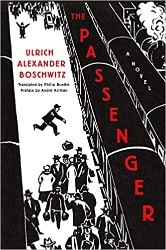
With this English translation of Ulrich Alexander Boschwitz’s first novel, Berlin Shuffle—originally published in German in 1937, when its author was only twenty-two — readers enter the dark, chaotic landscape of prewar Germany, on the threshold of Hitler’s rise to power. Similar to Boschwitz’s unsettling prophetic forecast regarding Jewish fate in The Passenger (1938) — which appeared in an English translation, also by Philip Boehm, in 2021—Berlin Shuffle limns a series of characters “maimed” by life, engulfed by memories of past trauma, and preoccupied with the threat of apocalyptic violence that always seems to be on the verge of breaking out.
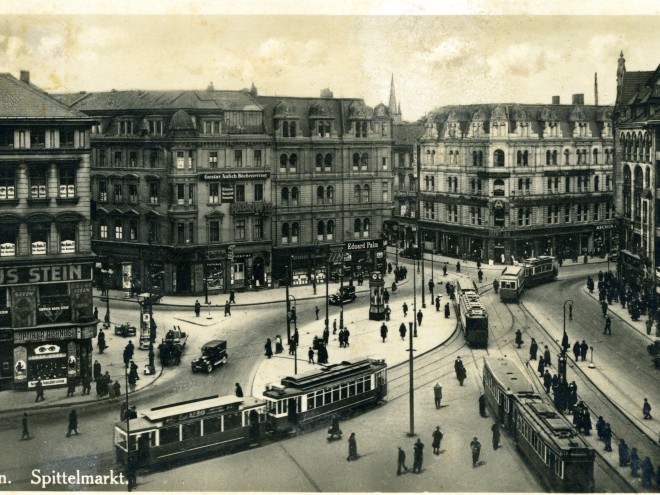
Unlike The Passenger, however, Berlin Shuffle does not focus on the uprooted figure of an assimilated German Jew, displaced from an imagined “homeland.” There are no “Jews” depicted in Berlin Shuffle. Still, simmering violence and “characters full of aggression and resentment” characterizes Boschwitz’s surreal post-World War I Berlin world. In his first novel, the young author envisioned the poisonous atmosphere to which Germany’s Jewish population would soon be subjected.
Philip Boehm’s Introduction speaks of the “cinematic structure” of Berlin Shuffle. The phrase perfectly captures the unfolding, episodic movement of the novel. In contrast to the thickly drawn figure of Silbermann in The Passenger, Boschwitz’s characters in the earlier novel remain relatively thin; yet each carries the weight of a past trauma; each is burdened by the breaking-down of social norms and resulting psychological disconnection.
We meet, for example, Fundholz, a man “well on his way to complete indifference. His past lay behind him like a dream, and his future was foggy, uncertain, and rather uninteresting.” He survives by staying inebriated, imbibing consecutive glasses of peppermint schnapps. Then there’s Tönnchen, characterized by his “incessant grinning”; he is mentally arrested as a result of experiencing trauma as a boy: his father was run over by a beer wagon while the son was trapped in a cellar.
Other, equally grotesque figures include Sonnenberg, a sadomasochist blinded in the war. He meets a deadly fate in the form of Grissmann, a thief and opportunist, driven by jealousy and cynicism. Eventually they are all drawn together through the figure of Elsi, Sonnenberg’s would-be partner, who seeks to escape Sonnenberg’s innate violence — an impossible wish.
Perhaps the most poignant, if absurdly depressing figure drawn in Berlin Shuffle is Frau Fliebusch, who, oblivious to “the entire wickedness of recent times, remains trapped in the past, dragging her late husband’s army uniform and a new top hat around Berlin, waiting for his return. “’Why can’t I find you?’” she asks, lost in the present; “’Surely you can feel me searching for you.’”
As the novel moves towards its violent, apocalyptic climax, Boschwitz deftly gathers his characters at a local bar, named (comically? ironically?) “The Jolly Huntsman.” In the end, we recognize how each lost figure finds ways of coping, as the postwar world shuffles away. They survive, somehow, through indifference, madness, repression, rage, or remaining trapped in the past. It is a bleak, ominous vision of pre-Nazi Germany — a Germany that would tragically fulfill Boschwitz’s prediction: “It is to be expected that in the coming years, we will experience entirely new episodes of annihilation.”
Donald Weber writes about Jewish American literature and popular culture. He divides his time between Brooklyn and Mohegan Lake, NY.