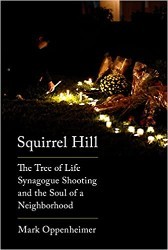
Judy Blume is an icon among American authors of fiction, for both children and adults. One of the first authors of young adult books to write about previously taboo subjects including intermarriage, the uncomfortable aspects of puberty, and adolescent sex, she has also become a vocal advocate for freedom of expression against the threat of censorship. Mark Oppenheimer, who had unprecedented access to a wide range of sources, reveals facts about Blume’s life and work that transform the legend into a complex woman and a multifaceted artist. His nuanced interpretations of her work offer a fresh perspective on characters who have entered the pantheon of children’s fiction, including Margaret Simon, Sally J. Freedman, and Fudge Hatcher, as well as numerous women in books for adults who push back against stifling norms of conformity.
Judith Sussman Blume was born in 1938, into a Jewish middle-class family in New Jersey. Post-World War II economic mobility, and gradually changing social norms, formed the background for her coming-of-age. Growing up in relative comfort, and, in her first marriage, experiencing both the privilege and the constraints of affluence, Blume only achieved success as an author after persistent attempts and many rejections. Eventually, she developed the conviction that a career in literature was possible, while a lifetime as a dutiful wife was not.
Oppenheimer deflects some of the assumptions about Blume’s phenomenal success, producing a truer portrait of the writer who has come to represent truth-telling in children’s books and conveying the challenges of celebrity in a field where that status is uncommon. He notes both strengths and weaknesses of her books, as well as her personality. For readers expecting Blume to be a feminist, he notes the debt she acknowledged to such pioneering women authors as Beverly Cleary, Louise Fitzhugh, and E. L. Konigsburg, but also describes her ambivalence about gender roles. While Blume has been attacked by conservatives for her perceived subversive values, she has also been criticized by liberals for her depictions of girls’ cruelty, particularly surrounding oppressive beauty standards, and her alleged unawareness of broader social problems. Yet, as Oppenheimer points out, her novels are focused on characters, not issues; on “the unvarnished depictions of children’s normal lives.”Tales of a Fourth Grade Nothing, and Superfudge achieve this goal as resolutely as her controversial works.
While Are You There, God? It’s Me, Margaret, is her most celebrated children’s book, Oppenheimer shows appreciation for the more autobiographical Starring Sally J. Friedman as Herself. He credits the novel, set in Miami shortly after World War II, as having a much stronger sense of place than others set in less defined suburban environments. Jewish themes are also much more prominent; Sally struggles to understand the deaths of relatives, and other Jews, in Europe, blending imagination and reality to manage her anxiety. His appraisal of Blume’s adult novels acknowledge both their importance as reflections of their era and their uneven literary merit.
Characterizing Blume as “one of the most fortunate people in history … as a Jew, in particular, exquisitely lucky,” Oppenheimer conveys the essence of her remarkable accomplishments and enduring legacy in the light of that truth.
Emily Schneider writes about literature, feminism, and culture for Tablet, The Forward, The Horn Book, and other publications, and writes about children’s books on her blog. She has a Ph.D. in Romance Languages and Literatures.