Join a community of readers who are committed to Jewish stories
Sign up for JBC’s Nu Reads, a curated selection of Jewish books delivered straight to your door!
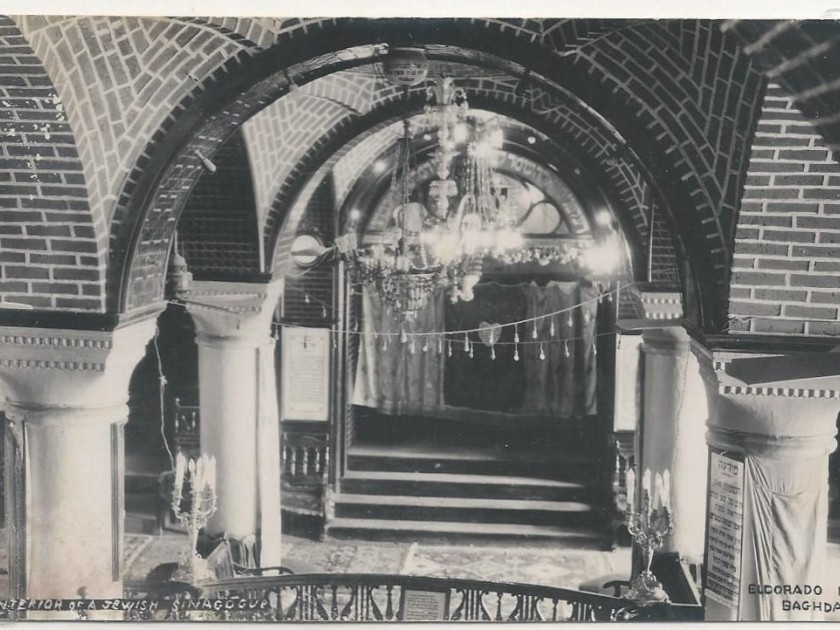
Great Synagogue of Baghdad, Iraq, Babylonian Jewry Heritage Center via WikiMedia Commons
Growing up as the daughter of Iraqi Jewish refugees in London in the 1980s, there were very few books about my community. In Iraq, the Jewish story had been erased. In Israel, Iraqi Jews had been pressured to forget their cultural identity. In the UK and the US, the Jewish stories that were told were overwhelmingly Ashkenazi. Iraqi Jews appeared only in the margins — or even the footnotes — of the books I read, scouring the pages as I hoped to see myself and my community. One reason for writing my memoir, Always Carry Salt, was the realisation that the last Jews to have grown up in Iraq were getting older, and that their stories would soon disappear unless we wrote them down. It felt as though a Flood was coming and we needed, urgently, to build an Ark.
The following books come from different Iraqi Jewish perspectives and focus on different parts of the community’s story. Now that the shelf of Iraqi Jewish books is growing, there is more space for the complexity and contradictions of our stories.
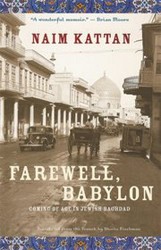
Farewell, Babylon: Coming of Age in Jewish Baghdad by Naim Kattan, translated by Sheila Fischman
This elegiac memoir captures an optimistic time in 1940s Baghdad when, even after the Farhud (the riots of 1941 in which many Jews were murdered), Jews wanted to be part of the new country of Iraq. Kattan and his friends would meet in cafés to passionately debate Iraq’s future. “We were neither Jew nor Muslim. We were Iraqis”, he writes, adding dryly, “Except that the Muslims felt more Iraqi than the others.”
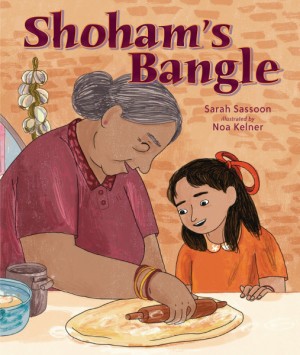
Shoham’s Bangle by Sarah Sassoon, illustrated by Noa Kelner
I wish this picture book had existed when I was young; my son loves it. Its young heroine leaves Iraq in the mass airlift of Iraqi Jews to Israel in 1950 to 1951, leaving almost everything behind, including her gold bangle. But when she gets to Israel and eats the bread her grandmother has packed for her, she bites into something hard and realises her grandmother has managed to smuggle out a piece of home.
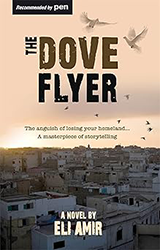
The Dove Flyer by Eli Amir translated by Hillel Halkin
This classic autobiographical novel about the exodus of 1950 to 1951 begins with a teenager caught between his father’s dreams of planting rice in Israel and his mother’s love for Baghdad. It’s richly nostalgic, from the zangoola vendor calling out “Jews, come and get it! Zangoola and honey, I don’t take any money!” to the fortune teller lamenting “The whole world eats dates and I get only the pits!” Iraqi Jewish diva Salima Murad even appears, singing so ardently that one of her fans exclaims “God in heaven!…How are we Jews supposed to leave all this?”
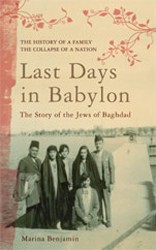
Last Days in Babylon: The Exile of Iraq’s Jews, the Story of My Family by Marina Benjamin
Benjamin travelled to Iraq in 2004 with a suitcase stuffed with salt beef, Wiener schnitzel, Vienna sausages, and roast chicken, (kosher labels carefully removed) to give to the twenty-twoJews who (then) lived in Iraq. In this wry, gorgeous, heartbreaking memoir she retraces the footsteps of her grandmother, Regina, who was born in Baghdad in 1905, tells the community’s story, and finds its last vestiges, from a boarded-up synagogue to a ruined cemetery.
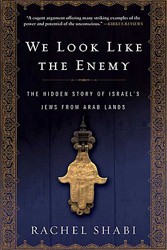
We Look Like the Enemy: The Hidden Story of Israel’s Jews from Arab Lands by Rachel Shabi
Razor-sharp, engaging and powerful, Shabi’s book explores the discrimination faced in Israel by Iraqi Jews, as well as other Jews from Arab lands and North Africa. (One of the many things Shabi explains is why the word Mizrahi is so problematic.) It’s the story of her family too, but she ranges widely, analysing everything from the films that cast Mizrahi Jews as lazy, drunk, and behind the times, to the unfair allocation of housing.
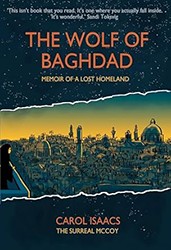
The Wolf of Baghdad: Memoir of a Lost Homeland by Carol Isaacs
Often compared to Persepolis, this charming and devastating graphic novel imagines a cartoonist being transported, by music, to Baghdad, and seeing a child swimming in the Tigris (where my mother, also, learned to swim). Except this child is a ghost as is everyone she meets; her relatives now haunt the city that used to be their home. The titular wolf refers to the wolf teeth amulets worn or attached to babies’ cribs to ward off the evil eye. Isaacs evokes the richness of Jewish life in Baghdad as well as its tragic end.
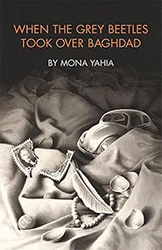
When the Grey Beetles Took Over Baghdad by Mona Yahia
This is a rare book that tells the story of the Jews (like my mother) who stayed in Iraq past 1951. Yahia’s autobiographical novel is set in the 1960s, and the title’s beetles are the secret police’s omnipresent Volkswagen cars. Her teenage heroine’s life veers from the joy of gambling at Purim to the horror of seeing the aftermath of the hangings of the men and boys accused of being Zionist spies in 1969, as Iraq starts to feel less and less like home.
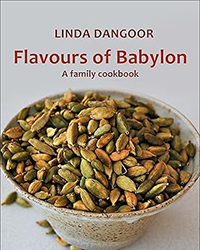
Flavours of Babylon: A Family Cookbook by Linda Dangoor
This wonderful cookbook will tell you how to make everything from ajjat b’jeben (literally “cheese storms,” a kind of omelette) to zangoola (fried dough swirls dipped in scented syrup). There is also a whole raft of lovingly detailed kubba recipes, from kubba poteta (kubba made with a potato shell) to kubba burghul b’siniya (kubba with a bulgar wheat shell, cooked in a tray) which rarely, if ever, appear in cookbooks.
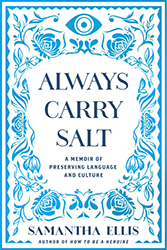
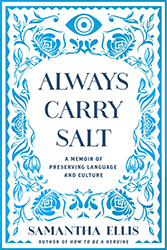
Always Carry Salt: A Memoir of Preserving Language and Culture by Samantha Ellis
I’ve always known the language of the Iraqi Jews was going extinct but it was only after becoming a mother that it hit me that I wouldn’t be able to pass it on; I’d never be able to tell my son he was “living in the days of the aubergines,” or remind him to always carry salt to ward off the evil eye. This realization led me on a journey of thinking about culture and heritage, about what we save, what we lose, and what we might need to let go of.
The daughter of Iraqi-Jewish refugees, Samantha Ellis is the author of How to be a Heroine and Take Courage. Her plays include How to Date a Feminist, Cling to me Like Ivy and Operation Magic Carpet. Her journalism has appeared in the Guardian, the TLS, the Spectator, Literary Review and more. She worked on the first two Paddington films. She lives in London.