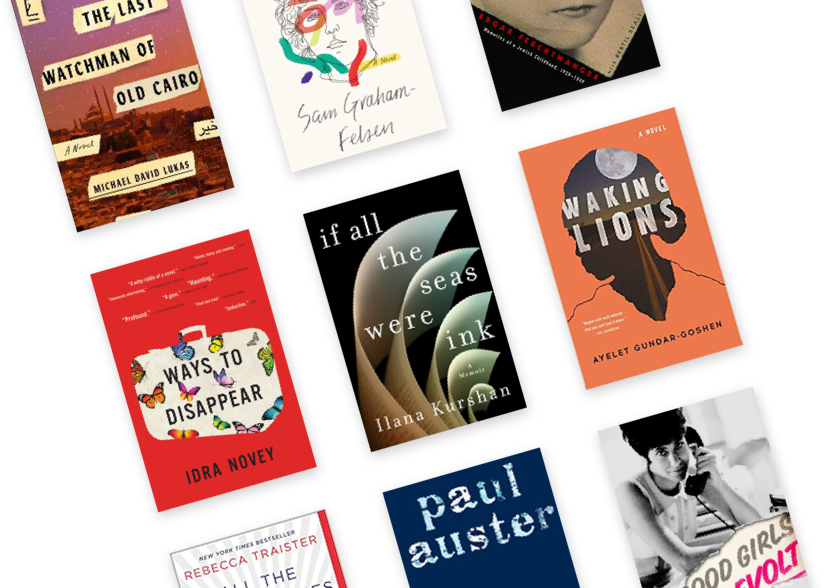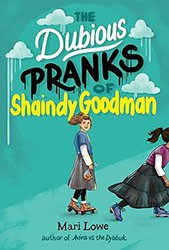
Reaching the age of b’nai mitzvah induces pride but also tension for any Jewish young adult. Imagine the level of stress magnified many times if, upon reaching the age of twelve or thirteen, one became responsible for saving the world from a powerful evil force. Drawing on Jewish folklore, but embroidering her own narrative, Mari Lowe raises issues of moral responsibility and difficult personal relationships in her fantasy novel.
Ezra Safran is approaching his bar mitzvah under tremendous pressure. He is a Nivchar, the child born each generation who must ensure that stability of Beinoni time. During this era, which has existed from the return of the Jews from the Babylonian exile, there is a crucial balance between good and evil. The world is not perfect, but nor is it under imminent threat. As Ezra solemnly acknowledges, “the fate of the world depends on my not being average.” Specifically, he will be called upon to fight the gurya dinura, a fiery lion who has the potential to engulf the world in his powerful grip. Ezra trains for his role with Gadi, an expert in combat and resistance, during their sessions in the village of Chorvos Hagoral. Similar to an archeological site, but transcending time and space, the ancient setting is also the headquarters of the Sanhedrin. This governing legal body is not relegated to the historical past in Lowe’s imagined world, but is a contemporary institution, and Ezra’s father is a member.
One of the most distinctive features of Beinoni is Lowe’s convincing character development within a fantastical setting. As in her previous novels, family relationships and friendships are sources of emotional support, but also ambivalence and confusion. Ezra’s academic performance and self-image as an achiever begin to decline. His alliance with Binyamin, a boy also respected by adults and by his peers, suddenly changes course. Ezra has always encountered hostility from Aryeh, a student who has lost his parents and lives with a foster family. Aryeh’s seething anger and antisocial behavior are forces to avoid, but, in spite of his father’s disappointment, Ezra finds more nuance than he had previously in Aryeh’s motives. Both in the familiar real world and in the looming struggle of the fantastic one, people are not always who they seem to be. Lowe credibly navigates the transitions between these intersecting spheres; returning from an exploration of caves at Chorvos Hagoral, he throws some frozen pizza bagels in the microwave for dinner.
Lowe consciously introduces characters from a diverse range of Jewish cultures, and also some non-Jewish characters. Dr. Chopra is the well-meaning psychiatrist who diagnoses ADHD, but his enthusiasm for the dramatic success of medications to treat this problem has an almost cartoonish aspect. Children’s behavioral changes sometimes have multiple causes; this plot development seems somewhat simplistic compared to the overall subtlety of the novel’s structure.
There are a number of surprises as Beinoni reaches its exciting conclusion. Good and evil exist side by side, and more than skillful swordplay is required to determine the outcome of Ezra’s seemingly impossible task.
Emily Schneider writes about literature, feminism, and culture for Tablet, The Forward, The Horn Book, and other publications, and writes about children’s books on her blog. She has a Ph.D. in Romance Languages and Literatures.