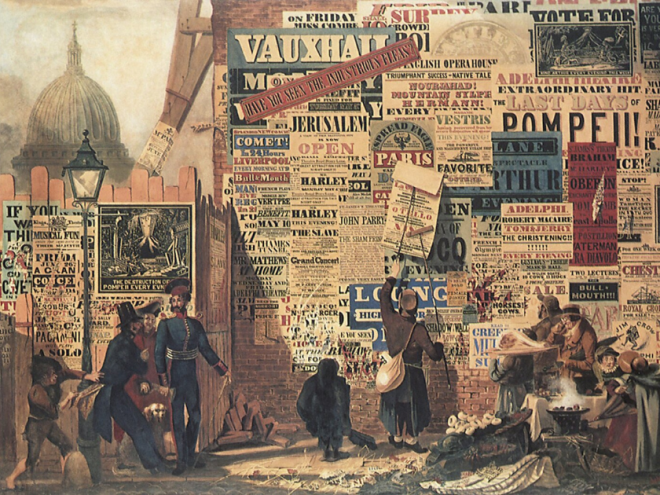
With Fagin the Thief, American novelist Allison Epstein takes on Charles Dickens, one of literature’s most iconic authors, and Oliver Twist, one of his most beloved tales. Epstein puts a clever spin on Oliver Twist by shining the spotlight on Fagin. In Dickens’s version, Fagin is the villainous thief who takes in the orphaned Oliver and lords over a band of pickpockets he’s trained since boyhood. Fagin is described almost exclusively as “the Jew” in this reviewer’s edition of Oliver Twist. Despite its cutting social commentary at the time, Dickens’ narrative did not invoke any sympathy for Fagin. Now, Epstein grants “the Jew” a first name, Jacob, “the cleverest of the patriarchs,” and gives him a suitably Dickensian backstory on the mean streets of Regency-era London.
We follow Jacob Fagin through his impoverished boyhood, meeting his beleaguered, Yiddish-speaking mother, and his mentor, the eccentric Anthony Leftwich, who sees in Jacob the spark of the legendary thief he is destined to become. It is through Leftwich’s tutelage that Fagin is able to overcome catastrophe and fend for himself. Fagin eventually becomes a mentor himself to a growing brood of hardscrabble outcasts and charming criminals seeking shelter in his squatter’s quarters, the delightfully decrepit Bell Court. “There will always be boys knocking on his door,” Epstein writes, “and he will always let them in.” Whereas Dickens busied himself with a huge cast of characters, Epstein dispenses with many to dig into the complications of Fagin’s relationship with the brutish Bill Sykes, his protege-turned-antagonist. “Every time he tries to think of what Bill is to him and he is to Bill, he is made aware anew of the vast holes in the English language,” she writes of the two men. Their mercurial dynamic is the novel’s most compelling thread.
It’s no shock that the novel’s greatest surprises occur where Epstein toys with the facts of Dickens’ original Oliver Twist fictional universe. It’s hard to discuss these artistic liberties without revealing plot details, but suffice it to say, Fagin is revised and deeply humanized here. In resurrecting such an infamously controversial character, Epstein risks possible pitfalls involved with settling scores. Instead, she gives us a lovingly rendered, insightful story, engaging with the flaws of her source material and adding new layers, rather than stamping all the old ones out. And for those who have avoided Victorian door stoppers like Oliver Twist, and all of this is brand new, don’t worry – this Fagin can stand entirely on his own.
Megan Peck Shub is an Emmy-winning producer at Last Week Tonight, the HBO political satire series. Previously she produced Finding Your Roots on PBS. Her work has been published in New York Magazine, The Missouri Review, Salamander, and Vol. 1 Brooklyn, among other publications.