Courtesy of Boruch Cohen
1. Would you recommend this book to someone who was interested in learning more about Judaism or being Jewish? If so, what would you say makes it a “good read” for that person?
2. How did you read this book? From cover to cover? By skipping around at random? Or based on the titles in the table of contents? How would you suggest the book be read?
3. Suppose that you are the author submitting this book for a book fair/review/award, and asked on the submission form to “Please provide a brief description of your book.” How would you describe it?
4. Suppose that you are a librarian. In which section of the library you put this book: (a) Jewish Knowledge (b) Spirituality & Well-Being © Self Help (d) Mysticism & Kabbalah (e) Psychology (f) Philosophy (g) Humor (h) Essay Collections (i) Cookbooks (j) Stream of Consciousness (k) Mere Child’s Play (l) Other???
5. Was this book in any way about its author? Was it in any way about you, the reader?
6. Was the book for you informative? insightful? inspiring? How about thought provoking? Did you learn anything new, in the sense of, “Hey, I never knew that”?
7. Was the book quirky enough for you? Too quirky? Not quirky enough? Were the oddities, overall, an enhancement or distraction to the book’s ideas?
8. Did you have fun with the cultural references, as one might have fun at a “scavenger hunt,” or did you just zoom past them, as one might zip past a driver going too slow in the right lane? Did you “google” any unfamiliar references for more information?
9. Any personal “take-aways” from this book? Have you tried employing any of the book’s “meditations” or “mantras” in dealing with life’s situations? What about its practical tools for working on character issues or interpersonal relationships? Has the book in any way helped you see “things” differently?
10. Did the book spark any self-reflection about being Jewish, about possessing a soul, about your relationship with G‑d?
11. Do you have any favorite essays/passages/quotes? If yes, what made them favorites?
12. Did this book seem at all relevant to world events, such as the war in Israel or anti-Semitism? If so, in what way? If not, why not?
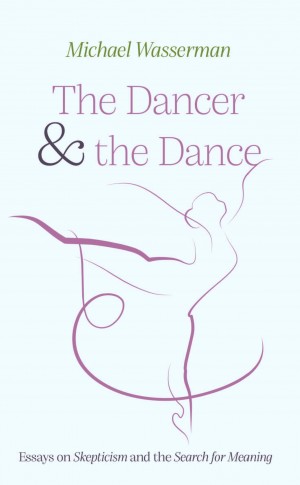
13. Would you agree that the book lives up to its subtitle, “A Fresh Perspective on Jewish Teachings and Traditions”? If so, how would you describe what this “fresh perspective” is?
14. Was your experience reading this book better than your experience going to Hebrew school?