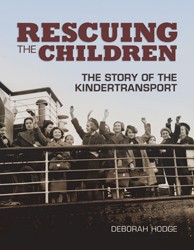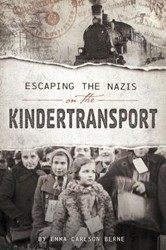
At the very beginning of World War II, 1.6 million Jewish children lived in Europe. By the end of the war, 1.5 million of them had perished. While Jewish organizations attempted to organize rescue operations to countries all over the world, most were met with little success. Through the miracle of the Kindertransport, 10,000 of the children were able to escape and survive by being accepted into Great Britain. Fewer than 500 were offered a place of safety in France and it is these 500 that are the subject of this book.
Laura Hobson Faure, a professor of modern history at the Sorbonne, has put together a deeply moving and comprehensive picture of these young people’s complex journeys West as they sought safety in France. Highlighting the network of people and organizations that aided the children along the way, her narrative follows their flight to France and then on to England and America as the Germans advanced and they were forced to flee yet again.
Faure’s research delves into a wide range of primary sources, including survivors’ testimonies, children’s diaries and autograph books, plus the songs, poems, drawings, and letters they composed. In addition, she gathered extensive material from archival sources from the US, France, the UK, Germany, Switzerland, Israel, and the Netherlands, studied private papers and historical troves kept by families, and conducted numerous oral history interviews
Clear photos, excellent notes, useful appendices, a detailed index, and a complete bibliography of both primary and secondary sources all work together to give the book an academic air, but the warmth and depth of the writing invite in readers of all levels and make the material accessible to both scholarly researchers and lay readers. In fact, the moving portraits of the children give the book an extra dimension that will appeal to many readers.
Fleeing unaccompanied to France and then the US to escape the Holocaust, most of the children portrayed in the book were ultimately the sole survivors from their families. Many came from orphanages, which took them in after they had lost one or both parents to the Nazis. The author highlights both the children and also the heroes who rescued them from deportation, bringing the stories of these courageous adults out of the shadows of history and giving them the recognition they so well deserve.
The author explores the very concept of rescue by delving deeply into the specifics of how the children’s lives were saved. In great detail and with great sympathy, she analyzes their flights to freedom and examines each part to try to determine how exactly they came together. For example, she looks at the courage of the parents who found the strength to separate from their children so that they would have a better chance at living; at the orphanages that searched for homes for them outside Germany; at the French Jewish committees that found them visas; and at the US organizations that funded their evacuations.
While some rescue attempts were great successes, others were devastating failures. Thoughtfully and elegantly, Faure analyzes both, providing historical perspective and sociological explanations, while balancing political motivations with psychological realities in her child-centered social histories. One of the most satisfying and unique parts of the book explores the children’s own perspectives; Faure considers their emotions, opinions, and reactions, showing them not as passive victims but as people who took action on their own behalf. The resilience these children demonstrated during that dark chapter of Jewish history should be honored for the significant part they played in shaping our understanding of the past.
Linda F. Burghardt is a New York-based journalist and author who has contributed commentary, breaking news, and features to major newspapers across the U.S., in addition to having three non-fiction books published. She writes frequently on Jewish topics and is now serving as Scholar-in-Residence at the Holocaust Memorial & Tolerance Center of Nassau County.