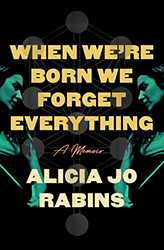
Many people who love Leonard Cohen’s celebrated anthem, “Hallelujah” know little about its author. In their new picture book, Alicia Jo Rabins and Gene Pendon introduce the song’s author to a young audience in the context of Cohen’s Jewish heritage. Simplifying some of the more disturbing and intense aspects of “Hallelujah’s” lyrics, they succeed in presenting an essential and truthful picture of the composition’s spirituality, and its lasting significance to a range of audiences.
Cohen’s childhood was a complicated mix of security and tension. Emphasizing the warmth of Jewish ritual and the deep roots of his identity, Rabins mentions that Cohen’s grandfather was a rabbi. While it is true that his maternal grandfather was a distinguished Talmudic scholar, the juxtaposition of this information with a scene of Cohen’s lively synagogue implies that the older man officiated there. Although he did not, he exerted a great influence on the future songwriter. Rabins’s text transitions to exploring Cohen’s childhood sadness, which compelled him to search for meaning in music and poetry.
Distilling the essence of Cohen’s artistry is a difficult task for a children’s author. Rabins succeeds in telling the truth about the multicultural elements that inspired Cohen, while also maintaining that his Judaism remained at the core of his vision. He emerges as an appealing figure, a boy who grows to manhood still struggling with conflicting parts of his psyche. Reserved and ambivalent, he eventually finds his voice and becomes a performer whose songs resonate because they “opened people’s hearts.” One of those songs, whose genesis was difficult, was “Hallelujah.” Rabins describes how Cohen kept searching through hours of frustration, until he found “the very last word and the very last chord.”
Pendon’s illustrations have a nostalgic tone and dramatic inflections. Scenes of Cohen’s family Shabbat and his Montreal home frame the beginnings of his quest for meaning in a specific setting. One felicitous pairing of words and pictures has a table set with the tea and oranges that adult readers will recognize from his song “Suzanne,” while the window looks out on a scene from his home city. The famous bird on a wire, colored in pastel violet and singing outside of Cohen’s bedroom, is also identified as one more inspiration for his songwriting.
Genius is not always recognized, and Pendon portrays an obtuse record executive gesturing with an empathic thumbs down as Cohen hopefully presents his magnum opus. But eventually his song’s universality triumphs, presented here in interfaith settings, around a campfire, and serenading a cat from a mid-century television set. Rabins brings “Hallelujah” to a child’s level of understanding, so that a song that refers to David and Bathsheba and Samson’s weakness for a
woman is translated as an acknowledgement of human imperfection. Love and anger can coexist, as Cohen learned from life itself, and from the biblical figures who animated his imagination.
Hallelujah: The Story of Leonard Cohen is highly recommended and includes an afterword with further biographical information.
Emily Schneider writes about literature, feminism, and culture for Tablet, The Forward, The Horn Book, and other publications, and writes about children’s books on her blog. She has a Ph.D. in Romance Languages and Literatures.