Hyam Plutzik (1911 – 1962) occupies a particular place within the realms of postwar American poetry and modern Jewish poetics. Socially conservative and interested in poetic formalism rather than in avant-garde experimentation, Plutzik died just as writing on the Holocaust was beginning to emerge, and before political consciousness-raising — empowered by the civil rights movement, feminism, and LGBTQ struggles — could influence his aesthetic.
The seventeen scholars who have contributed essays to this collection argue that it is precisely because Plutzik resides at this intersection of history, politics, and Jewish self-fashioning that he and his work are worth studying. The scholars offer expert takes on the poetics of Plutzik, maintaining that the poet dramatizes his uncertain relationship to American literature and his own Jewish identity. All of the essays are valuable, but several may be particularly useful to a non-academic reader.
In “The Universe Is No Consolation,” Cary Nelson argues that Plutzik is a crucial poet to know about because he establishes “his identity as a Jewish poet in the immediate post-Holocaust decade when many writers, except those on the radical left, avoided direct and aggressive commentary.” Using plans for an unfinished Holocaust epic as the basis, Nelson maintains that — at least in one 1987 collection — Plutzik presents a vision that is “postapocalyptic, explicitly imbued with the themes and philosophical outlook that emerged from the rise of fascism in the 1930s and culminated in the defining events of World War Two.” Sara R. Horwitz offers the intriguing information that, at the end of his life, Plutzik undertook English translations of traditional liturgical poems for the Conservative Movement. Noah Simon Jampol presents the startling news that Plutzik also wrote science fiction, and demonstrates that at least one of these stories may be read as a parable of World War II and the Holocaust. Kristin Boudreau identifies betrayal as a core theme in all of Plutzik’s writing. Finally, Rodger Kamenetz, himself a poet as well as scholar, encounters Plutzik in his own poetic attempt to deal with T. S. Eliot, whose writing Kamenetz loved and admired as a youngster, before becoming aware of the former’s antisemitism.
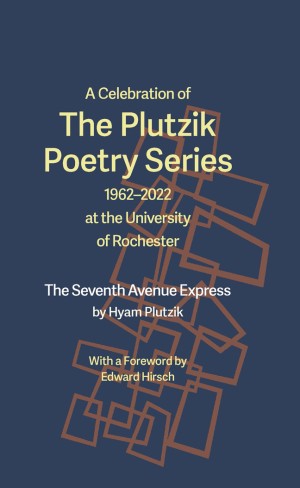
These and other informed scholarly considerations empower the reader to study the ninety pages of poems included in the book with more awareness and, perhaps, more empathy for Plutzik’s embattled situation. Knowing what we now know, we can better appreciate the historical underpinnings haunting a poem like “The Milkman”: “One night they will knock on the milkman’s door,/Their boots crunch hard on the front-porch floor./One-two, open the door.// You are the thief of the secret flame,/The forbidden bread, the terrible Name./Return what is left; go back where you came.” In “Portrait,” the poet describes the precarious position of American Jewry in the US: “Notice with what careful nonchalance/He tries to be a Jew casually,/To ignore the monster, the mountain — /A few thousand years of history.” The collection ends with Plutzik’s strange, magical-realism-infused epic “The Seventh Avenue Express.”
In sum, this is a compelling assemblage of scholarly texts and poems that give us insight into the process and situation of a Jewish American poet writing during World War II and the postwar years.
Stephane Barbé Hammer’s new collection of magical realist stories about a private girls’ school in New York, The Warbler School Chronicles, will appear in March with Bamboo Dart Press.