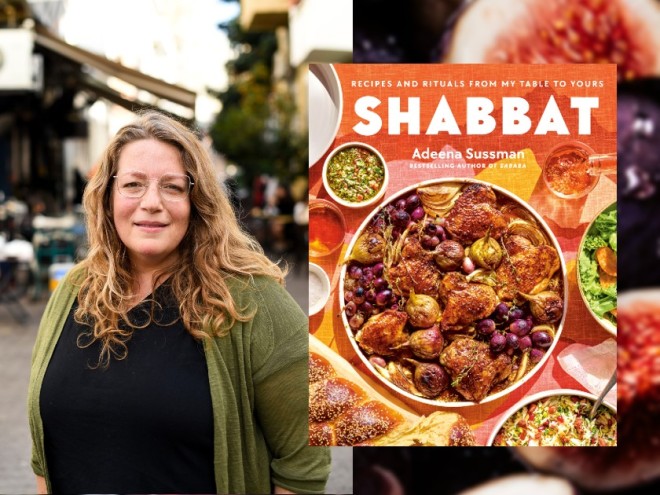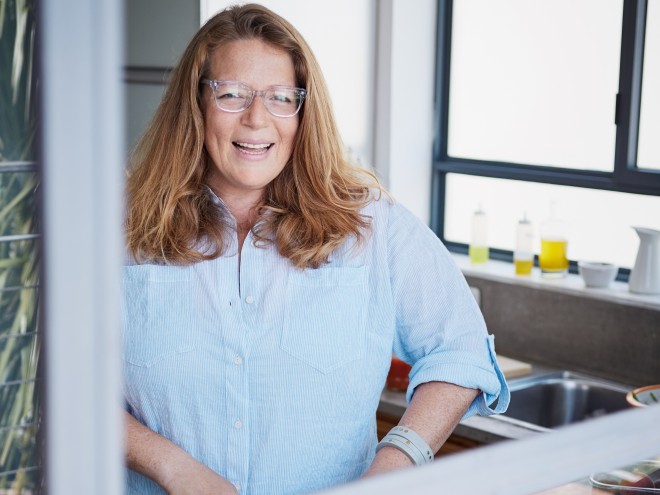
When I heard that Adeena Sussman was coming out with a new cookbook, I was thrilled. For the Land of Milk and Honey-yearning Metropolitan Area dweller in me, Adeena’s cookbooks don’t just offer reliable, approachable, sunny dishes; they let me play “Israel” in my New York kitchen. When I make her yerushalmi kugel, tahini blondies, or one of the many fish dishes that have become weekly staples, I can, for a brief moment, make believe I am back in my old Jerusalem apartment, with its linoleum floors, finicky burners, and egg yolk-like sun splashed against the walls. Adeena has a special ability to bottle the distinct awe that non-Israel-born residents of-Israel experience — a feeling that never seems to wear off — no matter how long you call Israel home.
That said, when I saw Zariz being marketed as an “easy recipes” cookbook, the thirty-minute meal warning bells went off in my head. With no disrespect to Rachael Ray (whom I watched religiously throughout middle school and credit with piquing my interest in food), I am not the type of cook who likes to be told something is easy. For me, cooking is about transporting myself to new places — both through the methodical measuring, kneading, and whisking that calm me more than any meditation, and through flavors and combinations that can carry me from Israel to India and beyond.
Having now made several of Zariz’s fish recipes, nearly all of the dips, and a delectable vegetable soup, I can say I am more than pleasantly surprised. In particular, I am excited to try Adeena’s pastilla-inspired (which she refers to as “b’stila,” using the b-sound of Arabic diction) salmon. This adaptation allows pescatarians such as myself to try this traditionally chicken-based sweet-savory North African dish. And, as a spoiler: the dips — especially the carrot-ginger and the white bean harissa — are excellent. I am already planning to make the Middle Eastern chili crisp and “dilly garlicky” eggplant dip for this coming Shabbat.
This cookbook is simple — simple, as I am learning, is not always a bad thing, nor does it signify simple flavors. Even for an experimental cook like myself, it can sometimes be nice to lean into shorter ingredient lists and fewer steps and still make something delicious and inventive without the legwork. And when it comes to simple done right, there is no better guide than Adeena Sussman.
Hannah Kressel is a current fellow at the Pardes Institute of Jewish Studies in Jerusalem. She holds a Masters in Art History from the University of Oxford and a Bachelors in Art History and Studio Art from Brandeis University. Her research examines the intersection of contemporary art, food, and religion. She is an avid baker and cook.