Join a community of readers who are committed to Jewish stories
Sign up for JBC’s Nu Reads, a curated selection of Jewish books delivered straight to your door!
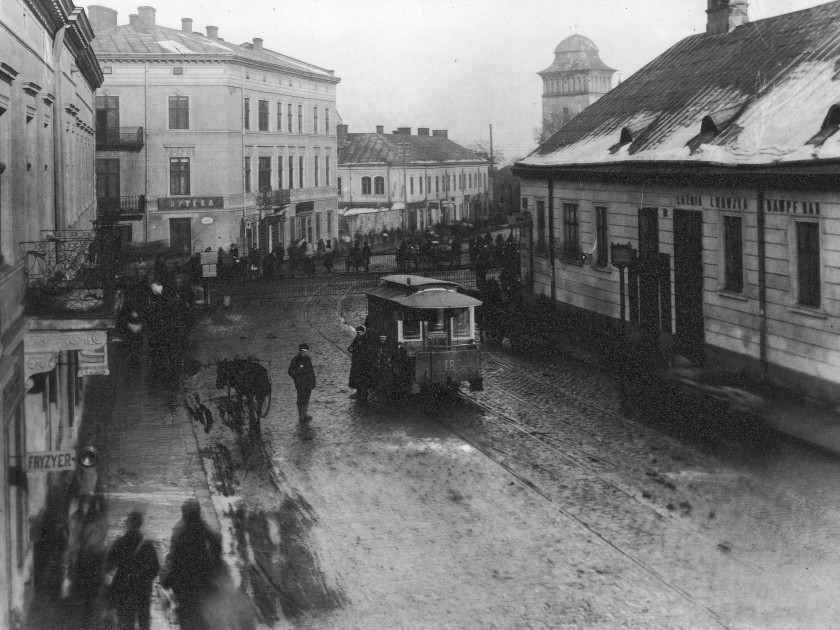
Zhovkivska Street in Lvov, between 1890 and 1908, via WikiMedia Commons
What would you do to survive when there’s no daylight left?
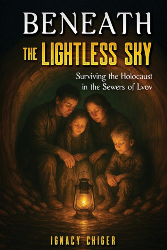
That question was not theoretical for my grandfather, Ignacy Chiger (1906−1975). It was his daily reality. Before I ever read his story of survival, before I fully grasped what atrocities my family had survived, I sensed the weight of something unspoken; a darkness carried quietly through generations. I grew up with fragments, hearing memories passed down through my mother, and learning from her memoir. But these family stories were never divulged outright. That silence began to lift when I found my grandfather’s manuscript, originally written and published in Polish. This document meticulously recorded how he, my grandmother, and their two small children survived fourteen months living in the sewers of Lvov during the Holocaust. Now, Beneath the Lightless Sky brings that buried testimony into English for the first time.
My grandfather’s memoir begins not in the dark underground but rather in a city bursting with a vibrant Jewish life. Lvov, before World War II, was a hub of Jewish learning and Polish culture. Then came the Soviet occupation,a regime that targeted thought itself and brought about a quiet terror beneath Jewish life. As a Jew under Stalin, my grandfather learned to fear his neighbors, his coworkers, as any knock at the door could end his life; he knew first-hand how interrogations blurred into days of paralyzing uncertainty. Under the Soviets, persecution of Jews wore the mask of a particular ideology. Under the Nazis, the mask was torn off and my grandfather and his family were in even greater danger. When there was nowhere left for Jews to go in Lvov, he and his family went underground.
Beneath Lvov, the sewers became both a tomb and a refuge. Darkness was everywhere, all the time. The stench, the rats, and the fear were constant. But in that filth, a few rays of humanity survived. Leopold Socha, a Polish sewer worker who first helped my family in exchange for money and later, when there was no money left, out of a sense of compassion, risked his life to bring food and news from the world above.
Beneath the Lightless Sky, my grandfather’s memoir, introduces figures so chilling they read like horrors torn from a nightmare — except they were real men who shaped the fate of thousands. Comrade Jakow Grona was a sadistic Soviet officer, a man intoxicated by power and ideological extremism. Hauptscharführer Josef Grzimek was a Nazi executioner whose cruelty defied comprehension. These figures are not villains in a story, rather we see the faces that shaped historical horrors. And they serve as reminders of the depths to which humans can descend when hatred becomes all-consuming.
When Germany invaded Poland, brutality turned absolute. My grandfather recounts Nazi officers whose names became synonymous with terror; soldiers who saw killing as sport. Yet even amid such madness, the unending desire to survive remained with him. Hide. Move. Adapt – or die.
My grandfather’s memoir is unique in many ways, in particular that it documents both Soviet and Nazi oppression. He reveals how totalitarianism, regardless of ideology, aims to annihilate humanity, before extinguishing life. In Lvov, the Jewish community was brutalized in attempts to reduce their existence to a meager survival long before the gas chambers were built. Still, my grandfather fought to remain human.
The liquidation of the Lvov ghetto sealed my family’s fate. With nowhere left to hide, Ignacy made a decision that defied logic and ultimately saved their lives — he led his family into the sewers of Lvov. Into the filth. Into the blackness. Into a world without time or sky.
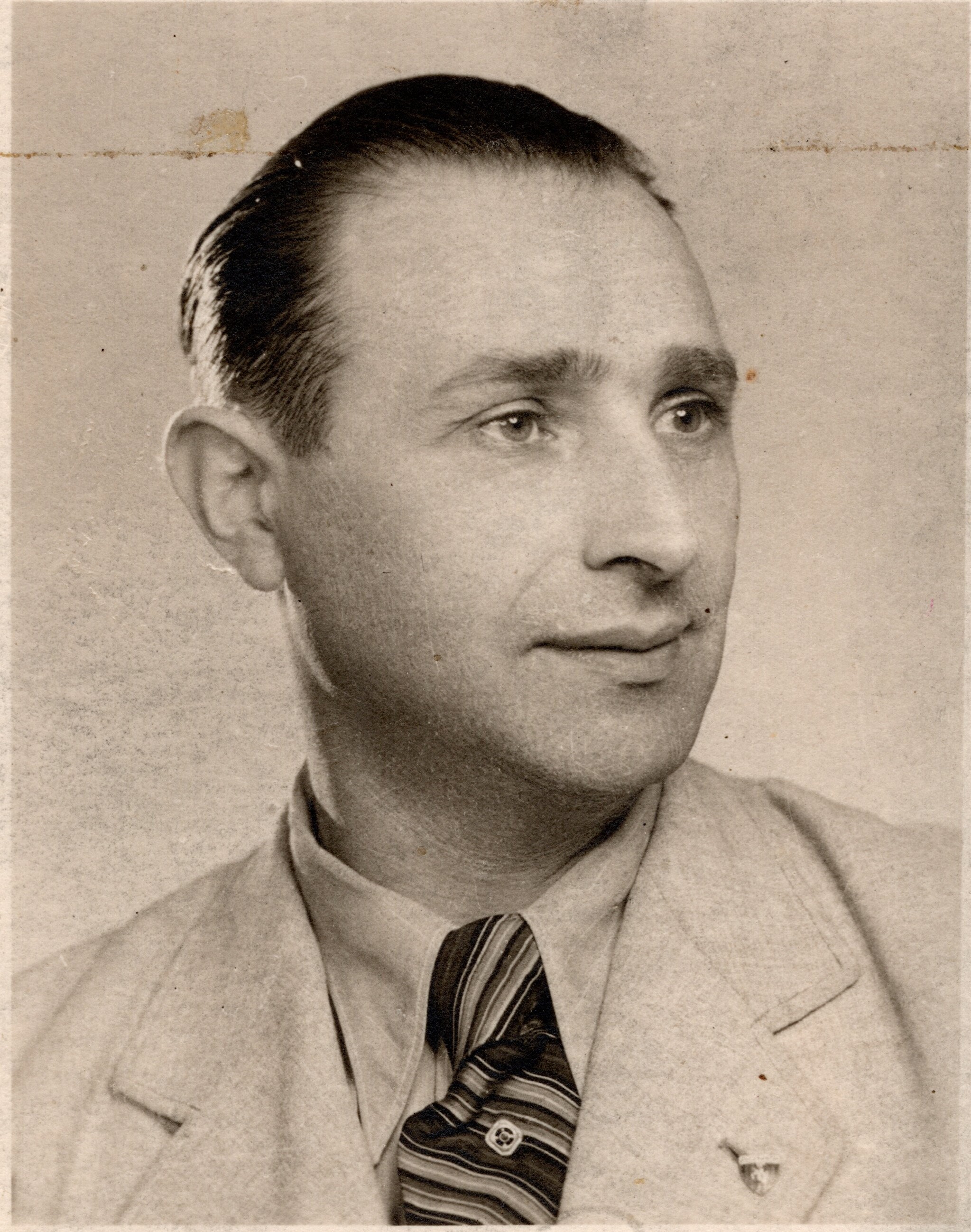
Ignacy Chiger, photo courtesy of the author
Fourteen months passed in that underworld. The memoir contains astonishing sensory power: the suffocating smells, the silence broken only by dripping water, the terror of footsteps overhead, the constant battle to keep children warm, fed, alive.
Beneath the city, an angel in human form appeared. A Polish sewer worker named Leopold Socha — part thief, part trickster — found them. At first, he helped only in exchange for money. But when the money ran out, he continued to aid them. He chose, day after day, to risk his life to feed, shelter, and protect the Jews hidden beneath his city. His transformation from scoundrel to savior stands as one of the memoir’s radiant truths: heroism often blooms in rough soil.
In my foreword, I call my grandfather “a real-life superhero,” and the description is earned. Ignacy outwitted interrogators, evaded deportation, engineered the survival of a small underground community, and kept alive the faintest flicker of hope in a place where even light could not enter. Yet the memoir insists that he was not alone in this work of survival. Socha’s courage was shared by fellow sewer workers who remind modern-day readers that choice is always in our hands.
As International Holocaust Remembrance Day approaches, the publication of Beneath the Lightless Sky offers both a historical excavation and a mirror. Its pages speak not only of what was endured but of what is imperiled when memory thins, and the moral complexities of survival are flattened into simplifications. The memoir demands that we consider not only how Jews survived, but also those who risked everything to help them, and what those choices meant in a world collapsing into violence.
What lingers after closing the book is not simply horror, though there is ample horror to absorb. It is the stubborn, almost unreasonable conviction that life must continue — that the human spirit, pressed into impossible corners, will still reach toward dignity and connection. My grandfather does not romanticize suffering. He bears witness to it. But in doing so, he also reveals the tensile strength of resilience.
From the father whose story gave rise to my mother’s book, The Girl in the Green Sweater—the memoir that inspired Agnieszka Holland’s Academy Award – nominated film In Darkness—comes this newly revealed testament to one family’s struggle against annihilation. Beneath the Lightless Sky is harrowing and intimate, brutal and tender, historically indispensable, and emotionally shattering.
It is a reminder that testimony is not merely remembrance — it is inheritance. And with this memoir finally brought to daylight, that inheritance has deepened for all of us.
Dr. Doron Keren, a retired dentist, discovered his passion project after having his grandfather’s, Ignacy Chiger, memoir translated from Polish to English. He is dedicated to preserving and sharing a vital contribution to Holocaust literature, ensuring that the horrors and heroism of the era are never forgotten. Beneath the Lightless Sky now stands as a powerful testament to resilience and survival.