Join a community of readers who are committed to Jewish stories
Sign up for JBC’s Nu Reads, a curated selection of Jewish books delivered straight to your door!
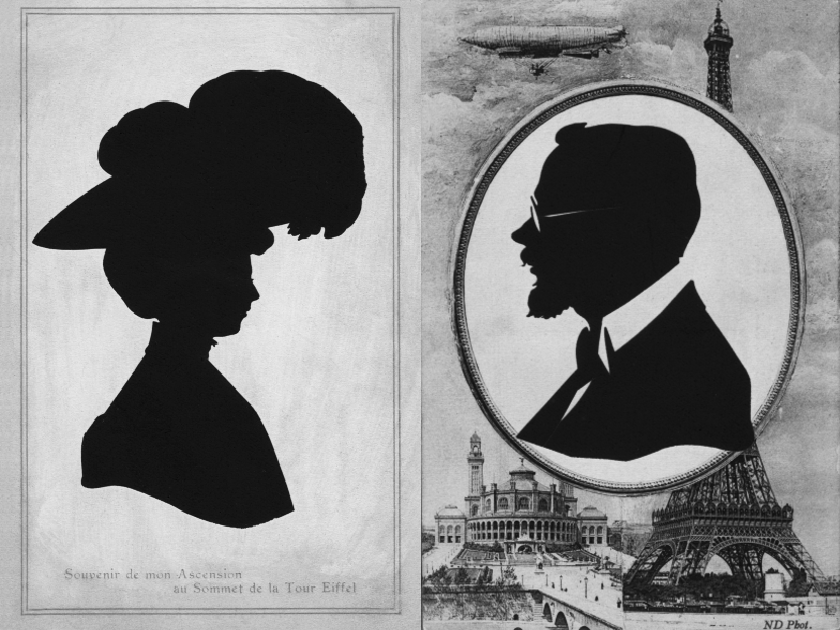
A honeymoon souvenir, 1908.
The Collection of Hadassah K. Musher, New York.
In 1930s America, an amusing cartoon that featured a husband and wife in a stationery store made the rounds, tickling the country’s funny bone. At the time, the husband would have been described as slight of build and milquetoast in disposition, the wife as pulchritudinous and bossy. Turning to the stationery store owner as her husband meekly stands by, the wife peremptorily requests “a diary for my husband, please. He’s a regular Samuel Pepys.”
Bearing witness to and poking fun at the popularity of diary writing which, along with scrapbook keeping, was all the rage in America of the interwar years, the cartoon appeared in 1932 in the Saturday Review of Literature, a weekly magazine that had its finger on the pulse of contemporary America.
Many decades later, I happened upon it in the most unlikely of venues: within the handwritten pages of the diary of Mordecai M. Kaplan, the towering religious and cultural personality who, singlehandedly, set out to render Judaism “habitable” for American Jews of the twentieth century, when not diligently recording his thoughts and impressions in a series of ledger books. I had been working on Kaplan’s biography, mining the voluminous journals of this self-styled “theological maverick”– some twenty-seven volumes spanning the years 1913 – 1981 – for both information and insight, when, startled, I first encountered the cartoon.
For one thing, its presence disturbed the wall of words that characteristically extended from one oversized page of Kaplan’s detailed and lively entries to another. Visual intrusions were rare in Kaplan’s private documentary universe: with the exception of tiny passport photos of Kaplan and his beloved wife, Lena, as they prepared in the late 1930s to travel to Jerusalem, and occasional newspaper clippings in Hebrew from Israeli newspapers, there were none. For another, the cartoon stood alone, commandeering the entire page. Kaplan commented neither on its presence nor its meaning, leading me to wonder what he saw in it.
Perhaps the cartoon made Kaplan laugh? Or furnished him with an opportunity to lampoon the intensity, the high mindedness, of his own, zealous diary-keeping practice? Maybe cutting and pasting the cartoon into his diary was his way of gently slapping himself on the wrist for spending too much time carefully assembling and crafting entries – even rewriting them – when he should have been polishing a sermon or working on a book? Then again, it could simply be that the insertion of the cartoon was of a piece with Kaplan’s practice of citing passages from other notable diarists that had caught his fancy, among them Ralph Waldo Emerson and Andre Gide. He’d copy those passages word for word and then inscribe them onto the diary’s flyleaf.
Should I be reading Kaplan’s diary in the first place? Might I be guilty of the literary equivalent of eavesdropping?
Whatever his motivation, the cartoon and its placement set me thinking about my relationship as Kaplan’s biographer to his private musings, or what he referred to as his “mewlings” and “mental acrobating.” Seemingly slight and incidental, of passing interest, especially when compared with the more weighty subjects – God, the future of American Judaism, Israel – that filled the diary’s pages, the cartoon pushed me to question my responsibilities to the text and its author. Should I be reading Kaplan’s diary in the first place? Might I be guilty of the literary equivalent of eavesdropping? After all, Kaplan’s observations, ruminations, equivocations, barbs, and apercus were not meant for my eyes.
Or were they? Put another way, for whom was Kaplan’s diary intended and for what purpose? Scattered clues pepper the text, but none are conclusive. Sometimes, it seemed as if Kaplan and Kaplan alone were both its intended audience and its exclusive beneficiary: a barometer of his moods, it enabled him to let off steam, to ventilate. At other moments, the diary resembled more of a blackboard than a therapist’s couch, the venue in which he’d diligently pursue, develop, and hone his unprecedented ideas.
But there were also instances when Clio, the muse of history in Greek mythology, appeared to be Kaplan’s primary audience. How else to understand his interest in having his diary published during his lifetime? For a brief spell in the 1950s – by then a household name – he entertained the possibility of seeing it in print, encouraged by the once-celebrated writer and critic, Charles Angoff who, having read several volumes and finding himself “tremendously impressed by them,” thought the diary would make for a viable and appealing book. Enthusiastic at first, Kaplan subsequently cooled to – and nixed – the idea, increasingly worried lest members of the reading public, especially his own congregants, not take well to some of his more wounding comments. (It would be another fifty years before selections from Kaplan’s diary would see the light of day, thanks to the 2001 publication of Mel Scult’s valuable Communings of the Spirit.)

When in the country, Kaplan liked to work outdoords, n.d.
The Collection of Hadassah K. Musher, New York.
Kaplan’s observation, late in life, that his longtime accumulation of diary entries showed “that I have lived” also supports the notion that he had posterity in mind, as did his hopeful comment that someday a “future historian will chance across this journal.”
It wasn’t “chance,” though, that drew me to Kaplan’s diary as much as its contents. When it comes to revisiting the American Jewish experience of the previous century and for understanding the person at its core, there’s nothing else quite like it. What a bonanza!
Kaplan’s diary laid bare the challenges – and costs – of being a Jewish communal servant while also documenting the slow and arduous process by which he developed the notion of Jewish civilization and argued for its “reconstruction.” Year in and year out, Kaplan’s entries showed him variously confounding, challenging, and disturbing the status quo and, concomitantly expanding the parameters of Jewish life, opening them up, emancipating them from “blind habit” and sentimentality in favor of a “maximum form of Jewishness.”
Kaplan’s musings turned out to be the beating heart of my new biography in the Yale Jewish Lives series; the cartoon was key to the portrait I fashioned of him and the basis for my reckoning with his legacy. Working in tandem, these two sources signaled the importance of situating Kaplan in his mis-en-scene, the larger American cultural context, from which he emerged; of centering my narrative on his interior life; and of highlighting a little-known but vital aspect of his fierce, dogged and determined personality: Kaplan’s humanity.
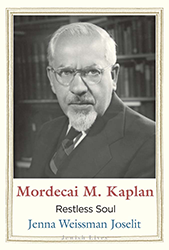
Mordecai M. Kaplan: Restless Soul by Jenna Weissman Joselit
Jenna Weissman Joselit is the Charles E. Smith Professor of Judaic Studies and professor of history at the George Washington University. Her many books include Set in Stone: America’s Embrace of the Ten Commandments and The Wonders of America: Reinventing Jewish Culture, 1880 – 1950, a National Jewish Book Award winner in History.