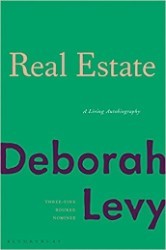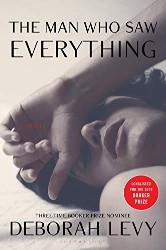
In her new book, My Year in Paris with Gertrude Stein: A Fiction, Deborah Levy plays with the boundaries between fiction and truth to tell the story of a British writer in Paris who is struggling to write an essay on Gertrude Stein, about whom the narrator knows both “too much and nothing at all.”
The narrator’s research, motivated by her deep curiosity about the elusive and often contradictory artist, is intensely intertwined with anecdotal stories of her shifting relationships with her two closest friends in Paris — sweet, smart Eva and headstrong, queer Fanny. Although the narrator claims to know little about the women, almost all of her time outside of working on her essay is devoted to a surprising investment in the search for Eva’s beloved pet cat, whom the friends interchangeably call “Bob” and simply “it.”
As the fiction progresses, though, it becomes clear that the search for “it” is a red herring in the narrator’s true aim. In fact, the entire book is devoted to the art of a search: for the cat, for a complete understanding of Stein, and for meaningful connection with the people she meets along the way.
The book opens with two distinguishable categories of writing: the first, biographical portions of Gertrude Stein’s life, and the second, a more conventional narrative about the narrator’s time working on her writing and research while spending time with Fanny and Eva.
Along the way, though, much like Gertrude Stein, Levy defies traditional genre norms. The separate threads of research and life become increasingly entangled, complexifying the prose to create a multifaceted work of art that pulls readers into the kaleidoscopic lives of both Gertrude Stein and Levy’s unnamed narrator.
The narrator complains that Stein’s writing is repetitive and confusing, but as she deepens her research, she becomes so immersed in it that even the narratorial portions begin to mimic the winding, rhythmic tone of Stein’s own writing. This manifests most obviously through the narrator’s own insistent repetition (like a catchphrase describing Eva’s eyes) and the rejection of traditional grammatical norms, like using commas as a pause point.
Even her relationships with Fanny and Eva — which seem shallow at first — represent Stein’s writing, notably existing only in the continuous present. The narrator is completely comfortable with the uncertainty of knowing them only in the moment that they are currently in, rather than trying to force an understanding of their familial history or backgrounds. Through these discreet references to and imitations of Stein — even during the narrator’s depictions of her personal life — Levy illustrates how the lines between art and life blur when an artist is wholly absorbed in a project.
Aptly named “a fiction” rather than “a novel,” the book points to the intersections between truth, art, and exaggeration, as genres bend and blend to create a truly original work. Just like Stein’s own wielding of modernism, this fiction completely subverts expectations, immersing readers in its intricacies just as the narrator is in her research. It is meta, it is unusual, and its surprises continue to the last page.
Sonia Freedman is a dual-degree student at Columbia University and the Jewish Theological Seminary studying Sociology and Jewish Ethics. She writes for the Columbia Daily Spectator on the Arts and Culture desk and serves on the editorial board of The Columbia Review.