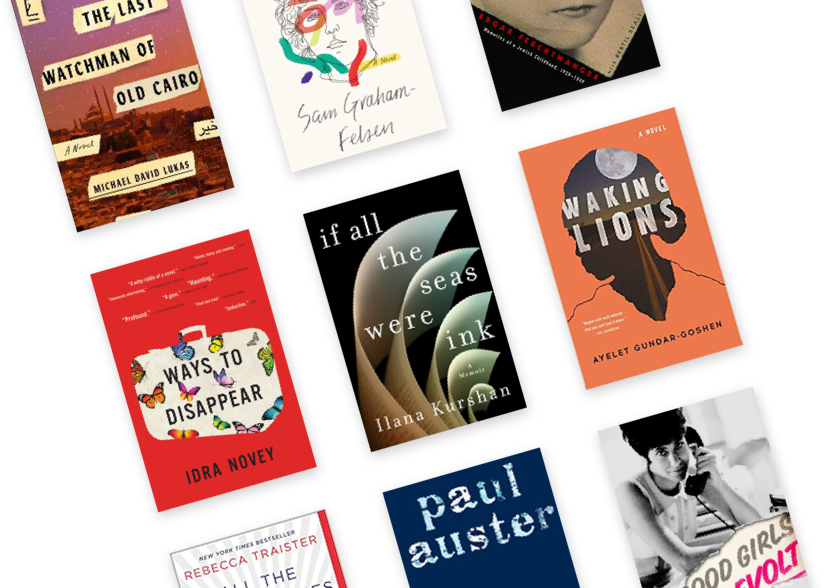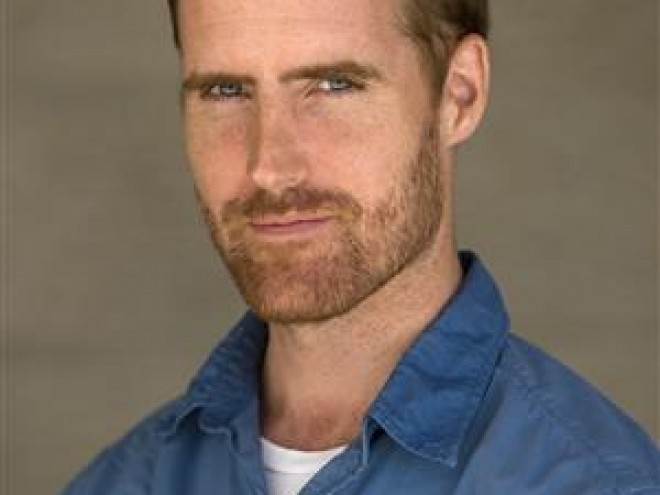
Matti Friedman has made something of a specialty of writing war stories with a human touch. In Pumpkinflowers, he recalls his service as a young Israeli soldier in the security zone in southern Lebanon in the 1990s. Spies of No Country tells the gripping story of four Jewish intelligence operatives in the 1940s who, before Israel existed, operated in Arab lands gathering information that would help create the Jewish state. In Who by Fire, he illuminates the journey of Leonard Cohen in Israel during the Yom Kippur War — a poet who “parachuted” into a war zone armed only with his music.
Now, in Out of the Sky, Friedman chronicles the story of young Jews who parachuted from British planes into Nazi Europe in 1944. They originally came from the crumbling Austro-Hungarian Empire, and had already escaped the Holocaust to Palestine. They did not love the British, who had closed the gates of Palestine to Jewish refugees, but they hated the Germans more.
The Jews of Palestine at that moment were young, and many were orphans. They chose new heroes; they elevated Judah Maccabee and the failed military leader and would-be messiah Bar Kokhba. The Warsaw Ghetto fighters — overwhelmingly members of Zionist youth movements — had shown what Jewish resistance could look like. Now another cadre of young Zionists would enter the battle.
Officially, the parachutists were to coordinate the rescue of downed Allied airmen. Unofficially — and more urgently — they were to reach surviving Jews and prepare them for mass immigration. “Death to fascism” was constantly on their lips. But no country on earth prioritized saving these people to the extent that their enemies prioritized killing them.
That is the tragedy: from the start, these missions were almost certainly doomed. The parachutists knew that the odds were grotesquely against them. But they also felt that it would be impossible to do nothing.
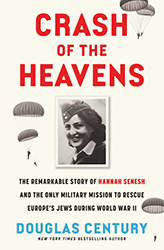
Hannah Senesh, a poet-warrior, is a major figure in this book, and this reflects a renewed attention to her life, including Douglass Century’s new biography (Crash of the Heavens) and a stage production. Perhaps in a post-October 7 world Senesh’s story of Jewish resistance resonates anew.
Senesh kept a diary; she was a poet who came from a wealthy background whose words became songs, and she was deeply drawn to Zionism. Her mentor, the charismatic Enzo Sereni, dreamed of Jewish-Arab cooperation under Zionist socialism. That dream was to turn to ashes.
“To be a Zionist in 1944,” Friedman writes, “requires tremendous imagination.”
This book reminds us of that act of creativity and of defiance. It is that way, once again, today.