Irvin Ungar first encountered the work of Arthur Szyk (1894 – 1951) in 1975, when he was browsing a Jewish bookstore for a gift. Drawn to a crate of slipcased books, he slid one out of its case and opened it. Before him was an extraordinary page of the Haggadah, an intricate and exquisite illustration embedded in handsome Hebrew calligraphy. Dazzled, Ungar bought copies for his wedding party. It was years before he thought about the book again.
Today Ungar is the preeminent authority on Szyk, coincidentally through a second bookstore encounter. After leaving the rabbinate in 1987, Ungar started an antiquarian book business and in another bookstore encountered Szyk again, this time in the form of a box of Szyk’s Jewish holiday prints. Ungar was again awed by Szyk’s work and immediately bought the prints. He was driven to learn all he could about the man who created such extraordinary work and to make it widely known again.
Arthur Szyk was born in Poland in 1894 and emigrated to the United States in 1940. He was at that time one of the best-known living artists, widely recognized and decorated by France, Poland, and the United States. Noted as both illustrator and artist, he worked in an almost medieval style, reminiscent of illuminated manuscripts with vibrant color and elaborate detail, but marked by contemporary allusions and themes of social justice. With the rise of Nazism and outbreak of World War II, Szyk turned to political activism, skewering Hitler and his regime in vicious caricatures and cartoons, often featured in such publications as Time, Collier’s, and The New York Post. An ardent advocate of Jewish statehood, he wept with joy on hearing the declaration of statehood and immediately created the Proclamation of theEstablishment of the State of Israel. He considered his masterpiece the limited edition The Haggadah (1940), printed on vellum in a run of 250 copies in England and declared “among the most beautiful of books the hand of man has ever created” by The Times of London. It was a facsimile of this Hagaddah that Ungar bought in 1975.
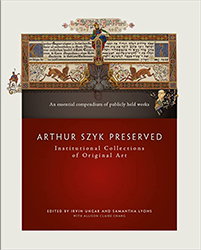
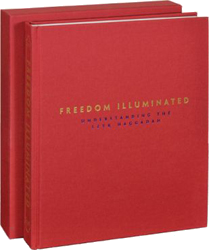
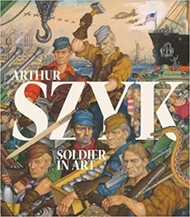
Reviving the Artist Who Fought Hitler: My Life with Arthur Szyk is Ungar’s memoir of his decades-long dedication to restoring Szyk’s place in political and artistic history. He recounts the groundwork behind the major exhibits he has originated or curated in museums and other institutions in Europe and the United States, the numerous essays he has published, and the many lectures he has given to reintroduce Szyk. In 1994, the Israeli artist David Moss suggested Ungar undertake publication of Szyk’s Hagaddah based on reproduction of the original art. Although far from Ungar’s intentions, the suggestion lingered. After years of complex negotiations and production problems, in 2008 Ungar published deluxe and premier facsimile editions of Szyk’s Hagaddah, followed by a trade edition in 2009.
Ungar’s connection with Szyk is also personal. His long friendship with Szyk’s daughter and other devoted and knowledgeable collectors has brought him into a world he would never had known as a rabbi. With Ungar as a guide, the reader also learns some of the ins and outs of art collecting.
Maron L. Waxman, retired editorial director, special projects, at the American Museum of Natural History, was also an editorial director at HarperCollins and Book-of-the-Month Club.