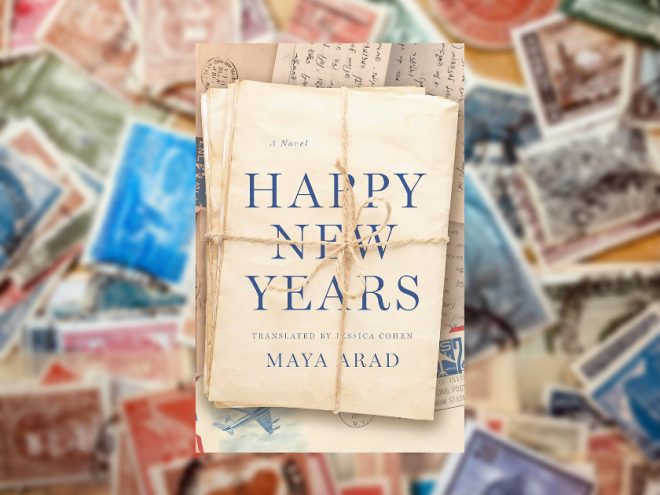
In the evocative and transporting new edition of The Diamond Setter, masterfully translated by Jessica Cohen, Israeli author Moshe Sakal illuminates a lost world where Jews, Muslims, and Christians travel throughout the Middle East with little restriction. Much of this novel, like the first edition of The Diamond Setter, moves between present-day Israel and a nostalgic look back at a time when these lands were under Ottoman rule and the British Mandate. Here relationships between Jewish and Muslim families flourish even while there is increasing unrest between Arabs and Jews in the streets of Palestine. From Cairo to Jaffa, Jaffa to Damascus, Damascus to Beirut, and back to Palestine/Israel, Sakal creates a landscape where physical and sociocultural borders are erased. The result is a freedom we can only dream of today.
In 2018, Other Press published the first English edition of The Diamond Setter, a sprawling intergenerational and intercultural family saga about the Muslim Jabbali family living in Jaffa, Palestine; and the Jewish Solomon family whose lives begin in Haret el-Yahud, the Jewish quarter in Damascus, Syria and end in Tel Aviv after the establishment of the state of Israel in 1948. The two families are deeply connected and both experience exile from their homeland. Their secrets are intertwined with the Sabakh, the blue diamond at the heart of both novels, whose provenance is as fantastical and peripatetic as the tales in The Arabian Nights. Sakal references this work in both editions and utilizes its story-within-a-story framework. In The Arabian Nights, the narrator, Scheherazade survives each day by telling stories. Sakal reiterates the idea that storytelling is an act of survival. The role of the storyteller is to bear witness. They are the repository of memory and the harbingers of possibility and change.
Both editions of The Diamond Setter begin with Fareed, a young Syrian Palestinian man who sneaks across the border into Israel in 2011 amid the chaos of the Arab Spring protests. He is the scion of the Jabbali family. In the preface of the new edition, Sakal writes that Fareed, “with a few steps that seem to erase that border as if it had never existed, reaches Jaffa.” The idea of a Middle East without borders is breathtaking and suggests a freedom and departure from enmity and hostility. Fareed undertakes what is essentially a hero’s journey. He is in search of his roots, of his grandparents’ home in Jaffa, and determined to right a wrong. In his pocket is the legendary Sabakh diamond.
In the first edition, Fareed’s story quickly gives way to Menashe Solomon’s narrative. Menashe is a jeweler in Tel Aviv who hires his nephew, Tom, a writer and the narrator of both novels, to be an apprentice in his shop. That storyline is followed by the overlapping tales of the Jabbali and Solomon families’ past, which lead us to the present day and the mystery of the Sabakh diamond,which was given toMenashe’s aunt, Gracia — a once famous Syrian Jewish chanteuse — by Abdul Hamid II, sultan of the Ottoman Empire. Tom reveals this information in the story’s narrative and in the novel he is writing about Tel Aviv – Jaffa, a diamond, a jeweler, and a young Syrian man who crosses the border. The metafictional blurring of narrative lines reverberates through both editions and reflects the overarching theme of blurred borders and the once shared cultures and language between Arabs and Jews in the Middle East.
In the new edition, revised after October 7th, Fareed’s narrative becomes the focal point. He experiences Tel Aviv – Jaffa during its own “spring” when Israelis held demonstrations in protest to the high cost of living. Although Fareed is embraced by the activists he meets and Jaffa’s Arab and Jewish gay community, he feels like a stranger, “stepping into an old memory — one that wasn’t his but wasn’t entirely foreign to him either.” His return to his ancestral home fills him with doubt and he wonders whether anyone can ever really return home.
Like the Sabakh diamond, Sakal’s new edition of The Diamond Setter is forged in compression. The tightly woven narrative brings the novel into stunning focus, and crystalizes the immense loss the Jabbali and Solomon families experience. Today’s Mizrahi and Palestinian narratives are refracted through this same prism of loss. Early on in the novel Fareed is told, “From the moment a diamond surfaces, […] nothing in the world can push it back underground.” The Diamond Setter has surfaced and its vision of the past shines a light on what is possible in the future.
This is a joint review for the 2018 and 2026 editions of The Diamond Setter.
Zeeva Bukai is the author of the novels, The Anatomy of Exile, winner of the National Jewish Book Award for Debut Fiction, and The World Between. Her work has appeared in numerous journals and anthologies. Her honors include fellowships at the Center for Fiction and Hedgebrook. She holds an MFA from Brooklyn College and lives with her family in Brooklyn, NY.