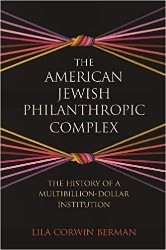
The oft-cited 1790 letter from George Washington to the Jewish community of Newport that pledges that the United States “give to bigotry no sanction, to persecution no assistance” also notes that “they who live under its protection should demean themselves as good citizens in giving it on all occasions their effectual support.” As Lila Corwin Berman argues in Who is American? Belonging and the Question of Jewish Citizenship, in that latter bit lies the rub. That is to say, the question of in what way Jews were recognized as citizens in the United States is not as straightforward as is often presumed.
After all, as she traces, the “good citizens” Washington had in mind were white men, of European descent. It took the US decades more to recognize the rights of Black Americans. When Asian individuals sought American citizenship, it raised the question of whether Jews could be categorized under that category, as opposed to conventional European whites. As Berman elaborates, the question of Jewish belonging in America extended beyond questions of skin color and race. After all, as has long been debated, is Judaism an ethnicity, a religion or a nationality? When legal arguments are made for protecting Jewish civil liberties, which category is utilized?
The rise of Zionism brought particular focus on nationality, as it wasn’t until the late 1960s that US citizens could also legally possess passports from another country. Thus, figures like Judge Louis Brandeis and American Jewish communal groups like the AJC and ADL had to navigate accusations against jewish Americans of dual loyalty when being a dual citizen wasn’t allowed. In 1950, Israel’s first Prime Minister, David Ben Gurion, under pressure, stated that Jewish Americans’ loyalty should be to the US not to Israel (Israel’s law of return, offering citizenship to any Jews who wanted it, had concerned those wary of forcing to pick sides). In fact, one reason why dual citizenship was eventually allowed was because of a case that resulted after the US government had attempted to revoke the citizenship of Beys Afroyim, a Jewish man born in Poland, because he had cast a vote in an Israeli election.
Furthermore, the fact that Jews have long had to negotiate the enforcement of laws protecting the Christian Sunday observance also complicated the presumption that Jews are accepted in America as “good citizens” just like Christians. More recently, legal debate has arisen over using Title VI of the Civil Rights Act of 1964, which prohibits discrimination on the basis of race, color, or national origin in programs receiving federal funds in the context of anti-Israel college encampments.
As Berman amply demonstrates, while the US has been unique in offering its Jewish citizens acceptance compared to other countries, the path towards protecting the rights of those citizens has not lacked problems, complications, and ongoing debates, within and beyond the American Jewish community.
Dr. Stu Halpern is Senior Advisor to the Provost of Yeshiva University. He has edited or coedited 17 books, including Torah and Western Thought: Intellectual Portraits of Orthodoxy and Modernity and Books of the People: Revisiting Classic Works of Jewish Thought, and has lectured in synagogues, Hillels and adult Jewish educational settings across the U.S.