Join a community of readers who are committed to Jewish stories
Sign up for JBC’s Nu Reads, a curated selection of Jewish books delivered straight to your door!
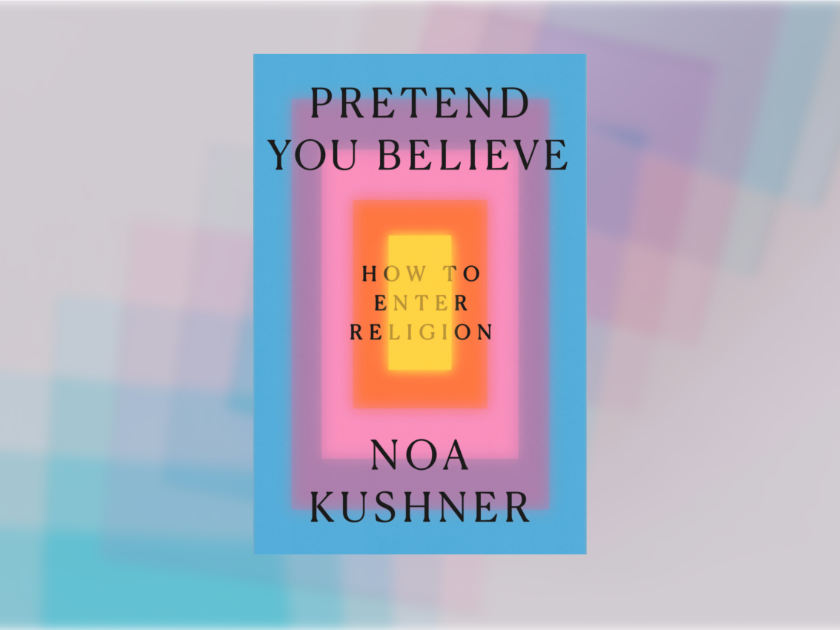
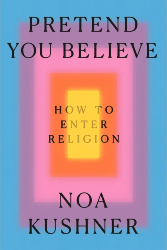
In the past several years, it became clear to me that The Kitchen was the living version of a few underlying ideas. Eventually, I wanted to be able to articulate those ideas more fully to myself and to others.
When I was younger, I learned from many towering theologians, religious geniuses in their own right. Well, to be more honest, in most cases, I learned from their books, reading them many times over. Each one described a system of religious thought: an understanding of our relationship with each other, the world, law, ritual, suffering, Torah, feminism, power, Israel, the diaspora, time, God, more. In their words, and in their company, I felt at home.
Many of these books still carry more than their weight in ideas, ideas I have drawn from in this book. But in recent years, I noticed fewer offerings for those who were simply curious, not necessarily about a particular flavor or subset of religious thought, but about the totality and meaning of religious thought altogether — a way to approach the whole thing. And so, I wanted to add my efforts to those that already exist, to offer just this kind of book, for our time.
I hope to bring a few ideas, once widely known and discussed, but increasingly forgotten, back into circulation. I believe our moment is ripe to reclaim some religious ideas, to see how they look, or, more accurately, to experience how they help us see.
There are already books that argue about whether or not there’s a God, but this is not one of those books. There are books that tell readers how to do religious things, but that’s kind of like having a recipe book when you don’t know that you’re hungry, or that eating keeps you alive. In this book I’m going to make the case that religion is as fundamental and transformational as eating.
______
Who is this book for?
Let me offer an illustration, one from Torah: Yitro was the father-in-law of Moses. He arrives on the scene after the Israelites have left slavery in Egypt, showing up when we’re in the middle of the wilderness, in the middle of nowhere.
Yitro is not an Israelite in any way. The rabbis say he actually worked for Pharaoh in the palace. But Yitro shows up because he hears a story that compels him to drop everything and to come out and find the Israelites in the wilderness.
What does Yitro hear? Well, from a quick read, it seems pretty obvious: After all, Israel has just escaped from slavery, crossing through the sea on dry land, a full-scale set of miracles if there ever was one. But, as usual, the rabbis complicate the matter, deciding that Yitro could have heard any number of stories. Maybe, says one rabbi, Yitro heard about the plagues. Another rabbi says Yitro heard about Israel’s unlikely liberation. Still a third suggests Yitro heard about the greatness of God, and so on.
We’ll never know what Yitro heard. All we know is that it was life-changing. It didn’t matter that Yitro wasn’t there himself when whatever it was that happened originally happened. He leaves his old life completely behind, running out into the middle of the desert to catch up on all he missed, ready to help, without plans to return.
In my mind, I wrote this book for anyone who sees themselves in Yitro. That is, you could be Jewish from head to toe, genetically and through your lineage, you could be quite literate and the rest of it, but if you’re not willing to drop anything in your current life, to change any of your views, to come and see what this is about, I don’t think you need this book, at least not now. On the other hand, if you are not Jewish at all, or you were born Jewish but do not know what that means, or you are conflicted about being Jewish, or religious, or you are thinking about becoming Jewish, or more religious, or you are married to someone Jewish, or hope to get married to someone Jewish, or maybe you are raising Jewish children, and you heard a story, something is compelling you to come out into the wilderness? Then, this is for you.
In the end, I believe this religious tradition is all we have,and this community, including you, is who we are. Many have tried getting rid of one or the other to no avail. Instead, I prefer to invite everyone and suggest we do real things.
______
Once, I was trying to go to Shabbat services in Marseille. I was traveling by myself and had sought a friend’s recommendation of where to attend. However, when I arrived at the address I’d been given, I couldn’t find anything that indicated a synagogue anywhere. Trying to look casual in my white dress, I stood in the street scanning the other buildings for any signs of Jewish life. Just as I was starting to think I’d walked really, really far for no reason, I realized there was a church on the same block. I stationed myself in front of the church door. When some people walked out, I pointed to myself and in my pidgin French said, “I am Jewish,” then pointed at the door where I thought the synagogue was supposed to be. I looked at them, shrugging my shoulders in a questioning manner, my hands turned upward. They nodded, yes, yes, this was the Jewish place I was looking for. I knocked on that unmarked door and sure enough, a Shabbat service was just beginning.
It is no small thing for people who love God to be able to help one another. I remain grateful to those churchgoers who guided me that night and to people of faith who have guided me through other kinds of nights. I hope my book can offer the same kind of extended hand, or set of directions, to any other seeker, lost or not. Maybe some of what I’ve worked out on these pages can help illustrate something for you, or for people in your community. I freely use the words religion and God solely from a Jewish context; this is all I know. However, I hope you feel comfortable borrowing or translating any of these images and ideas so that they illuminate your own traditions, with my blessing.
______
This book is also the result of a question a student asked me about twenty years ago. I was teaching an Introduction to Religion class and we were talking about prayer. “But how does prayer work?” she asked me. She wasn’t asking how we might direct a prayer to ensure a long life or access our true selves or get a new car. She wasn’t asking how many prayers to say and when. She wanted to know why we would pray in the first place, how it fit (or not) with other ideas and beliefs.
Many teachers are loath to answer these kinds of questions in the moment, and I understand why. First of all, the wrong response can be reductionist, robbing the tradition of its internal complexity and contradictions. Or a simple answer might discourage, rather than encourage, the curiosity of the student, inadvertently denying the reality of her personal religious experience and trajectory.
Further, even if we could agree on a suitable answer, once pinned down to a series of principles and aims, religion naturally loses some of its aura. Religion points to the very kinds of things that cannot be described, the things that resist definition and explanation. It’s not unlike trying to pin down why a particular love matters. Any answer to this kind of question is bound to be incomplete.
However, my student’s question would not leave me alone, especially as I was asked different versions of it over years of conversations. I found that for some students, leaving things open offered permission, but for others, the lack of an overarching picture only invited confusion, reinforcing their impression of being permanent beginners, or worse, outsiders. They wanted an orientation and I felt they deserved one. More and more, I began to wonder how I could expect a person to move through the tradition, let alone claim ownership of it, or reject it with any honesty, if that person was constantly feeling her way through the dark.
And, to be candid, I also increasingly wanted to know how I myself would answer my student’s question. What would a map look like that not only showed someone how to get in the front door, but also how to find her way around once inside?
I started to wonder what a kind of guidebook would look like for my students and for me.
כ״ו ְּׁבֶֶחְׁׁשָון תשפ״ו
San Francisco, California
Noa Kushner is the founding rabbi of The Kitchen, a synagogue and institute in San Francisco whose approach to religion has become a model for communities worldwide. Devoted to religious access for all and committed to the beauty and depth of the tradition, The Kitchen is widely regarded as a way forward for Jewish and religious life today. Called a “measure of hope” in Haaretz and a “rabbi to watch” in Newsweek, Kushner has translated religious experiences and ideas for tens of thousands across the United States, Israel, and Paris. She is married to Rabbi Michael Lezak, and together they have three grown daughters, Zella, Bluma, and Minna.