Join a community of readers who are committed to Jewish stories
Sign up for JBC’s Nu Reads, a curated selection of Jewish books delivered straight to your door!
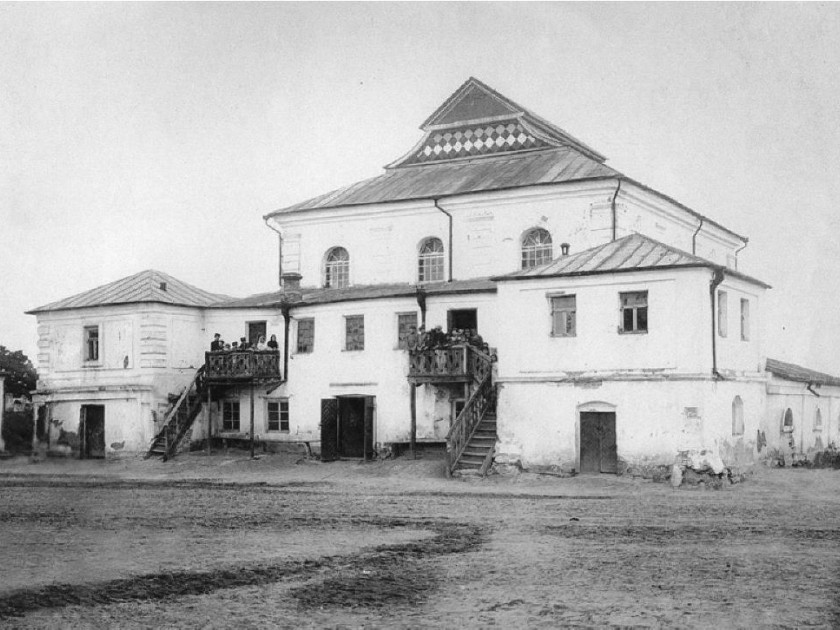
Former synagogue in Pavoloch in 1912, Photo by S. Yudovin, St. Petersburg Center for Jewish Studies, An-sky Collection, via WikiMedia Commons
After our mother died, my brothers and I sifted through boxes of old bills, knitting patterns, and report cards; amidst all this ephemera we found fragile handwritten journals, with weathered brown covers and crumbling yellowing pages. These were the diaries of my grandmother, Anna Feldman Gomberg, written in Yiddish and Russian from 1905 to 1918. My mother had saved them, untranslated.
We were anxious to know what was in these precious pages, but none of us knew Yiddish. My father could read Yiddish but was not able to decipher these diaries. Anna was not well-educated and most of her writing was in pencil and had faded badly with age. My brother Mitch, a klezmer clarinetist, found excellent translators who were able to decipher the handwriting and render her thoughts in English.
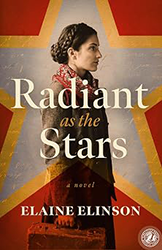
And it was from these absorbing pages that my new novel, Radiant as the Stars, was born.
Anna was born in 1889 and grew up in Pavolitch, a shtetl 100 kilometers southwest of Kyiv. She immigrated in 1905 with her mother and two younger siblings to Chicago, where she toiled in a garment sweatshop and learned English at Hull House. The diaries opened up her world to us, yet not without — occasionally amusing — obstacles. For example, sometimes Anna would write a Russian word in the Yiddish alphabet, which stymied the translators. I had studied Russian, so if they transliterated the Yiddish, I could look up the Russian word.
It was rewarding to hear her poetic, often melancholy, and ultimately bold voice.
My background is in journalism, but I didn’t think I could write Anna’s unique history as nonfiction. I pondered how to bring her story to the page.
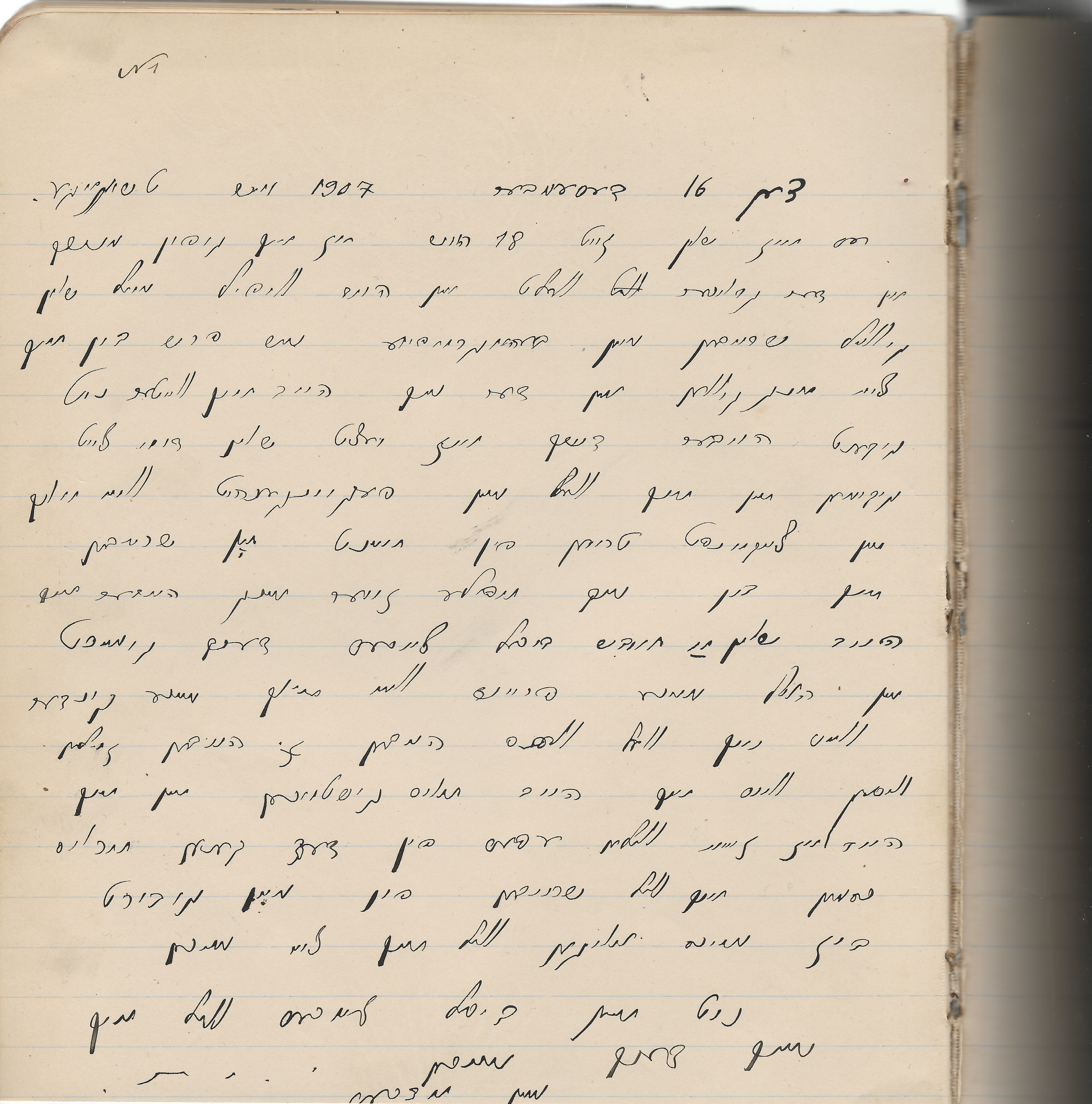
A page from Anna’s diary.
Most of the diaries — like diaries of many young women – described her internal feelings: her anger at her parents for not allowing her to go to school, her deep friendships with her coworker, her dismay when the boy she loved left her for someone else. In 300 pages, there was not much factual context that might inform a work of nonfiction about her life. I wondered, how much did she earn in a week? How long was the train journey from Chicago to New York to catch the ship back to Europe? How many Jews were in Pavolitch when she returned?
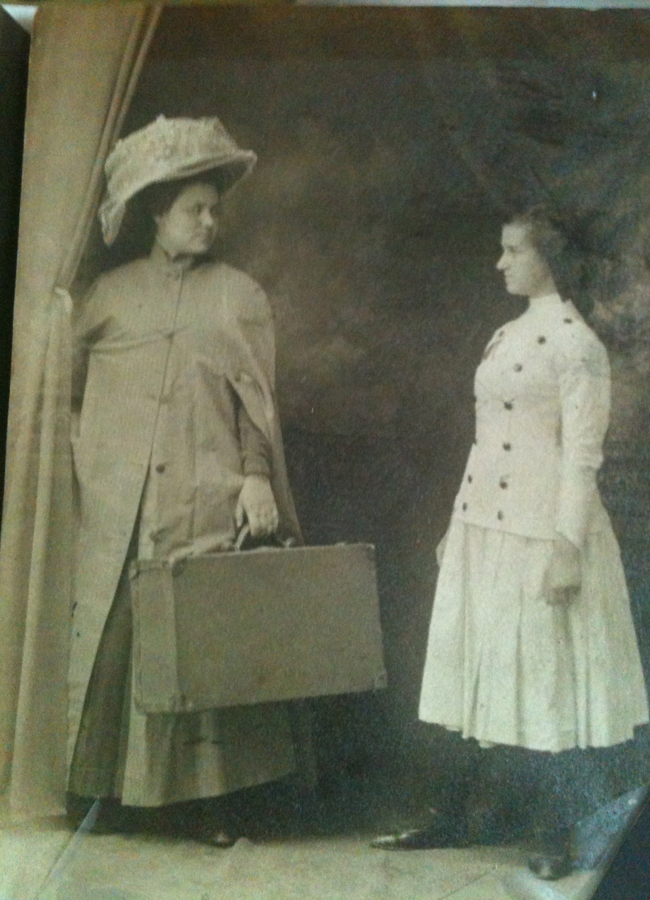
The author’s grandmother posing in a photo studio in Chicago before she returnsto Russia, saying goodbye to her younger sister.
After receiving a letter from her politically active cousin back in Pavolitch, Anna wrote that she resented being bent over a sewing machine, when she “wanted to write poetry and do something for her country,” which was in the throes of revolution. Anna did go back to Russia in 1911, by herself, at age twenty, but the diaries don’t reveal a lot about the time she spent there, perhaps because much of it was spent in clandestine activities. In Pavolitch, she writes about her grandmother cooking gefilte fish, reunions with her relatives, and walks through the fragrant apple orchard. But she doesn’t describe any of her work in the revolution.
Trying to understand that part of her life led me to the Yiddish Book Center. Its display of the photos and writings of S. An-sky gave me a visual sense of the shtetl life that Anna would have known in Pavolitch. Browsing the shelves, I discovered a bilingual pictorial history of The Jewish Labor Bund by J.S. Hertz, complete with photos of female Bund members in meetings and in prison! I was seeing my grandmother’s contemporaries: their dress, their hairstyles, their confidence in the future.
My grandmother’s story deeply informs my novel. It is a mosaic of gritty, quotidian reality, and the fervent hopefulness of a revolutionary time. Melding her time in the US and her revolutionary work in fiction was a challenge and exhilarating.
Anna returned to Chicago and remained political, at least in her heart. When I worked with the United Farm Workers, she told me she was proud to be a “redical” and proud that her grandchildren were “redical.” She moved to a retirement hotel in Miami Beach, and was thrilled to inform me that she sheltered antiwar demonstrators from the Republican National Convention in 1972 who were running from the police.
Well into her eighties, Anna was known for sitting on the sunporch with her friends reading the socialist newspaper The Forward.
I hope that Radiant as the Stars captures the zest and passion that my grandmother’s diaries and her lived experiences imbued in me.
Elaine Elinson’s historical novel Radiant as the Stars, inspired by her grandmother’s diaries, will be published in August by Sibylline Press.