Join a community of readers who are committed to Jewish stories
Sign up for JBC’s Nu Reads, a curated selection of Jewish books delivered straight to your door!
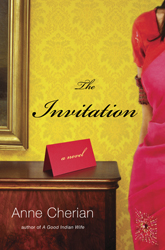
 where once I had thought it was charming doggerel, I discovered its general truth when I was writing my novel, The Invitation. I had the entire plot in my head, and knew my four characters, but had no idea what names to give them. I was so desperate that I even Googled common Indian names, only to stare at hundreds and hundreds of names – in a country of billion, what did I expect?
  All that remained were the two girls. One, I had always known, would be from Kerala, my father’s homeland. Most people from there have a baptismal name reserved for school, and a ‘pet’ name used by family and close friends. Lali goes against tradition by using her pet name alone; indeed, her baptismal name never appears in the novel. Such a character, I thought, would continue to be rebellious, and so it makes sense that Lali marries Jonathan, a Jewish doctor. The last character is based on girls I knew who came from Goa, all Catholics, of Portuguese descent – except that my character isn’t rich. Some people, like her, try to off-set poverty by using anything to make themselves look good, and she even uses how she was named. When her mother was pregnant with her, her father kept telling everyone that this time, after four girls, he was finally going to have a son and had already picked out Francis, the name of some forefather who may or may not exist, since the family likes to show off their Portuguese ancestry. When she turns out to be another girl, he simply changes the ‘i’ to ‘e’ and so Frances, from her very beginnings, has a story about herself, and as the novel shows, also starts her life being a disappointment and is constantly trying to appear better than she is.