Join a community of readers who are committed to Jewish stories
Sign up for JBC’s Nu Reads, a curated selection of Jewish books delivered straight to your door!
This piece is part of our Witnessing series, which shares pieces from Israeli authors and authors in Israel, as well as the experiences of Jewish writers around the globe in the aftermath of October 7th.
It is critical to understand history not just through the books that will be written later, but also through the first-hand testimonies and real-time accounting of events as they occur. At Jewish Book Council, we understand the value of these written testimonials and of sharing these individual experiences. It’s more important now than ever to give space to these voices and narratives.
The jackals are back.
That’s the good news. It’s day fourteen of this “new,” “renewed,” “continued,” “fill-in-the-expletive,” Iranian War. I woke up at 3 a.m. with the realization that I’d been in bed for more than five hours — horizontal, still tucked tightly under the blankets, surrounded by all my fuzzy housemates. There had been no siren since 9:30 p.m. Outside, the jackals were howling. I sighed, eyes still closed. The sounds that had sent shivers through me every night of February were almost comforting now. These nocturnal creatures were also appreciative of the respite, maybe even anticipating a détente.
For weeks leading up to the war, these unnatural, wild city dwellers, who had moved into the nearby Yarkon Park in Tel Aviv during COVID, had serenaded us in the early hours with their mournful cries. My husband insisted that they were nice animals, but I was concerned; I kept our new puppy close to me during our 5 a.m. walk, just in case. When one boldly ran right down the path near our front door, the three of us froze. This wasn’t any old street cat. Our dogs stood at attention, recognizing a threat.
At the time, the jackals were my biggest fear. Now I realize that they were no more than a “concern;” something that could be managed, even controlled, to some degree. The jackals’ presence hadn’t accelerated my natural heartbeat to a gallop like those ninety-second-second alerts.
With the outbreak of the war, the jackals disappeared. I imagine that they were probably scared off by the lack of night’s natural cover, the skies now bursting in light, deep booms breaking the silence, hordes of people rushing through the streets to seek cover. Their peace and quiet was destroyed, turning their world — like ours — upside down.
We are deep into the war — maybe the same one, maybe a new one. The fog that has settled in my sleep-deprived brain makes assessments fuzzy and uncertain.
It was such a relief to see Tel Aviv shaking off the dust of a two year war, flourishing in its unique, life-embracing manner: the cafes bursting with people, the streets bustling with activity, laughter, and smiles.
Purim was on the horizon, and what a wonderful one it would be. At least, that was the plan. The sober celebrations of the previous two years were finally a thing of the past. It was time to dress up, bask in the sunshine, and embrace the future. It was going to be so much fun.
But that was not to be. Life has become a mad dash at all hours of the day and night. One day, we had seven sirens in Tel Aviv between 7 p.m. and 7 a.m. — we could only lie down long enough to be once again brutally blasted from our slumber. We meet our neighbors again and again in the dimly lit safety of our nearby shelter— faces rent with exhaustion, propped up on plastic chairs hastily delivered the day after the war began, gripping the leashes of our dogs to keep them still. Parents engage their young children with puzzles and coloring books, which were provided by the municipality along with water, cups, and rotating fans in an effort to make this whole experience a little bit easier to bear. Young adults with drinks in hand wander in from local bars that dare to remain open in wartime. Walkers and motorized wheelchairs crowd the elevators. The elderly are forced to stay home and hope it’s not their turn to leave this world.
We nervously glance at our cellphones, check for missile damage updates, question whether or not it is safe to climb the stairs that lead up to street level. We force smiles to indicate that we’re okay, that this is all okay. But of course, it isn’t.
The scenes are far too familiar. Rinse and repeat. How many times have I uttered this phrase in the last two and a half years? We’ve barely had a chance to catch our breath, and now we’re back at square one. But alongside what remains the same — everything we think we know— are the differences that this new war brings. I call my brother, concerned about the ballistic debris falling from cluster bombs. “Isn’t it a war crime to use them?” I ask. “Yes,” he confirms. “But so is targeting citizens.”
There’s no time to brush our teeth, comb our hair, or even put on glasses, because who knows when the next missile will strike? Last summer, a missile flew just over our building with a terrifying, deafening screech before smashing into a building about five blocks away. This time one passes so close by that the impact sends shockwaves strong enough to force the windows and doors of our apartment open. It shatters glass in a wide radius, and destroys a gorgeous Bauhaus building where two of my friends live — a place I’ve attended writing workshops and parties for years.
Despite the dark and threatening clouds that simply refuse to budge from our skies, this is Israel and life — better yet, “living” — somehow goes on. When we return to our apartment after an “all clear,” we let our dogs run wild, living vicariously through their desperate grasp at normalcy. During Purim, the shelters are filled with colorful costumes, dancing, and celebration, adults and children alike refusing to yield to the sobering reality of the world outside. There was a wild party with a DJ on Level Four of the parking lot, and karaoke on Level Three. All that shimmered at this festive time of year was forced deeply into the earth, but refused to be extinguished.
After the initial shock of the first few days of the war, the natural life force of the local population scrambled out of the rubble and into the light. Cafes are full again, restaurants and businesses open. Even though the war rages on, the jackals are back. Their return formalizes the existence of an altered, albeit undesired, reality. Their nightly howls are less frightening to me now — in fact, they almost offer hope. Somehow, the show must go on.
The views and opinions expressed above are those of the author, based on their observations and experiences.
Support the work of Jewish Book Council and become a member today.
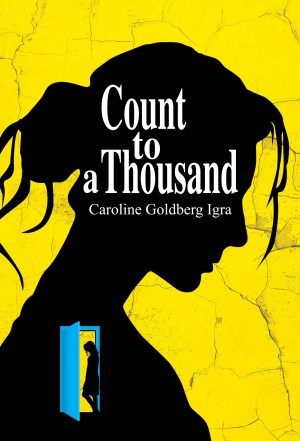
Caroline Goldberg Igra is an author, an art historian, a triathlete, and a mother. A native Philadelphian, she lives in Tel Aviv. She has published nonfiction, art historical articles, and exhibition catalogs. Her monograph on J.D. Kirszenbaum was chosen as one of Slate Magazine’s Best Books. Her first novel, Count to a Thousand, was published in 2018, From Where I Stand, in January 2022. Her latest novel, Pictures of My Desire, was published in October 2025.