Join a community of readers who are committed to Jewish stories
Sign up for JBC’s Nu Reads, a curated selection of Jewish books delivered straight to your door!
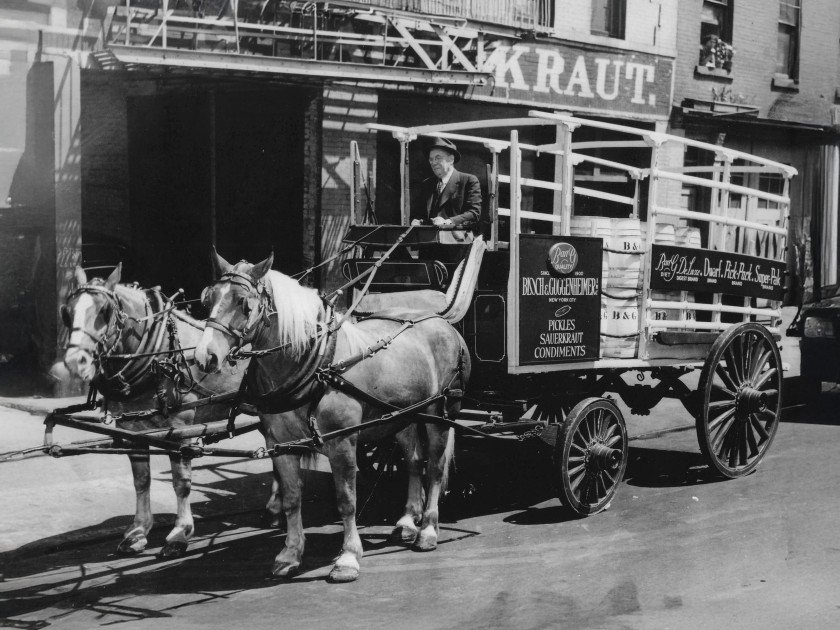
1944 Julius Guggenheimer, 302 – 345 East 103rd Street
Photo courtesy of the publisher
Pickles. A simple word, perhaps, for a humble food. Yet behind it lies a profound story of culture, resilience, and human connection — a story that spans centuries and continents.
The journey of the pickle begins long before modern food culture. The Renaissance provided the technological and scientific foundation for food preservation, while the Enlightenment created the social and economic conditions to make these methods widely accessible. What began as a practical necessity became a symbol of human ingenuity, cultural identity, and connection.
At Mattmo Creative, a communication and design agency rooted in Amsterdam’s historic Jewish neighborhood, we’ve spent decades exploring the idea of “the interconnectedness of things.” This philosophy has guided us as cofounders of Dutch Cuisine, a movement dedicated to preserving and celebrating Dutch food culture. It also led us to an unexpected chapter of Amsterdam’s past: the rich history of the pickle.
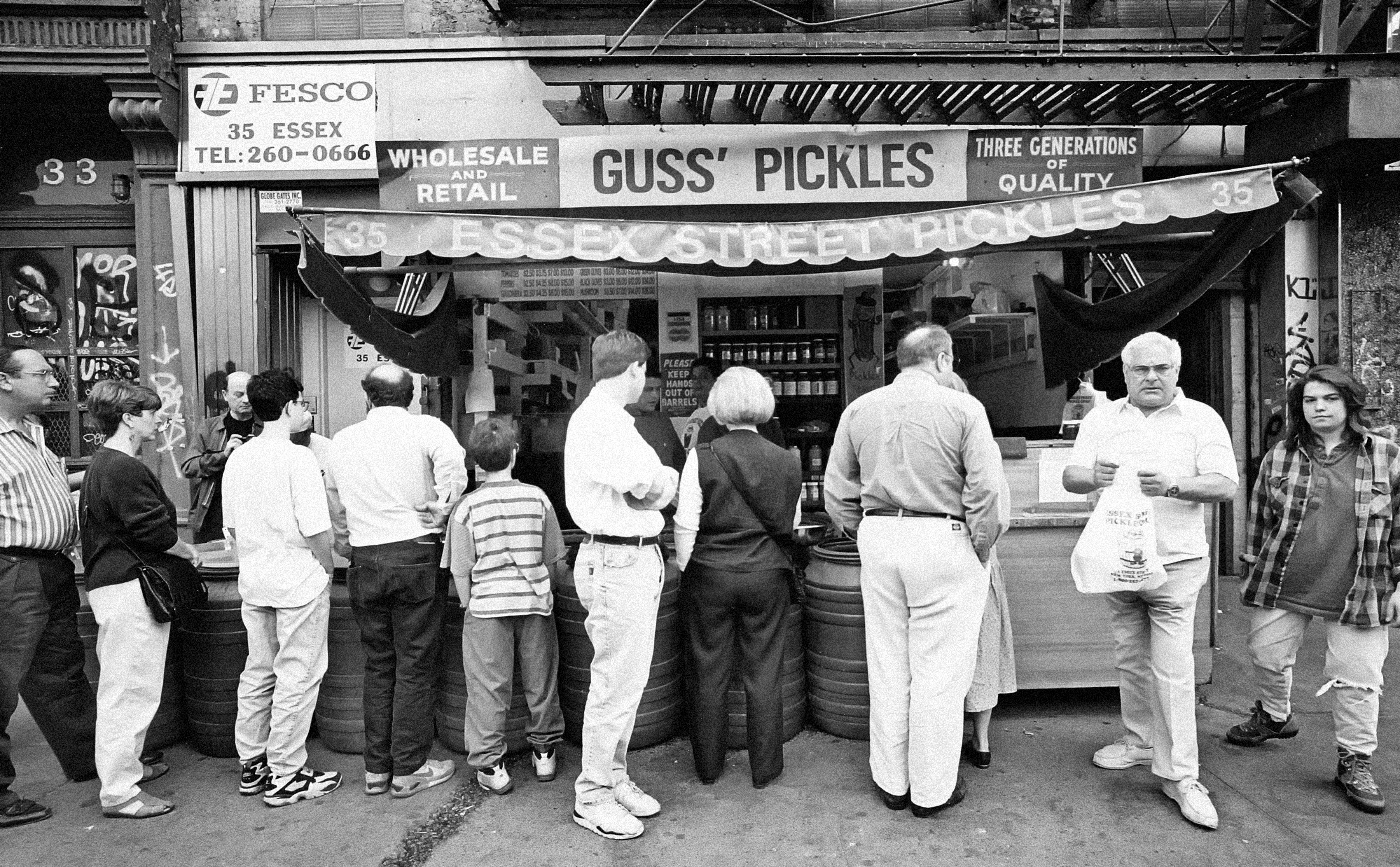
1994 Guss’ Pickles, 35 Essex Street
Photo courtesy of the author
Pickles play a key role in shaping cultural identity.
Before World War II, Amsterdam was home to over five hundred pickle vendors and fifty pickle businesses, many run by Jewish families who immigrated from Eastern Europe. These families brought with them traditional pickling methods, preserving not only cucumbers but their culture and community. As we delved deeper — much like reaching into a tall pickle barrel — we discovered that Amsterdam’s pickle industry wasn’t just a local phenomenon. It was a lens through which to view global trends in migration, resilience, and food culture.
Our research took us across the Atlantic to New York City’s Lower East Side, where Jewish immigrants carried their pickling traditions and transformed them into an integral part of the city’s identity. Their craft became a symbol of immigrant ingenuity, community, and survival. By tracing the pickle’s journey, we unearthed a hidden world of family stories and economic contributions that helped shape New York’s cultural and literal foundations.
To visually reconstruct this world, we pored over archival photographs, municipal records, and family trees. With the precision of investigative storytellers, we mapped the connections between history and culture, showing how something as unassuming as a pickle became a symbol of Jewish identity and resilience. For many families, pickles were not just food — they were a link to their roots and a testament to shared histories.
Our work brought us closer to New York’s pickle families, revealing how these traditions were passed down and adapted over time. Four years ago, we published De Zure Stad (The Sour City), a visual exploration of Amsterdam’s pickle history. It became a bestseller, finding a home in institutions like the Stedelijk Museum and the University of Amsterdam. Yet the story of pickles is also one of loss. Many of Amsterdam’s pickle makers, predominantly Jewish, were murdered in the Holocaust, leaving a void in the city’s cultural landscape that still lingers.
Pickles reflect the contributions of culture, science, and egalitarian ideals to the democratization of food.
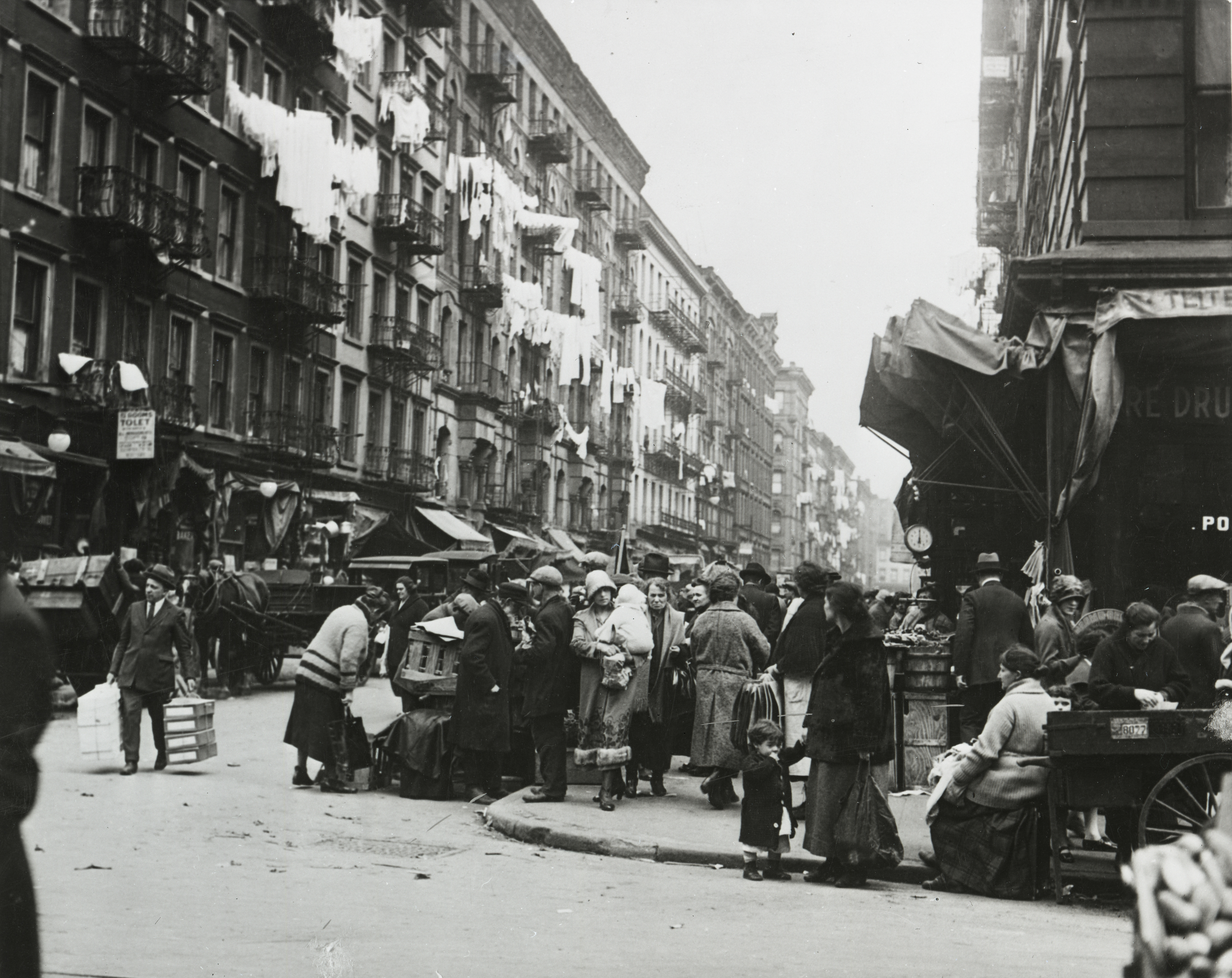
1933 Kaplan’s pickle stand at the corner of 144 Orchard Street
Photo courtesy of the publisher
In New York, the pickle evolved into a broader symbol of the immigrant experience and cultural identity. From small Jewish-owned businesses like Guss’ Pickles to the billion-dollar US pickle industry, the humble cucumber has become a testament to resilience and adaptability. While companies like Vlasic dominate the market, smaller operations like the Pickle Guys remind us of the immigrant roots of this iconic food.
Pickles mirror the evolution of America itself: from colonial necessity to industrial innovation, from cultural tradition to a symbol of a diverse, ever-changing society. Today, New York’s food culture reflects this rich history, blending flavors from Jewish pickles to Korean kimchi — a testament to the city’s spirit of renewal and connection.
Ultimately, the pickle is more than a preserved cucumber. It’s a vessel of memory, a symbol of survival, and a story of shared history. From ancient preservation techniques to its role as a cultural touchstone, the pickle embodies the enduring spirit of innovation and adaptability. It serves as a reminder of how food connects us to history, bridges diverse communities, and preserves the essence of those who came before us.
The history of pickles runs like an invisible thread through the world.
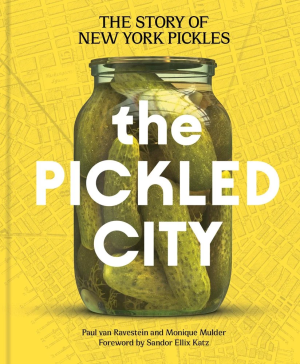
Excerpt from The Pickled City: The Story of New York Pickles by Paul van Ravestein and Monique Mulder, published by Chronicle Books 2026
Paul van Ravestein and Monique Mulder are the principals of Mattmo, a branding agency in Amsterdam specializing in culinary history.
Paul van Ravestein and Monique Mulder are the principals of Mattmo, a branding agency in Amsterdam specializing in culinary history.