Join a community of readers who are committed to Jewish stories
Sign up for JBC’s Nu Reads, a curated selection of Jewish books delivered straight to your door!
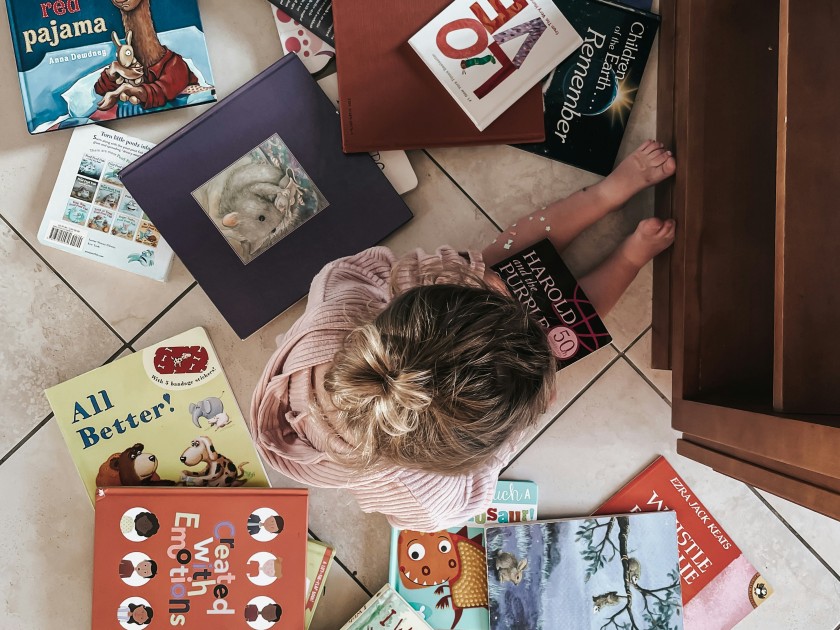
Photo by Derick McKinney on Unsplash
Since the summer I was nineteen years old and interned at Philomel Books, I’ve worked on picture books. I’ve typed up hand-written manuscripts, I’ve packed up art to ship back to the artist, I’ve sat with double-sided tape and an x‑acto knife to make book dummies, and I’ve edited books. Recently, I tried to count all the books I’ve worked on , and while I never kept a definitive list (Tip for anyone who’s just started working in publishing — keep a list!), I estimate that I’ve edited or assisted a boss in editing approximately two hundred and fifty picture books over the past two and a half decades.
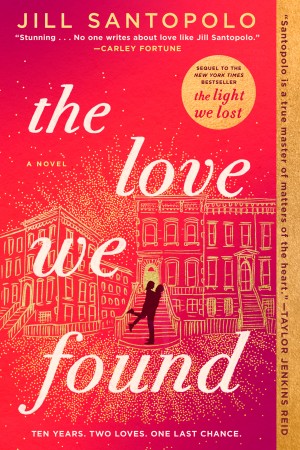
But when I went to write books, the stories that came into my brain were novels. I started out as an author writing chapter books for children, but for the past decade I’ve been firmly focused on writing longer novels for adults. That is, until a few years ago, when the first line of a picture book popped into my head. I wasn’t expecting it, and was actually in the midst of writing a chapter in The Love We Found (published in 2025), my fifth novel for adults, when it happened.
It was the summer, and my then two-and-a-half-year-old daughter was sitting in her highchair, ready for breakfast. Along with her standard one-egg omelet, I asked her what fruit she wanted for breakfast. I offered a banana, blueberries, or strawberries. She modified that request and asked for a blue banana.
“We don’t have blue bananas,” I told her. “We have yellow, a little bit green, and a little bit brown.”
“That’s okay,” she said to me. “We can go to the store.”
“The store doesn’t have blue bananas either,” I explained.
“So you can grow one,” she told me, with the beautiful logic of a toddler.
“I can’t grow a blue banana,” I informed her. “They don’t come in that blue.* If you want blue fruit, how about blueberries?”
She reluctantly agreed and moved on with her breakfast, but I couldn’t stop thinking about that interaction. It made me think about all the things my daughter asked me for that I couldn’t provide. Especially as a two-and-a-half-year-old, it was a lot. Can you make my hair look like cat ears? Can we eat dinner tonight with Grammy (who lives a two-hour plane flight away)? Can I come with you on the train to work? Can you sleep holding my hand for the whole night? Can we get a pet and can it be a penguin? I thought about all the times I had to say “no” for reasons that were valid to me, but that likely seemed incomprehensible to her, and how disappointing I must be on a regular basis.
In The Love We Found, there is a character, Eva, who is a children’s book author and illustrator. The chapter I was working on the day of the blue banana incident included her — in fact, it was one where she and Lucy talk about a book that Eva wrote, one I had to invent. And I realized that perhaps the banana incident would be a great beginning to a story that the fictional Eva wrote. So I non-fictionally wrote the first couplet: “I can’t grow a blue banana, I can’t stretch like a giraffe. I can’t hear an earthworm’s whisper, or make a spider laugh.”And then I wrote the last: “But, my darling, here is something that always will be true: No matter what, I’ll find a way to show my love for you.”
I thought I’d gotten the banana incident out of my system…but I was wrong. Instead of working on the rest of the chapter that day, I ended up drafting the manuscript for the entire picture book and sending it to my agent.
Leviticus tells us to love not only our neighbors, but strangers as well. I hope that this book will help to plant that idea in her heart.
I write novels about love and loss because I want people to feel less alone in their experiences, to know that there are others in the world who feel the way they do, who have gone through the same difficulties they have and came out on the other side. And I want people who have had different experiences to understand what others may be going through. When I wrote this picture book, I was thinking about something similar. I wanted it to reassure kids that no matter whether their parents can fulfill their requests or not, it doesn’t change how much and how deeply they are loved. And I wanted to give them a sneak peek into their parents’ minds and hearts, to see things, for a brief moment, from their parents’ perspectives.
In this book I have very consciously uncoupled “perfection” and “love.” As people living in a world with deep divisions and fault lines, where family and friends may have different beliefs and core values than we do, it is important to me for my daughter to know both that the people we love will not always be perfect in our eyes, and that imperfect people are still deserving of love and understanding. Leviticus tells us to love not only our neighbors, but strangers as well. I hope that this book will help to plant that idea in her heart.
Last week, when my daughter, now almost five and a half, asked, again, for something I couldn’t provide, I added “and I can’t grow a striped* banana” to my “I can’t.” Instead of being upset, she laughed and said, “you’ll always show me you love me, right Mom?”
“Right,” I told her.
And writing this picture book, my very first, is one of the ways I’ve showed her.
*My daughter did indeed ask for a blue banana, but my book is called Can You Grow a Striped Banana? because my incredibly brilliant editor shared with me that there are, actually, blue bananas in the world, mostly grown in Southeast Asia. So we changed “blue” to “striped” in the finished book.
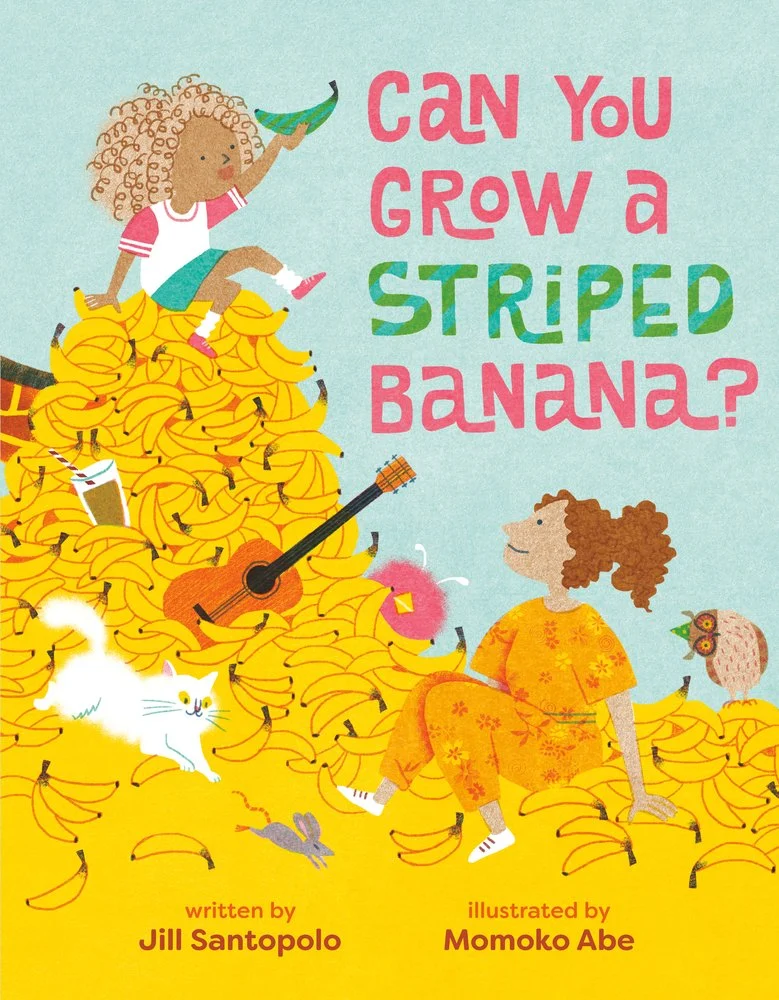
Can You Grow a Striped Banana? by Jill Santopolo, illustrated by Momoko Abe
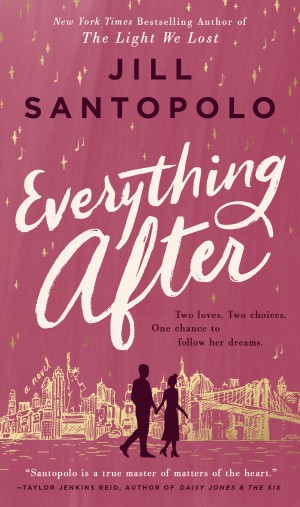
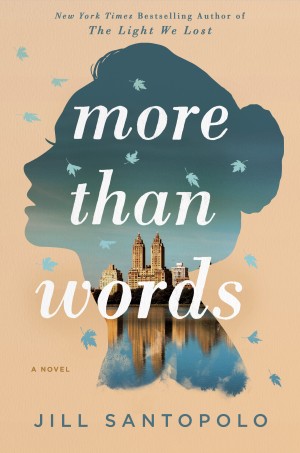
Jill Santopolo is the New York Times and internationally bestselling author of Stars in an Italian Sky, More Than Words, Everything After, and The Light We Lost, which was also a Reese’s Book Club pick. Her work has been translated into more than thirty-five languages and has appeared on the New York Times, Wall Street Journal, USA Today, Apple, Amazon, and Indiebound bestseller lists. She received a BA from Columbia University and an MFA from the Vermont College of Fine Arts. She is also the author of three successful children’s and young-adult series and works as the publisher of Philomel Books. Santopolo travels the world to speak about writing and storytelling. She lives in New York City with her family.