Join a community of readers who are committed to Jewish stories
Sign up for JBC’s Nu Reads, a curated selection of Jewish books delivered straight to your door!
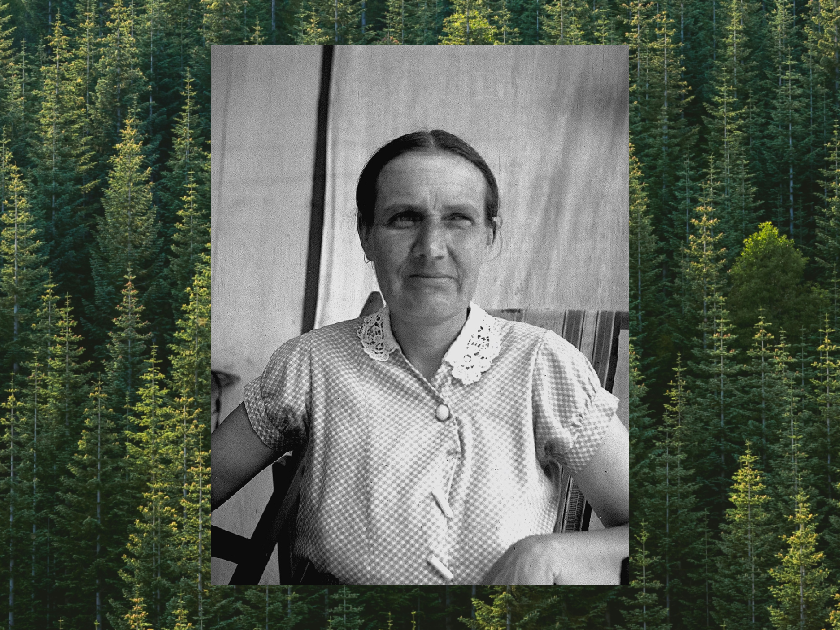
Photo of Elisheva Bukhovsky by Zoltan Kluger, 1936, National Photo Collection of Israel
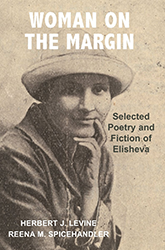
We have been a translation team for the last dozen years, bringing works of Hebrew to English-reading audiences. We’ve translated and published stories by Nobel Prize winner Shmuel Yosef Agnon and by one of the founders of modern Yiddish and Hebrew literature, Mendele the Book Seller (S. Y. Abramovitch). After working to illuminate classic pieces by these Jewish male authors, we sought out a female writer to bring into our current moment. We found a fascinating figure in Elisheva Bukhovsky, a woman who immigrated with her family to the Yishuv from Russia and published in the 1920’s under her Hebrew first name. Elisheva was the first female to write a novel in modern Hebrew.In her poetry we found a musical, fluid, modern Hebrew governed by the Sephardi pronunciation. In her stories, we found her grappling with multi-culturalism during a time we may not associate with this topic.
Elisheva was a Jew by choice. Though she never actually converted in a religious ceremony, she considered herself one of the new Hebrews, and a member of the Jewish people; she married a Jewish man, wrote primarily in Hebrew, and even made Aliyah to Palestine in 1925 as a young adult with her husband and child.
Her poems and short stories bring a former outsider’s freshness and enthusiasm to many Jewish images and events. Pine trees in Russian became candelabras in the Holy Land, crystalline stars twinkle like candles sending out a Sabbath kiss, a medieval knight guards the gates of Jerusalem.
Elisheva was an outsider throughout her life. In Russia she was raised in an English-speaking, Protestant family. In Palestine, she was accepted by the literary community yet viewed by many as other. Most of her literary output was in modern Hebrew, the primary language of a select few at the time, and in Elisheva’s case her fourth language. In the literary world, she was an outlier as a woman in a largely male cohort.
In her heyday, Elisheva was called by contemporary critics a Ruth from the Volga.
In all these ways, Elisheva’s point of view was that of someone who always felt and saw herself on the margin, so we have entitled our book Elisheva: Woman on the Margin.
This outsider perspective is not limited to literary symbols. In her short stories Elisheva examines the relationships between Jews and non-Jews from multiple angles. One story tells of a non-Jewish woman in love with a Jewish man; another of a non-Jewish man in love with a Jewish woman; another describes a Jewish woman’s relationship to her non-Jewish colleagues, as well as her close friendship with a non-Jewish woman. The novel, Byways, which we have excerpted in this work and pared down into a compelling novella, tells of the attraction of a Jewish writer and a non-Jewish poetess for one another — an attraction that neither one feels free to act upon.
Finally, Elisheva uses her insight as a woman to convey experiences not typically being told by her male literary counterparts, such as descriptions of gowns, and what they represent for the wearer, snippets of women’s gossip, and an exploration of the inner lives of women trapped in their often-difficult circumstances.
In her heyday, Elisheva was called by contemporary critics a Ruth from the Volga. Ninety years after she was last translated into English, she is now ready to be met again by the Jewish people who once claimed her. We invite you to engage in your own voyage to discover a too-long forgotten modern Hebrew innovator.
Herbert Levine, Ph. D., is the author of two volumes of bi-lingual poetry Words for Blessing the World and An Added Soul: Poems for a New Old Religion. Most recently, he has published Blessed Are You Wondrous Universe, A Siddur for Seekers.