When sixteen-year-old music student Anita Lasker was deported from Berlin to Auschwitz in December 1943, she, like thousands of others, was stripped bare, tattooed, had her head shaved by prisoners, and was shoved into the Quarantine Block. But she didn’t stay there long. When Alma Rose, the formidable leader of the Lager Orkestra, discovered that Anita played the cello, she asked the SS officer to bring her to the Music Block for an audition. Anita played the slow movement of the Boccherini Concerto and was immediately placed in the orchestra. She was the only cellist in the camp and Alma was thrilled to have a bass line.
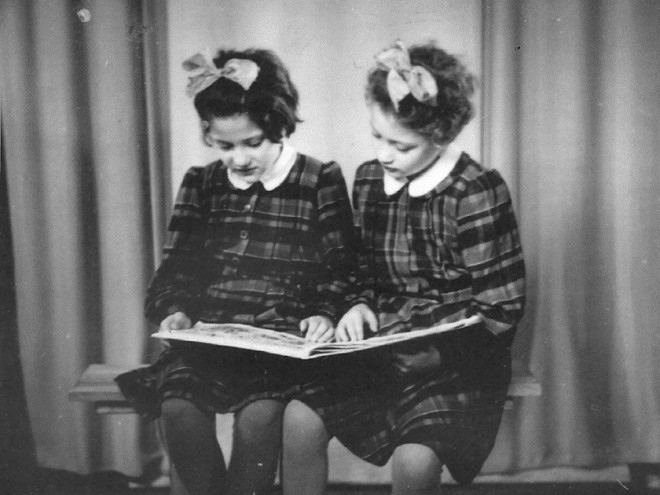
The primary function of the Lager Orkestra, comprised of both Jews and non-Jews, was to play every morning at the Main Gate for the prisoners who were being sent to worksites outside the camp. But that was not its only function. As Anita quickly realized, their conductor also used the orchestra to save as many people as possible. Anyone who was able to hold an instrument could join. Prisoners who didn’t know how to play were brought in as music copyists. That is how Anita saved her sister Renata, who had been ill and starving in the disease-ridden Quarantine Block.
Outside their little musical world, the gas chamber was used nonstop. Alma Rose used the music to focus the prisoners’ attention “away from the smoking chimneys and profound misery … to an F which should have been an F#.” The orchestra also played concerts, especially when high officials came to the camp. Anita played Schumann’s “Traumerei” for Dr. Mengele.
Lasker-Wallfisch’s writing is fluid and vivid, so her horrific journey is easy to visualize and even easier to feel in your gut. Her extensive inclusion of primary sources gives depth to the memoir. For example, when her parents were deported in 1942, the Germans forced her father to write a sixteen-page “Declaration of Possessions,” documenting everything they left behind in the apartment from spoons to a piano. It is chilling to see the detailed hand-written list of the possessions they had to abandon.
After liberation, Anita and her sister stayed on in Belsen and served as interpreters for the British Army. “I must have been the first interpreter who couldn’t speak the language I was supposed to interpret.” She found this “doubly funny … because I had to type up the reports and I really couldn’t type either!” One of the most moving sections of the book contains the letters that she and Renata wrote after liberation to their sister Marianne, who was able to escape to London before the deportation. Interspersed between desperate pleas for help in getting visas to England, and requests for items like cello strings and sheet music, the young women rekindle warm family memories and trade intimate secrets. A miracle for sisters who thought they would never see each other again.
Elaine Elinson’s historical novel Radiant as the Stars, inspired by her grandmother’s diaries, will be published in August by Sibylline Press.