There is no shortage of stress-management practices out there: meditation, spending time in nature, mindfulness, seeing friends, to name just a few. There is, however, one common denominator in all of the advice given: do a practice consistently to reap its fullest benefits.
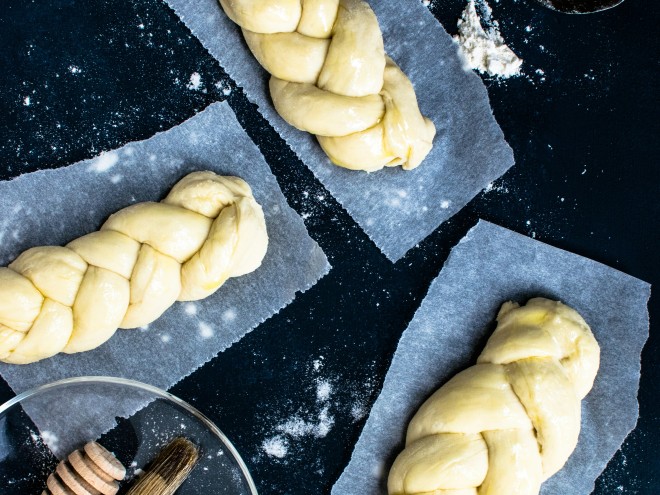
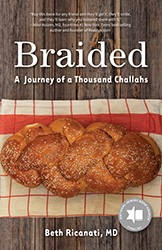
Such is the premise of Dr. Beth Ricanati’s second installment in her baking-challah-as-wellness-practice series. Whereas her first book, Braided: A Journey of a Thousand Challahs, shares her story of reclaiming a sense of inner peace through the ancient ritual of baking challah, this book dives deeper into the methods that are “baked in” to the ritual — seven practices that anyone can implement to manage stress and find connection.
In the introduction, Ricanati shares how, thousands of challahs later, this journey has brought her “solace and a sense of peace,” pointing out that it’s not just the ritual of baking, but also the act of kindness when you share the ritual, that is soothing to the soul.
Chapter one offers backstory: Ricanati gives readers a brief glimpse into her life before and after she took on the weekly ritual that then grew into a worldwide movement. By Chapter 2, she is digging into the science. Addressing naysayers first, she acknowledges that some might argue baking challah is a chore — just one more thing we “should” do, on our already too-long-list of “shoulds.” But on the heels of this acknowledgement, Ricanati emphasizes that it’s precisely the repetitive act of baking challah each week — the ritual aspect — that is essential to our mental health. We need rituals, for they ground us — something especially important during this long and traumatic period of instability in our world. “I only had to show up at my kitchen counter each week,” Ricanati writes, “… [and] my stress lessened. I was more present and subsequently this quality was spilling over into the rest of my life.”
Ricanati then explores each of the seven practices that comprise “the braided prescription”: act with intention; stop and breathe; embrace Imperfection (very important for anyone who has ever tried to braid a challah with a small child!); act authentically; engage in challah diplomacy (sharing is caring); dare to prepare; engage in positive social connection. The intentions are not only a framework for reaping the spiritual benefits of weekly challah baking, but also an excellent recipe for a good life. (There’s also an easy-to-follow actual recipe, for a great challah.)
Interspersed with the chapters on intentions are “doctor’s sidebars” — bits of science to underscore the proven health benefits to the practice of challah baking: the importance of unprocessed food and moderation, the brain benefits one derives from working with her hands, the undeniable link between stress and health.
Early in the book, Ricanati pays homage to Ahad Ha’am, the Ukrainian-born Hebrew journalist and a prominent thought leader of his time, who emphasized Jewish culture and spirituality before the founding of the State of Israel. She writes, “we don’t just braid the challah, the challah braids us.” Shared rituals strengthen identity. A strong sense of identity brings joy, maybe even peace.
I can’t think of a better reason to bake a challah this week.
Adina Kay-Gross is a writer and editor who also serves as the Director of Thought Leadership for The Covenant Foundation. She and her family live in Port Washington, NY.