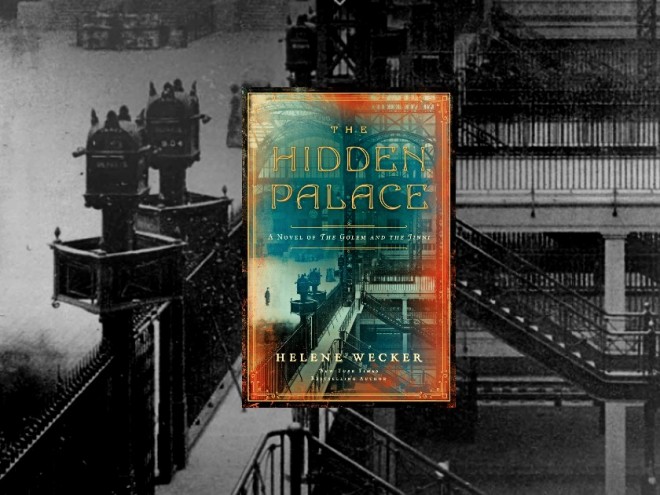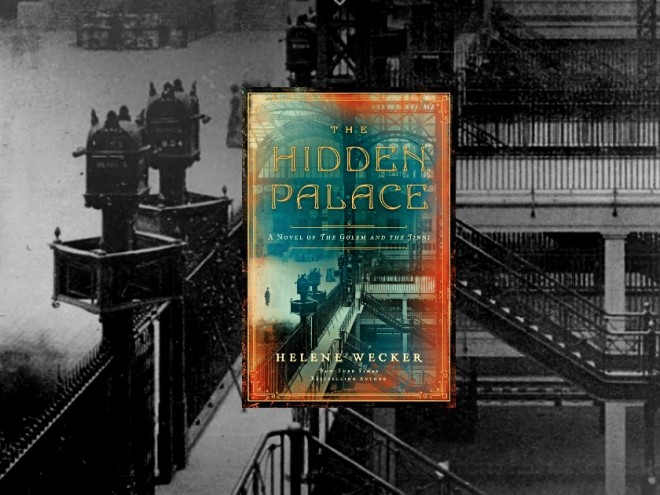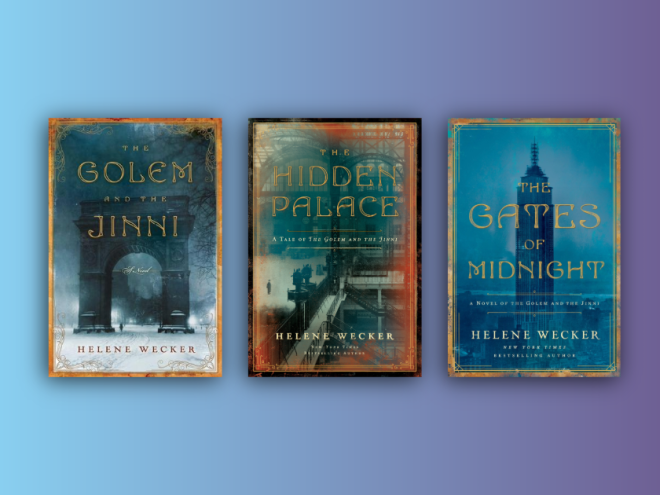
Helene Wecker found a winning formula in her 2013 debut novel, The Golem and the Jinni, combining Jewish and Arab folklore into a magical realism tale of immigration at the turn of the last century. She followed this book with a sequel, The Hidden Palace, in 2021, continuing the story of Chava the golem, who was created by the sinister wizard Yehuda Schaalman, and Ahmad the jinni, who was imprisoned by Schaalman for years. At the conclusion of the second book, Ahmad buries Schaalman in a flask in the Syrian desert. Now Wecker returns with the third book in her trilogy, The Gates of Midnight, which picks up where the last book left off.
Schaalman the wizard is unearthed by unsuspecting characters and blames Chava for his banishment. Now free, he is determined to find his way back to New York City, where Chava still lives. She is not alone and enjoys the company of a group of friends found in the previous books. She is also in close contact with her dear friend, Ahmad, although he’s in hiding after a fire supposedly took his life in the second book. Jinns cannot die from fire, and because Ahmad still has six hundred more years to live, he must go undercover so he’s not discovered to be a jinni.
Apart from an engaging story that moves around the world mainly in the 1930s, The Gates of Midnight stands out for the sense of place Wecker evokes in her writing. One of the most dramatic scenes occurs in Chicago when Ahmad flies in an airplane for the first time. This experience will change his life. “The view was widening, the horizon stretching farther and farther into the distance.… The landscape rolled away beneath them, an entire city — and he was in the air above it, a dot in a cloudless sky.”
For readers who are not typically fans of the fantastical, Wecker’s characters are so relatable and empathetic that her story often seems more historical fiction than magical realism. She also writes in a way that allows her books to be read out of order or as stand-alone stories. Wecker is married to a Syrian man and lovingly combines the cultures of her family to show that when we examine our histories, we can see that our similarities outweigh our differences.
Susan Blumberg-Kason is the author of three books, including Bernardine’s Shanghai Salon: The Story of the Doyenne of Old China, and co-editor of the anthology Hong Kong Noir. She is working on a biography of Golda Meir’s childhood and teenage years in Milwaukee and Denver.