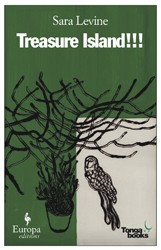
In The Hitch, Sara Levine delivers a quick-paced, spirited novel that explores loneliness, frayed family relationships, and the assumptions people make about one another. Throughout the novel, Levine’s protagonist finds herself in increasingly strange predicaments that underscore the tension between her rigid need for control and the chaos she unwittingly helps create.
The novel centers on Rose Cutler, a relatable but deeply flawed protagonist who runs The Cultured Cow, an artisanal yogurt company. When the novel begins, Rose firmly believes she can parent Nathan, her precocious six-year-old nephew, better than her brother and his wife. Rose’s week-long venture into babysitting spins wildly out of control and leaves her scrambling to bring order back into her life. Levine quickly establishes the stakes for Rose and develops her as a quirky character with complicated baggage and buried trauma.
Early in the novel, Rose’s Newfoundland attacks and kills a corgi in front of Nathan. Not long after, Nathan announces that the dead dog’s soul has jumped into his body, where it remains. Nathan unexpectedly starts quoting Shakespeare and sharing comments from the talkative dead dog he says is inside him. While dealing, or failing to deal with, a potential contamination at her yogurt company, Rose races to exorcise the corgi inhabiting Nathan. Levine excels at creating compelling scenes in which her character’s choices are ridiculous, but somehow also completely believable. Levine’s dialogue is also particularly sharp. What other author could land knock-knock jokes spoken by a boy but originating from a canine soul? While Levine leans heavily on her absurdist world-building, she also deftly creates complex situations in which there are no easy answers or single perspective. She specifically leaves some elements ambiguous. Is there a corgi possessing Nathan or is this a coping mechanism for a lonely boy? The story is told through Rose’s first-person perspective, and it’s clear from the start that she’s an unreliable narrator.
Another question left unanswered is whether Rose is too self-absorbed to be capable of self-reflection. Ultimately, readers must sift through Rose’s opinions, miscalculations, and limitations to get a clearer perspective on what’s actually happening in contrast to what Rose thinks is happening. Through that process, readers can reflect on how their own biases and preconceptions affect their ability to relate to others.
Anna Stolley Persky, a journalist and lawyer by background, writes fiction and creative nonfiction. She’s been published in The Washington Post, Mystery Tribune, Ellery Queen, and Pithead Chapel.