At the beginning of Two Roses, Miriam Libicki’s new graphic adaptation of Rose Lipszyc’s Holocaust survival story, Rose’s mother pushes her away from the group of Jews from Lublin on their march to Sobibór. “You have to run,” she says, “because if you live, I’ll live through you.” This sentiment — the way that Holocaust survivors keep the memory of victims alive — is central throughout Two Roses. The narrative, told by Lipszyc and illustrated by renowned comics artist Libicki, follows Rose’s survival as a Polish Jew hiding as a laborer in Germany. While her survival story is nothing short of inspiring, the undercurrent of how — even, and perhaps especially, during the horrors of the Holocaust — survival is a communal act leaves readers with a powerful reminder about the power of storytelling and community.
Even after Rose is separated from her family, she quickly discovers that survival doesn’t happen alone. At a family friend’s home she finds her grandmother, who informs her that her aunt, also named Rose, “refused to try and save herself, unless you will also come with her.” Immediately, the two Roses are bound together in their survival. Posing as non-Jewish Polish laborers, they work at a German rope factory in Grohn for the remainder of the war.
The two Roses’ survival illuminates a lesser-known history of how some were able to escape the Holocaust. In recounting her story, Lipszyc remembers those around her and refuses to let them be forgotten by history. In fact, Lipszyc explains that a main motivation for sharing her experiences stems from this desire instilled in her by her mother to serve as a way for others to live on. In “How the Two Roses Survived in Nazi Germany,” one of the essays at the end of the text, Agnieszka Haska and Andrea Löw look to prior interviews Lipszyc has given to contextualize her story. They quote Rose saying, “Many survivors don’t like to tell their story, and I understand their point of view, but in my opinion, I think it should be talked about. When a survivor tells their story they bring all those who perished to life […] I bring them back to life.”
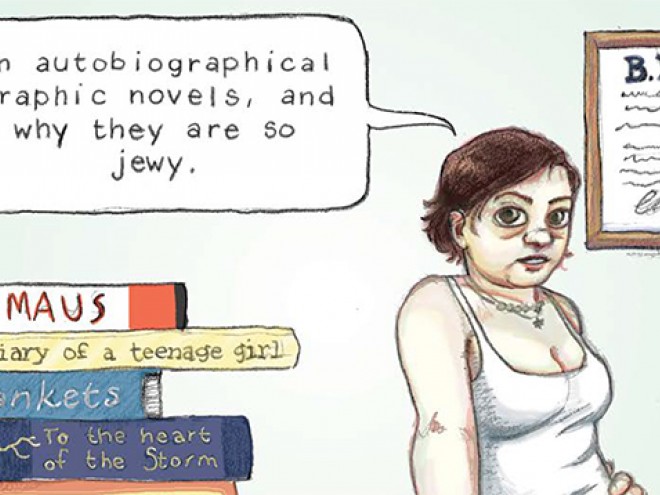
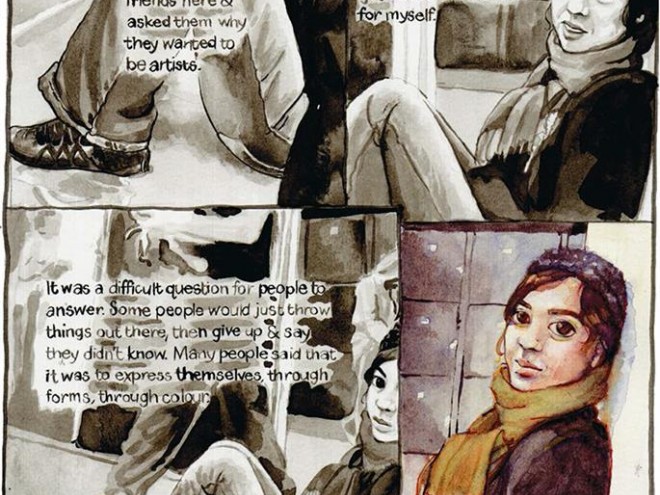
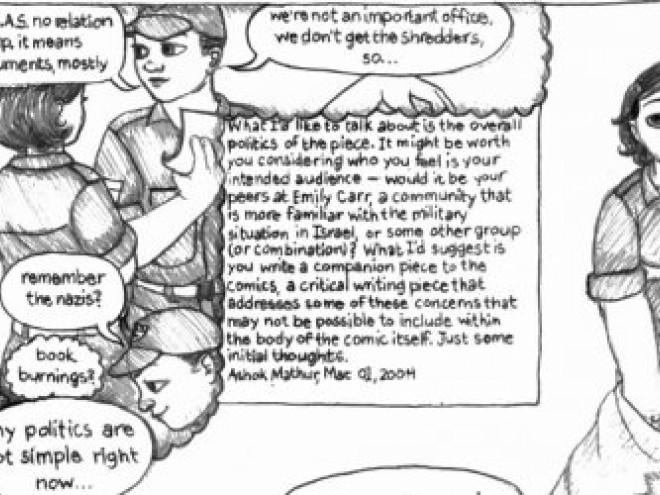
The very medium of the text emphasizes the collaborative aspect of how stories can bring the dead back to life; Libicki’s iconic art style and the graphic novel form itself emphasize how survival is a communal act for Rose and her aunt, and how that communal act continues long after these two women escape the Holocaust. The narrative and the actual text mirror each other and reinforce the way survival, memory, and storytelling demand and forge community. In her essay, “Behind the Panels,” Libicki examines the process of bringing Lipszyc’s narrative to life on the page. She explains that, “in order to harness the immersive power of fiction, the stories Rose told me had to be fleshed out with dialogue for the different characters. If all the text was in captions, it would read as ‘voiceover’ told decades later, which creates a certain emotional distance.” For a text so focused on illustrating the power of storytelling in building community — to survive and to remember the dead — the graphic format is a perfect choice. Yes, Two Roses shares a survival story; more importantly, it reminds us of the importance of storytelling as a tool to survive now, and into the future.
Dr. Megan Reynolds is the Development Manager for the National Book Foundation. Before joining the National Book Foundation, Megan Reynolds served as the Development Coordinator at Jewish Book Council. Megan holds a Ph.D. in English from the University of Oregon and BA in English with minors in Creative Writing and Spanish from Trinity University. She is originally from New Mexico and now lives in New York City.