Join a community of readers who are committed to Jewish stories
Sign up for JBC’s Nu Reads, a curated selection of Jewish books delivered straight to your door!
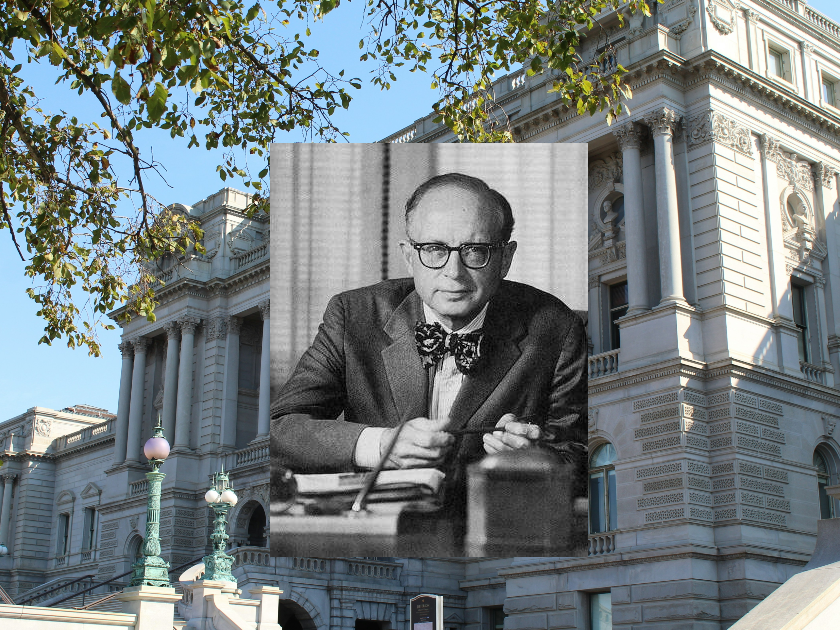
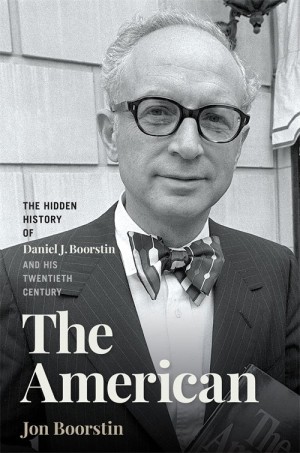
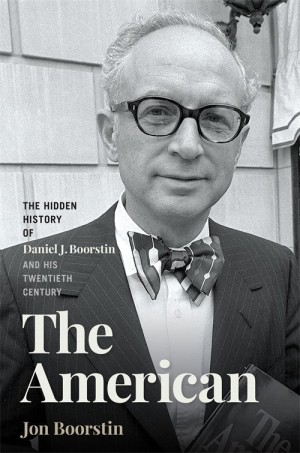
Librarian of Congress Daniel Boorstin via WikiMedia Commons
Library of Congress photo by Laura Borman on Unsplash
Did my father believe in God? Daniel Boorstin was among the first Jewish American historians. When I was nine, he was summoned before the House Unamerican Activities Committee, accused of being a Communist. With his career hanging by a thread, he replied that his “bulwark against Communism” was his Jewish faith.
He quoted Thomas Jefferson: “Can the liberties of a people be thought secure if we have removed their only firm basis, a conviction in the minds of the people that those liberties are the gift of God?” Daniel swore under oath, “I believe that, sir.”
They bought it. This Jewish outsider won the Pulitzer Prize and wrote best-selling books. You read him in Esquire and Reader’s Digest, your children read about in texts in school in, and he counseled national leaders. Daniel’s generation had survived the existential threat of World War II. With the Civil Rights movement, the arc of our moral universe was bending toward justice. Boorstin was proud of what we were becoming and he wanted you to be proud too.
We Jews all have ancestors who lived through difficult times. Daniel’s life and work reminds us that what binds us together as part of the American community is stronger than what drives us apart.
I read his HUAC testimony for the first time when I was thirty, and when my father was appointed Librarian of Congress. Though we often said Hamotze at dinner, I still can’t tell you if my father believed in God. I grew up over dinners packed with talk about important stuff without Judaism coming into it.
And so I read his testimony again, and I realized that Daniel was being lawyerly to appease godfearing congressmen. He isn’t saying that he believes in God. He’s saying that not believing makes our liberties insecure.
In Atlanta the Jew Leo Frank, a close friend of Daniel’s father, was lynched. In Tulsa, Daniel lived through the Race Massacre of 1921. Yet Daniel still celebrated America’s genius for innovation and communal effort. How could he do that?
Lately, I’m finding deeper meaning in the Yiddish proverb “it’s hard to be a Jew.” We Jews all have ancestors who lived through difficult times. Daniel’s life and work reminds us that what binds us together as part of the American community is stronger than what drives us apart. If we can share Daniel’s spirit, we can share his hope.