Join a community of readers who are committed to Jewish stories
Sign up for JBC’s Nu Reads, a curated selection of Jewish books delivered straight to your door!
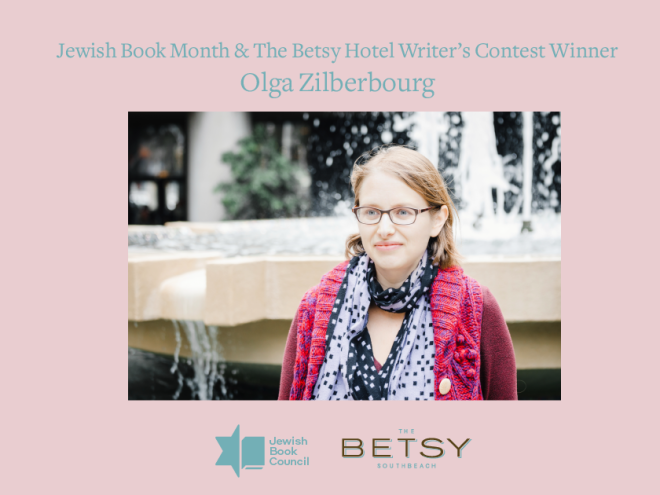
The Betsy Hotel and Jewish Book Council are pleased to share the finalists for this year’s Jewish Book Month writer’s residency contest: Lesléa Newman, A.R. Vishny, and Erica Stern. You can see their entries below and find out more about this year’s winner, Olga Zilberbourg, here.
The Writer’s Room at The Betsy is a working studio space for visiting writers and artists to create, develop their craft and share their work through community programs, The Writer’s Room pays homage to the many“writing rooms” that existed in prewar hotels where guests recorded memories and linked to home. Alumni from the program can be found here and more information on The Betsy Hotel can be found here.
It is very fitting that I am composing this essay on June 12th, Anne Frank’s birthday (she would have turned ninety-six today). Anne Frank has lived in my private library since I was twelve years old. The Dell paperback I read in junior high school was published in 1952, sold for thirty-five cents, boasts a photo of Millie Perkins who played Anne in George Steven’s movie on the cover, and contains an introduction by Eleanor Roosevelt. I have schlepped that book with its brittle brown pages and torn cover to every home I’ve ever known — from my suburban Long Island childhood split-level, to my Vermont college dorm, to every ratty apartment I’ve ever lived in, to the house my bashert and I finally purchased seventeen years ago.
Along with my precious, falling-apart copy (the cover has detached itself from the inside pages) I have several other books about Anne including Anne Frank’s Tales from the Secret Annex and Anne Frank’s Diary: The Graphic Adaptation. In addition, my bookshelf holds works of fiction inspired by Anne: the short story collection What We Talk About When We Talk About Anne Frank by Nathan Englander, The Boy Who Loved Anne Frank by Ellen Feldman, and When We Flew Away: A Novel of Anne Frank Before the Diary by Alice Hoffman. And then there’s my most recent addition to this collection, Anne Frank: The Exhibition, the museum catalog I purchased after touring the Center for Jewish History’s exhibit about Anne Frank which included, for the first time ever, a recreation of the rooms that Anne and her family hid in for two years until they were discovered and….well, we all know what happened.
Anne Frank has always been a presence in my life. As a Jewish author, my self-appointed mission is to use my voice to honor those whose voices were stolen. I feel like I owe it to Anne to open my big Jewish mouth and carry on as loudly and as proudly as I can. And to remember as she, who was so wise beyond her years put it, “How wonderful it is that nobody need wait a single moment before starting to improve the world.” Anne Frank improved the world by leaving behind a diary full of compassion, dignity, strength, and hope. I feel honored that her words have taken up residence in my heart and home.
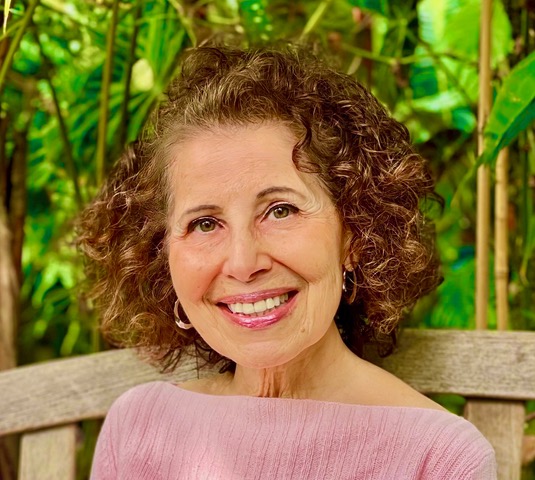
Author photo by Mary Vazquez
Lesléa Newman has created eighty-eight books for readers of all ages including the memoirs-in-verse, I Carry My Mother and I Wish My Father, and the children’s books, Joyful Song: A Naming Story; The Babka Sisters; Gittel’s Journey: An Ellis Island Story; Welcoming Elijah: A Pasover Tale with a Tail; and Ketzel, The Cat Who Composed. Her literary awards include two National Jewish Book Awards, the Sydney Taylor Body-of-Work Award, a poetry fellowship from the National Endowment for the Arts and the Massachusetts Book Award. A former poet laureate of Northampton, MA, she teaches at the Naslund-Mann School of Professional Writing. Her newest children’s book, Something Sweet: A Sitting Shiva Story will be published in March, 2026.
I’m drawn to works that illuminate the interior lives and burning ambitions of Jewish women across time. Maybe it’s because a lot of my writing is about ghosts and the undead, but again and again the authors who win me over are those who breathe life and humanity into the past. Amy Levy’s Reuben Sachs I return to often. Levy’s so clever and witty, and her book is perhaps the only time I’ve ever picked up a novel written by a Victorian-era person and felt it depicted Jews who were familiar and a Jewish community I recognized. Her sharp dialogue and observations about middle-class Jewish communal life feel like they could have been written today. Alice Hoffman’s The Marriage of Opposites is another all-time favorite; the attention Hoffman gives to Rachel’s desires and character development across a lifetime and the rich, immersive rendering of the nineteenth-century Jewish community of St. Thomas make for an incredible literary achievement. Judy Batalion’s The Light of Days shook me to the core when I first read it. The book is a humanizing portrait of these frankly superhero Jewish women resistance fighters who have by and large fallen out of the historical narrative.
While I’m ordinarily not a big poetry reader, the Paper Bridges collection by Kadya Molodowsky is a gorgeous articulation of longing and reflection. I adored Paula Vogel’s Indecent so much when I saw it on Broadway that I bought and regularly reread the play; I loved the attention it gave both to the history of God of Vengeance and how a story transforms the people who tell it. And when I want fantasy, I return to Naomi Novik’s Spinning Silver. The book is beautiful, top-tier world-building as far as Jewish fantasy is concerned, and ambitious, prickly Miryem is a protagonist after my own heart.
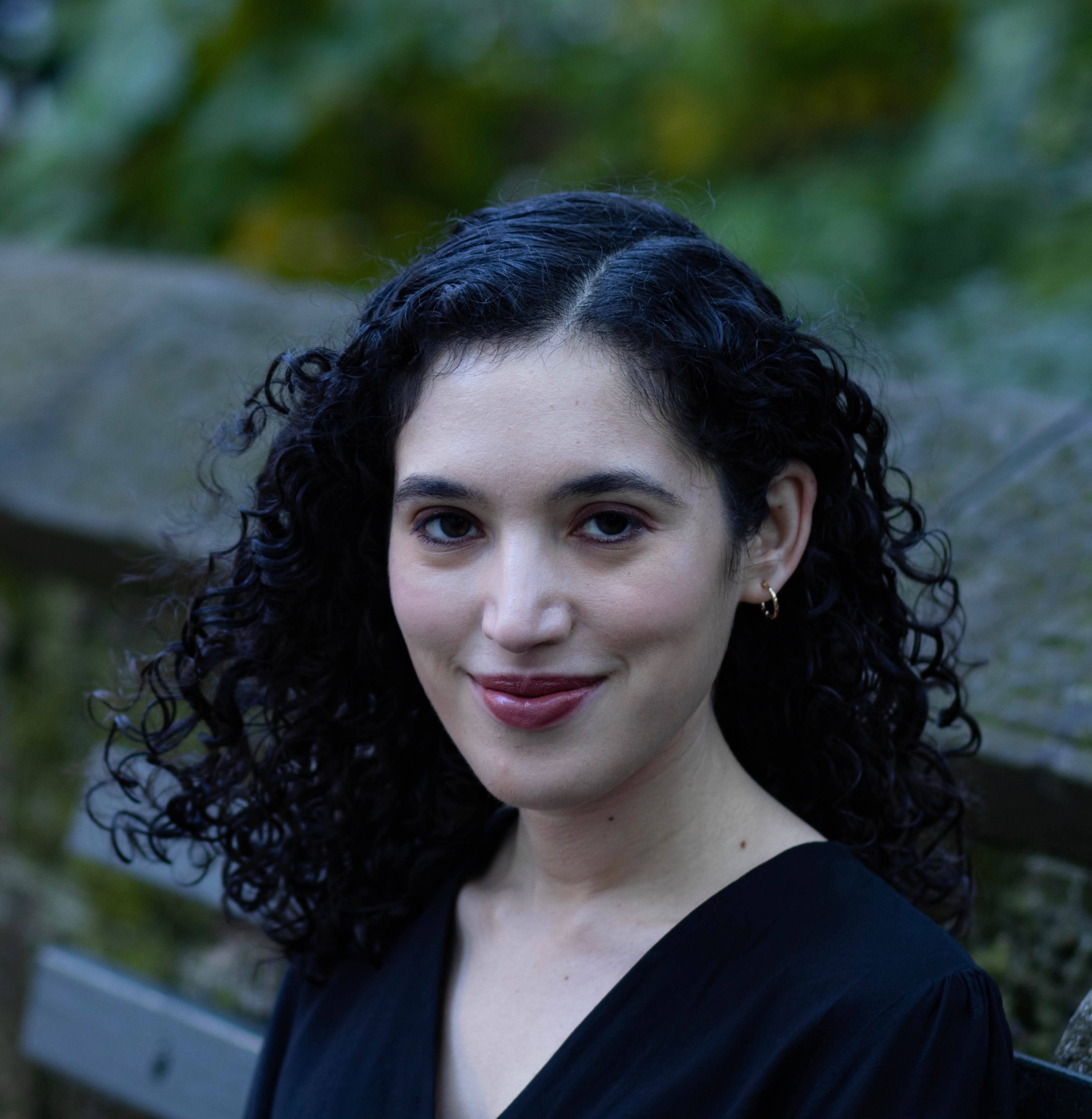
A.R. Vishny’s debut novel, Night Owls, won the National Jewish Book Award and Sydney Taylor Book Award. Her essays on Jewish representation in pop culture have appeared in Teen Vogue, The Washington Post, and Hey Alma. She earned a B.A. in English at the University of Massachusetts Amherst, and a J.D. at the Benjamin N. Cardozo School of Law, where she was a Law and Literature fellow. Born and raised in Massachusetts, she now calls New York City home.
My Jewish bookshelf includes everything from classics by Grace Paley and Cynthia Ozick (favorites of mine and such masters of the short story) to contemporary writers, including Benjamin Resnick and the magnificently inventive Sabrina Orah Mark. There’s something about the voices of Jewish writers that seems to echo out from a deeply familiar place. It’s not just the stories or characters, but also the voice, the entire milieu of the narratives. As a Jew who grew up in the deep south, I’ve long gravitated towards work that felt like it belonged to me, that I could claim somehow as my own.
For the past several years, I’ve also been immersed in Jewish texts for my book, a hybrid memoir about a traumatic birth that wrestled with deeply Jewish themes. I did not set out to write a Jewish book and yet apparently that was inevitable. I could not grapple with what it meant to become a mother or experience grief or navigate uncertainty without looking to Judaism. I read Adrienne Rich, the Bible — particularly the Book of Jonah — as well as related commentary. I also read a number of Jewish folk tales, most of them from Joachim Neugroschel’s collection, Great Tales of Jewish Fantasy and the Occult.
Now that my book is out and much of the publicity work behind me, I’ve begun to delve back into reading wholeheartedly. Just last week I did a book event at a store in New York, and afterwards found Yael van der Wouden’s The Safekeep on the shelf. I immediately bought it (I’ve heard such wonderful things about it for a while now) and started reading it while traveling. Though I’m only at the beginning, I can tell it’s going to be truly excellent and gripping, with a unique viewpoint into Jewish identity — a perfect book to recenter myself as I begin new creative projects.
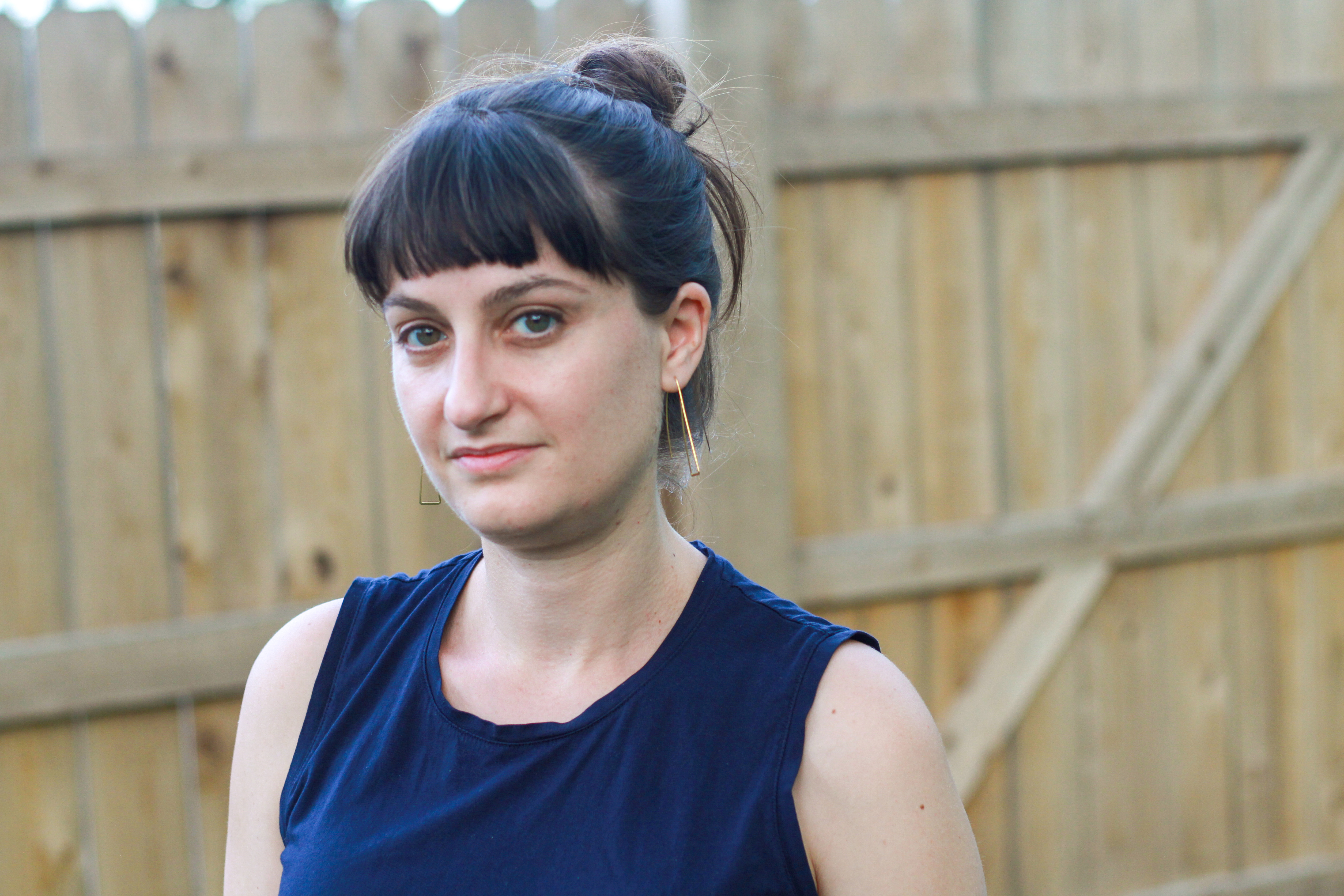
Erica Stern is the author of Frontier: A Memoir and a Ghost Story (Barrelhouse Books), a Jewish Women’s Archive Winter 2025 Book Club Pick and a Chicago Review of Books Must Read Book of June 2025. Her writing has appeared in The Iowa Review, The Sun, Denver Quarterly, The Wall Street Journal, LitHub, and other publications.
Erica has been awarded fellowships and residencies from the Vermont Studio Center, the Martha’s Vineyard Institute for Creative Writing, and the Virginia Center for Creative Arts. She received her undergraduate degree in English from Yale and her MFA from The School of the Art Institute of Chicago. A native of New Orleans, she now lives with her family in Evanston, Illinois.