Join a community of readers who are committed to Jewish stories
Sign up for JBC’s Nu Reads, a curated selection of Jewish books delivered straight to your door!
Image by DesignDraw DesignDrawArtes from Pixabay
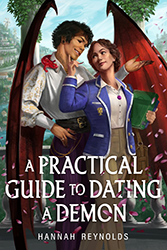
When news of my latest book, A Practical Guide to Dating a Demon, came out, I started to get messages from Jewish readers asking the same question: Are the characters in your book Jewish?
Yes, I responded. And also, no.
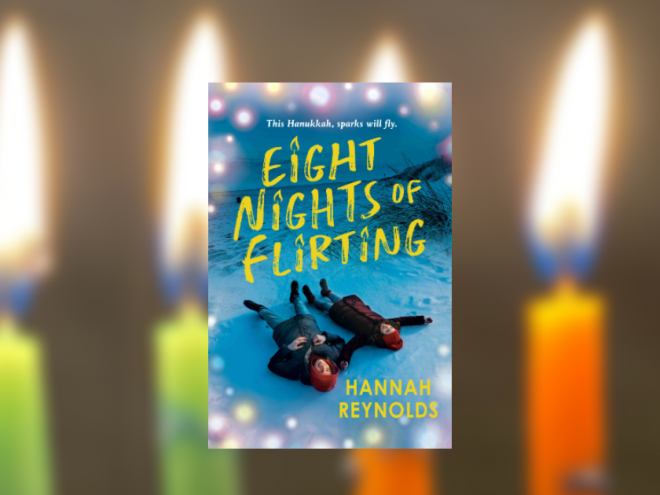
My last six books have been contemporary romantic comedies, and the majority of my characters in these novels have been Jewish. Some have been deeply connected to their Judaism, others more casually so, but it’s always been important to me to show Jewish experiences on the page. For example, some of these characters go home for the High Holidays or praise their mom’s kugel or have a grandmother who survived the Holocaust.
My latest book, A Practical Guide to Dating a Demon, however, is a cozy romantic fantasy. As I planned it, I was confronted with a new question: What does it mean to write a Jewish fantasy novel?
The Jewish fantasy novels that came to my mind felt inspired and tied to Jewish historical events, like the Spanish Inquisition (Leigh Bardugo’s The Familiar) or the Holocaust, (Lisa Goldstein’s The Red Magician) or other eras of our history (Cassandra Clare’s Sword Catcher and Naomi Novik’s Spinning Silver). I wanted to write a cozy, whimsical book, where the Jewish element of the story sprang not from trauma, but other parts of our identity. And so I was faced with the question of how to make my magical world clearly Jewish. I turned to our mythology.
And soon asked myself – what did I know of Jewish mythology? I, who’d studied Classics and steeped myself in tales of Persephone and Helen of Troy? I realized, to my embarrassment, that I knew little besides tales of golems.
But I had an idea. First, I knew demons showed up in Jewish mythology, since a friend of mine had written her dissertation on Jewish demons. Second, I’d long wanted to write a book about a girl who made up a fake boyfriend, only to have someone appear claiming to be said fake boyfriend. What if, I wondered, my heroine told people she was betrothed to a demon? What if, by doing so, she accidentally summoned a demon (an attractive one, of course) who insisted the betrothal was real?
I set off on a whirlwind of research. Jewish demons, I found out, have a rich and varied lore. Referred to as shedim, or shayd in the singular, there’s no one hard and fast description of them. They come up in the Babylonian Talmud, the Zohar, and Midrashic literature. Some references are negative, and others are neutral, describing them as the gods of foreigners.
The take I liked most, though, was the one where the shedim were uniquely Jewish – bound by Jewish laws, Jewish courts, Jewish sacred objects. There is a story in the Talmud (Chullin: 105b) about a demon who destroys a barrel of wine belonging to porters and is subsequently brought to court, and made to pay. Another story in the Talmud depicts Ashmedai, King of the Demons, who is wise and well acquainted with the Torah. I liked that. My demons, I decided, would be Jewish.
Jewish demons, I found out, have a rich and varied lore. Referred to as shedim, or shayd in the singular, there’s no one hard and fast description of them.
If you have demons, you better have safeguards against them. The more I researched, the more I found: blowing a shofar might banish shedim; mezuzahs should ward them off. If you’re worried about an infestation, scatter ash on your floor and check in the morning to see if any demons left behind chicken-like footprints.
Here, my heroine, Naomi, uses a few of the details I discovered in her attempt to banish the demon Daziel:
We’d removed all the mirrors from my rooms. We’d tried capturing Daziel via incantation bowl. I threw a thrift store ring at him, based on lore that rings could capture demons. He caught it and slid it on, smiling. I even spat at him, which was a horrible experience for everyone involved.
I dug deeper into other Jewish mythology, reading the Tree of Souls: The Mythology of Judaism by Howard Schwartz along with countless academic articles. I came across the three primordial beasts – two of which I was well acquainted with, for fantasy novels often use the term “behemoth” and “leviathan” in passing. But I’d never heard of the Ziz, who ruled the sky as the Behemoth ruled the land and the Leviathan the sea. I delved deeper into the subject.
“The Ziz is a giant griffin-like bird,” I told my boyfriend excitedly the very morning I learned about it. “With a wingspan large enough to block out the sun! One legend says that once it dropped an egg and that destroyed cities. It rules over all the birds. It’s going in my book.”
Another magical creature also crept in – the tiny salamander I named Paz, who jumped into my head as soon as I read about mythical creatures born of fire. He even made the cover.
There are other bits of lore woven into A Practical Guide to Dating a Demon. The belief that if you tie a red string around your wrist, it will protect you from evil and the additional legend that if you lose your bracelet, it means you’ve met your husband; the power of rings, and the symbolism behind pomegranates. I learned about symbols known as charaktêres, incorporated by Jews during ancient and medieval periods into their tradition of magical writing, and it became the basis for spell-writing in my book.
To make the world around my characters feel deeply Jewish, I pulled in historical concepts, the same way a fantasy novel based on Ancient Rome might have a Senate or a Coliseum. The political system is based on the Great Sanhedrin of the Second Temple period (516 BCE – 70 CE), which had an assembly of seventy-one judges that acted as a supreme court. I tweaked it, as fantasy authors often do, and comprised mine of elected officials from the twelve tribes. (Naomi’s aunt is one such official). The twelve tribes show up frequently, in fact, and people wear amulets reflecting their tribe. In honor of Judaism’s academic tradition, I created the Lyceum, which Naomi attends, a magical university comprised of five schools. In this world, the religious leaders are rabbis, and the year, as an astute reader might notice, is the 5660s – which corresponds to the first decade of the 1900s.
And so, to return to the question I often receive – are my characters Jewish? Well, the world and demons are Jewish, with a hefty dose of artistic license. It’s inspired by Jewish mythology. But I never use the term Jewish, or Judaism.
I will let you debate whether that means A Practical Guide to Dating A Demon is Jewish or not.
After all, that’s the Jewish thing to do.
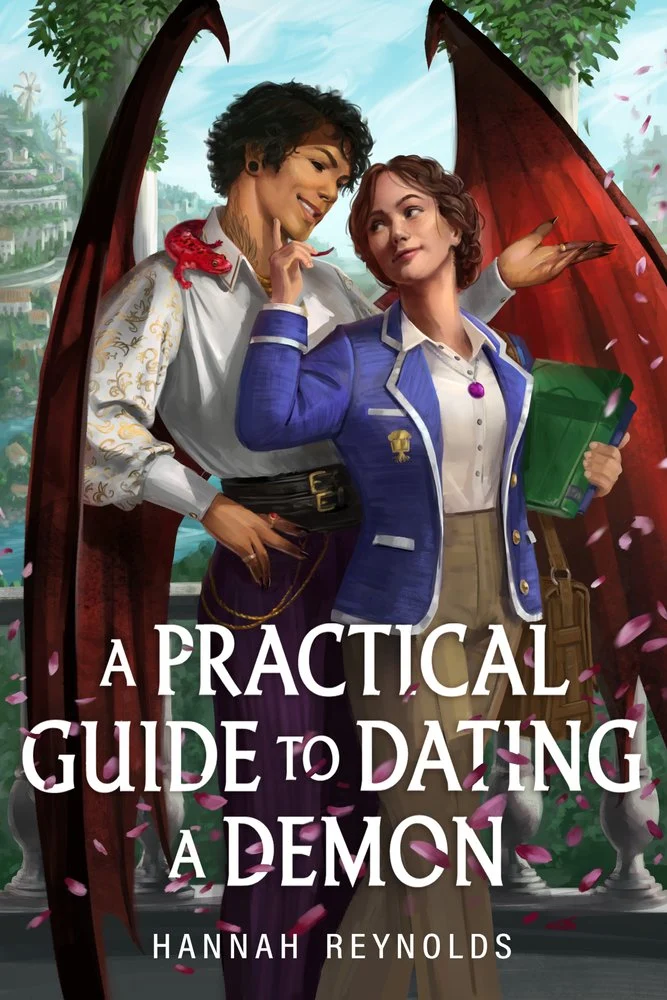
A Practical Guide to Dating a Demon by Hannah Reynolds
Hannah Reynolds grew up outside of Boston, where she spent most of her childhood and teenage years recommending books to friends, working at a bookstore, and making chocolate desserts. She received her BA in Creative Writing and Archaeology from Ithaca College, which meant she never needed to stop telling romantic stories or playing in the dirt. After living in San Francisco, New York, and Paris, she came back to Massachusetts and now lives in Cambridge.