Join a community of readers who are committed to Jewish stories
Sign up for JBC’s Nu Reads, a curated selection of Jewish books delivered straight to your door!
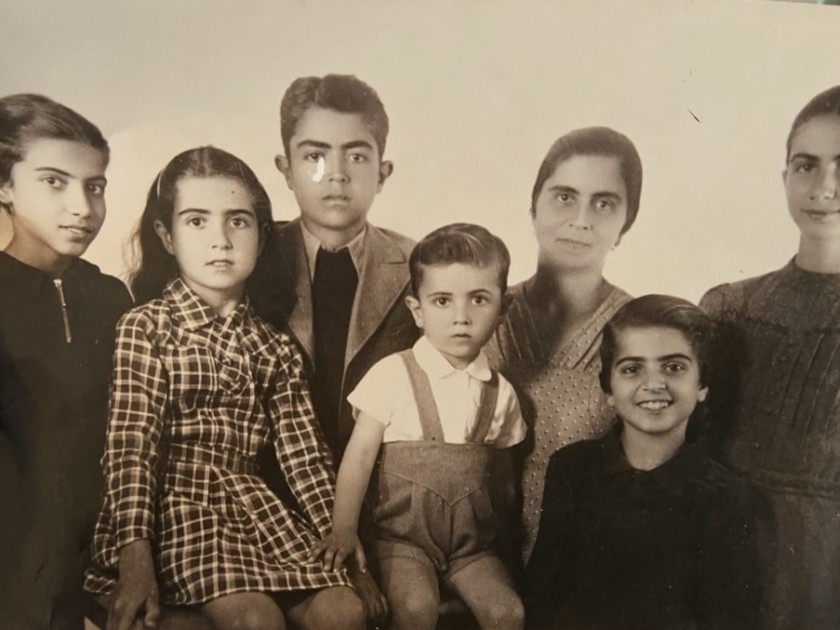
The Illouz family: the authors great-aunt Yocheved, Suvta Shulamit, great-uncles Avner, and Eliyahu, great-Suvta Sarina, and great-aunts Chana and Simcha, in Tiberias in approximately 1938
Art has always been a huge part of my writing process; as a child in Johannesburg, South Africa, I drew or painted constantly, along with a lot of reading and a passion for creating stories. Whenever I had thoughts or feelings that language couldn’t express, or that I needed to process, art was there, helping me work my way through it. I was lucky to have a fantastic art and English teacher in elementary school (who I’m still in touch with today), and I attended an incredible after school art program which taught me so much about confidence and artistic fearlessness that remains foundational to my work today.
In college I pursued these dual artistic interests, studying Visual Arts and Creative Writing; I used my skills to storyboard and understand my characters’ facial expressions and body language. I never considered telling a story entirely this way until I started writing Vidal.
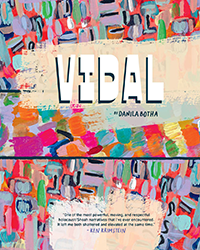
Vidal is a graphic novel that follows a Sephardic Jewish artist from Tiberias who travels across the world to France to pursue his dreams. He gets trapped there when World War II begins. With his natural optimism and resilience, he manages to escape the Vel D’Hiv raids, joins the resistance where his Arabic becomes surprisingly useful, and eventually is caught and sent to Auschwitz.
When protagonist Vidal describes his city of Tiberias in terms of visceral experiences and the environment, I wanted the reader to see it and feel it, just as I did when my Suvta and her siblings talked about growing up there to feel the weight of the humidity, the dust in the air, the scents of jasmine, coriander, and almonds.
Working in a new medium can be both exhilarating and terrifying. I was thrilled to finally feel like I was allowed to focus on this tangible art. Painting has an immediacy and an expressiveness that’s always felt irresistible to me; full of rich textures, yet to be discovered combinations of images, and so much potential. At the same time, despite how many graphic novels I’d read and loved over the years, I felt unsure of how exactly to proceed until I returned to my Suvta’s brilliant, vibrant stories about her childhood.
My Suvta Shulamit was an incredible storyteller, sensitive to nuance, emotion, and sensory details. I learned so much about pacing and description from her.
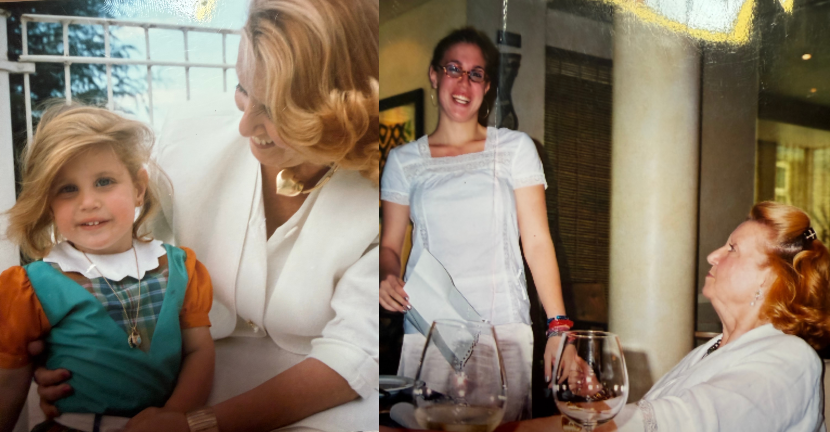
Danila Botha and her Suvta Shulamit, when she was a child, and when she was older, reading something she’d written to her
Many of the details in the opening section of Vidal are based on her stories. For example, my Suvta’s descriptions of adventures with her best friend, Esther Malka, and her older brother, Avner, who she was closest to, feature here. One such story included an outing boating on the Kinneret, when she described the heat as so intense that they had to sleep on the roof of their house and sidewalks so hot they could fry eggs on them if they accidentally dropped them. I could see it all in bright colors, and I wanted more than anything to capture it visually.
My grandmother’s family (the Illouz family, later anglicized to Illos in South Africa), were Moroccan Jews who had lived in Tiberias for five generations. They were from Fez, in Morocco and grew up speaking both Hebrew and Arabic. In Vidal, the fictional Ben Soussan family share these parallels from my own family history. And the house that I created for them on Mamounia Street is based off of my family’s own abode there, which is still owned by one of my great-uncles today.
My family’s synagogue in Israel was Beit Knesset Hasignor and housed the graves of famous rabbis, including the Rambam and Rabbi Meir Baal Haness, all things my family was very proud of.
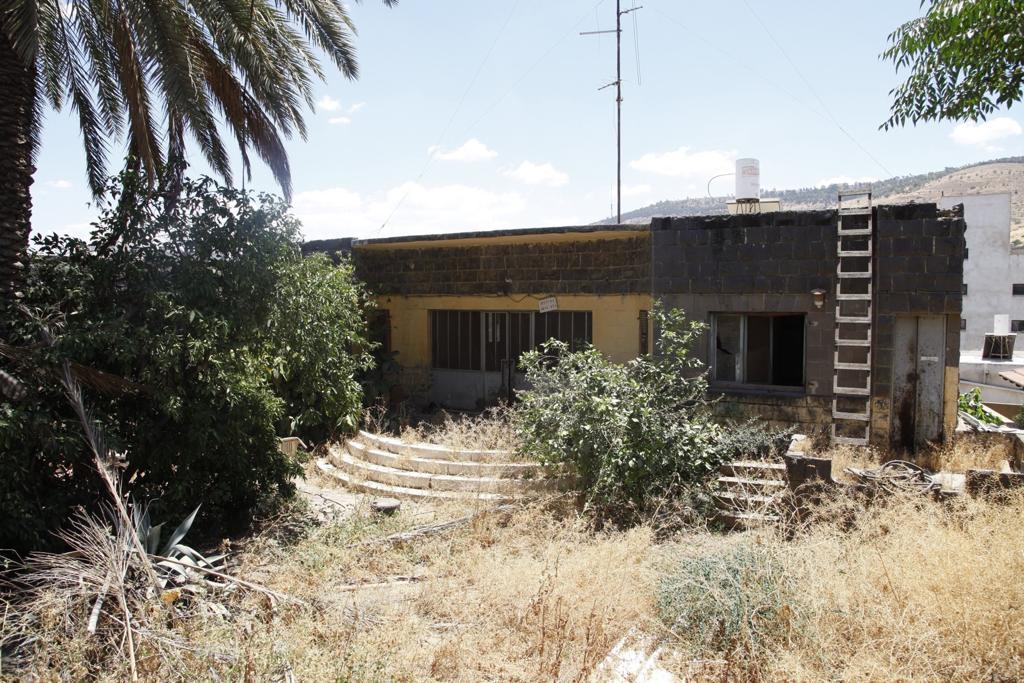
The Illouz family home in Tiberias
Throughout my writing and painting process, I often consulted my great-aunt, Yocheved. Yocheved is my grandmother’s older sister and her memory is astounding. She is able to recall in detail all the schools that existed in Tiberias in the early to mid 1900s, the names of her neighbors, the food her mom made (including excellent Ma’arud, Dafina, and couscous rolled by hand, as mentioned in Vidal), the slang phrases they used in both Hebrew and Arabic, among so many other aspects of her childhood and life. I wanted to preserve all the Moroccan Sephardic food, family stories, and religious rituals as she had experienced them and conveyed to me.
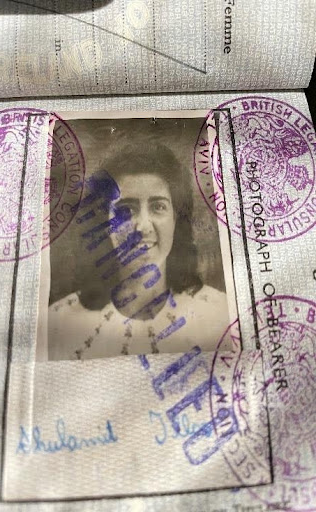
I also consulted often with my mom, Nurit, who knew all of the family recipes and phrases, and had notes and photos of everyone throughout the ages. This included my grandmother’s original British Citizen (Second Class) passport, which I used and adapted for Vidal.
My great-Suvta Sarina, Shulamit’s mother, sometimes called us Yarohi, a beautiful Arabic term of affection whose literal meaning is “my soul.” For special occasions and family simchas, she made an exceptionally delicious, triangular and circle shaped marzipan called Chouaflouz, which I painted as part of Vidal’s wedding celebrations. I didn’t know why I couldn’t find the term my family had used since I knew that the Arabic term was Mazapan.
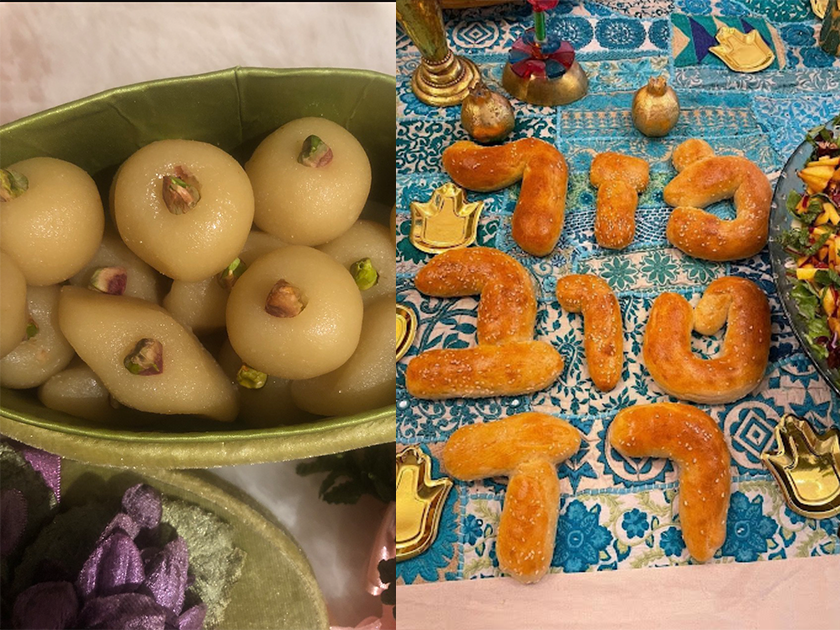
Chouaflouz, as made by the author’s mother, for the author’s sister-in-law’s wedding and special challah made by Yocheved for a family simcha
I learned that the term Chouaflouz is Judeo-Arabic, a linguistic combination of Arabic, Hebrew, and even a little French that was specific to Jewish communities of North Africa. It was fascinating to realize that. It came up again when I tried to find the Arabic translation for a blessing my great-grandparents and even sometimes my Suvta used when they were growing up. As I included other blessings and phrases that I was familiar with hearing I would come across this situation again and again. At the end of the story, when Vidal is reunited with his daughters, he uses the phrase Sma Allah Aleiki, may God be Upon You, a phrase both of my great-grandparents blessed us with.
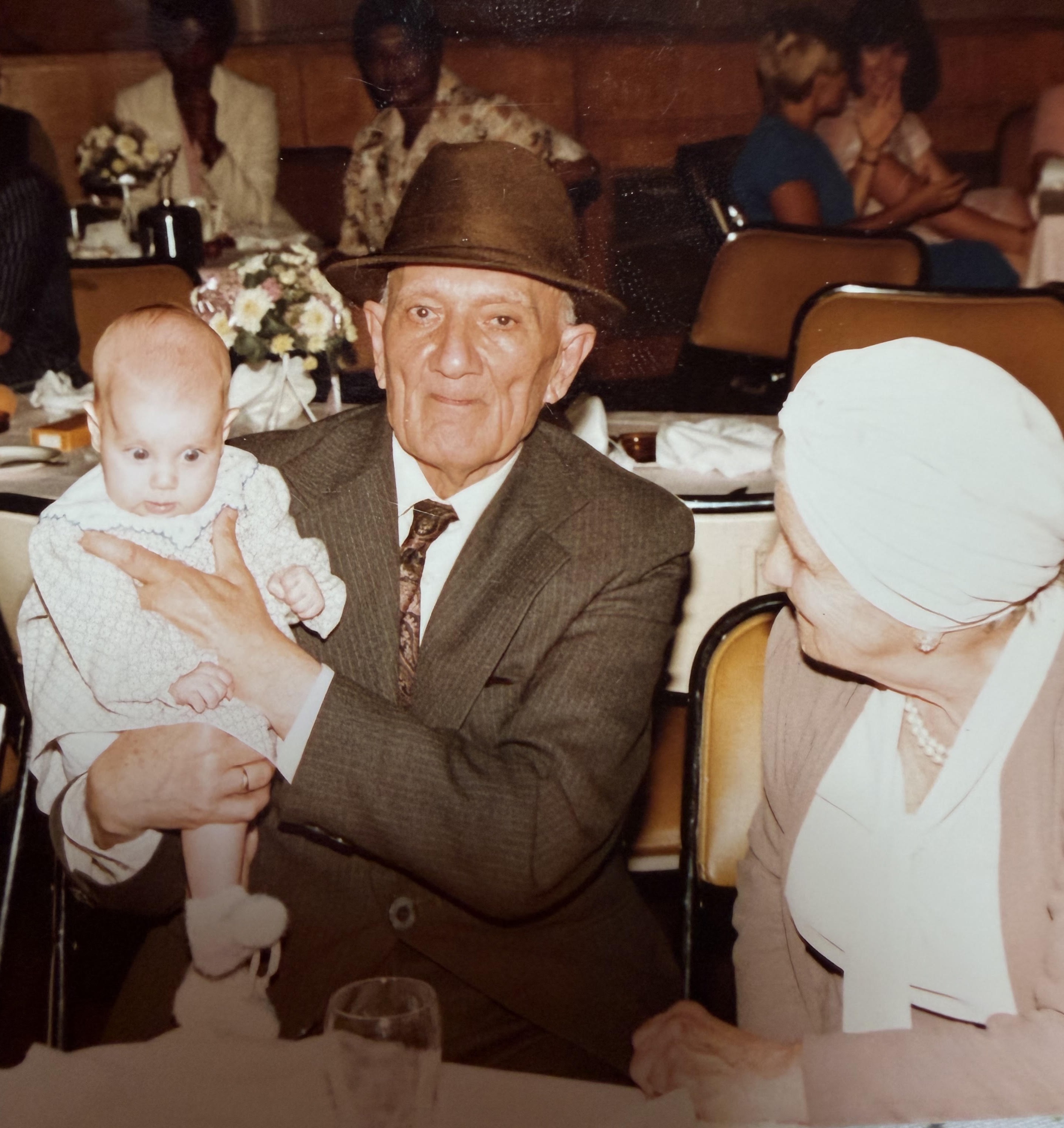
The author, as a baby, with her great-grandparents, Rabbi Moshe and Sarina
The titular character of Vidal is very much a creation of mine but his personality was based on my great-uncle, Avner, who my Suvta was very close to.
As I was creating this graphic novel, I was reflecting deeply on my family’s journey to South Africa. My great-grandfather travelled there for work, and was stuck in South Africa when World War II broke out. No one could have predicted the length and reach of the war, or where Jewish communities might remain safe. For example, my great-grandfather’s family briefly moved to Greece under the Ottomans, and, in time, were able to return to Tiberias. The thought of them staying in Greece, and the way it would have altered my family history (and possibly even my own existence), is haunting.
My great-grandmother Sarina was left alone for years with six children in Tiberias and then in Jaffa. She was exceptionally strong and resourceful and I tried to capture that in Vidal’s mother through her cooking, sewing, and creative ingenuity, and in her compassion and ability to have clear-eyed insights.
The family would later join him in Johannesburg. Beginning in the 1970s, nearly all of my family members returned to Israel. My family who lives there now are eighth and ninth generation.
As I wrote and painted Vidal, I wanted to highlight so many aspects of my family’s story: the longevity of Moroccan Jewish identity; the relationships between cousins whose cultures and histories are so similar; and the king of Morocco, who wanted to protect his Jewish citizens in France during World War II, as did the rector of the Great Mosque of Paris. Through Vidal, I hope to convey what antisemitism looked like during this time, and in particular the insidious nature of prejudice and discrimination that heralded the beginning of the Holocaust..
Perhaps most of all, I wanted to share the beauty of my family’s story, the Sephardic customs, the familial closeness, and the resilience and strength that’s in all of our DNA.
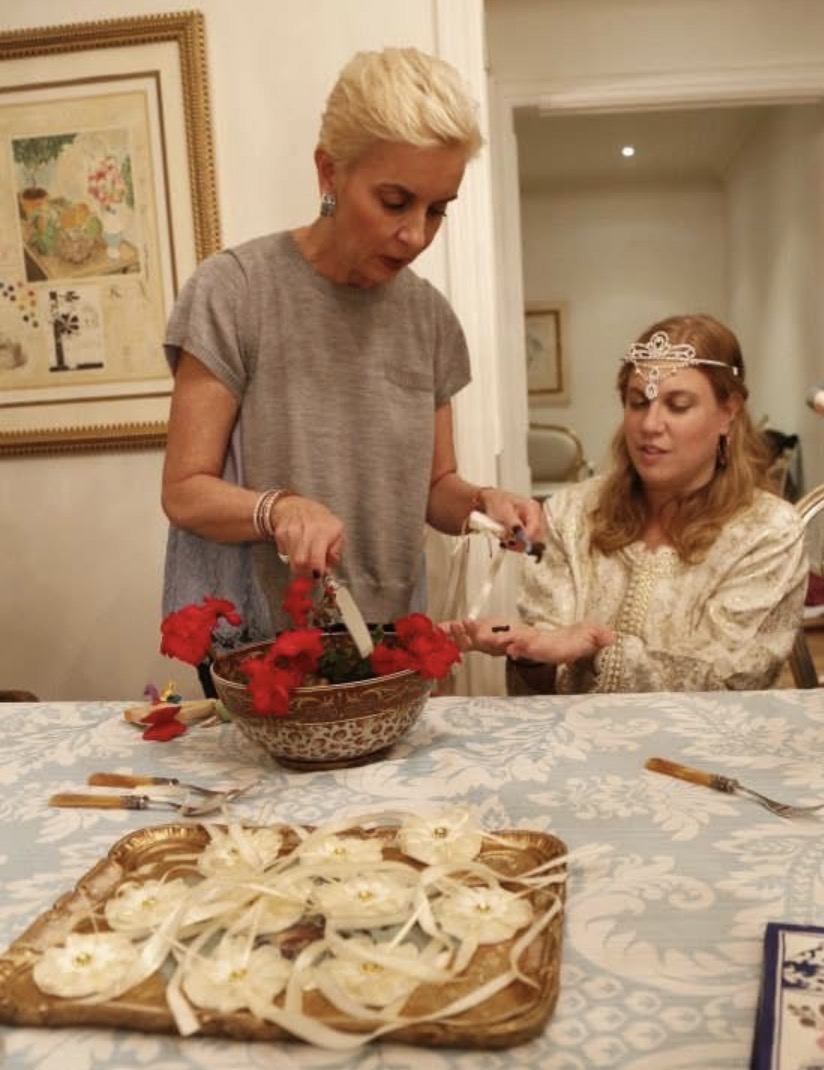
The author with her mother, Nurit, at the Moroccan henna party before her wedding
Danila Botha is the author of the critically acclaimed short story collections, Got No Secrets, For All the Men (and Some of the Women) I’ve Known, which was a finalist for the Trillium Book Award, The Vine Awards, and the ReLit Award and Things that Cause Inappropriate Happiness, which won an Indie Reader Discovery Award and was a finalist for the Canadian Book Club Awards, the Next Generation Indie Book Awards, and the National Indie Excellence Awards. She is also the author of the award-winning novels Too Much On the Inside and A Place for People Like Us, which won an Independent Press award for Contemporary Novel and was a finalist for the CIPA Evvy Book awards, the Eric Hoffer awards, the Next Generation Indie Book Awards, and the National Indie Excellence Awards. Vidal, which she wrote and illustrated, is her first graphic novel.