Join a community of readers who are committed to Jewish stories
Sign up for JBC’s Nu Reads, a curated selection of Jewish books delivered straight to your door!
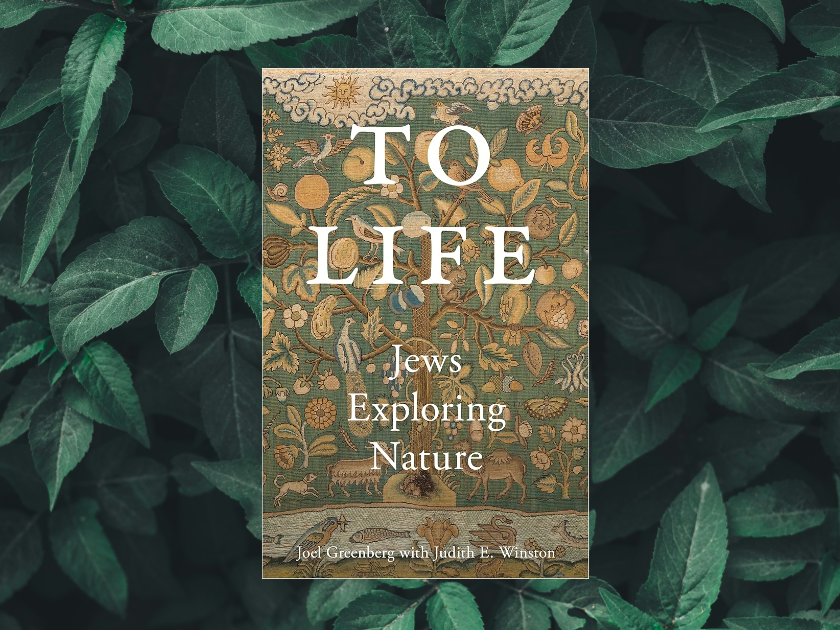
Photo by Nahil Naseer on Unsplash
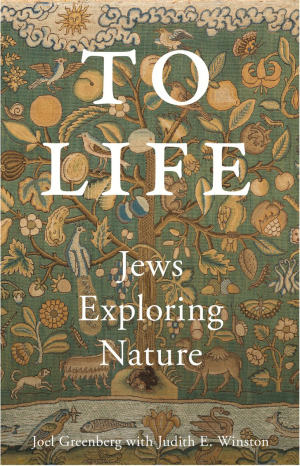
To Life: Jews Exploring Nature offers a unique treatment of Jewish engagement with nature through eight chapter-long biographies of naturalists who manifested different aspects of their Jewish identities and made significant contributions to their fields. As such, it spans two major realms that are rarely dealt with in the same book, Judaica and natural history. But this pairing of subjects also reflects my own life-long identity — Jewish by birth and a passion for animals and natural history acquired a few years later. Neither of my parents went to college, but having lived through the Great Depression, and experiencing deprivation, they were totally committed to ensuring that neither my sister nor I were ever wanting, and that included total support of our interests.
For the first twelve years of my life we lived in Skokie (an area that had a large Jewish population at the time) and then we moved to Mount Prospect, Illinois (where Jews were quite rare). The Chicago area is rich in venues that nurture a love of animals and nature. One cold Sunday morning in January when I was in fourth grade, I read an account of wolverines, the largest of the weasels which can supposedly drive grizzly bears from their victuals. This left me very much wanting to see one. My father obliged and we drove to a nearly empty Brookfield Zoo where my wish was fulfilled. A period of butterfly collecting led my dad to contact the director of the Chicago Academy of Sciences (now the Peggy Notebaert Museum) who met with us and gifted me a butterfly net which I still have. And my mother took me on numerous birding trips throughout the region and beyond.
Our family was not particularly religiously observant, although my father attended High Holiday services at various temples, with me usually accompanying him. His eldest sister regularly hosted a seder at which we were frequent participants. My spouse and I belong to one of the two temples in our home county of DuPage. Judaica from the beginning formed a center piece of this book and I had considered myself knowledgeable about secular modern Jewish history, but through my research for this new book I have learned a lot about the theological and philosophical writings that provide the foundations for Jewish thought and practices.
To Life: Jews Exploring Nature offers a unique treatment of Jewish engagement with nature through eight chapter-long biographies of naturalists who manifested different aspects of their Jewish identities and made significant contributions to their fields.
All of my books take a long time from conception to publication. The preparation of this one commenced in 2016. During that period events and encounters occurred that added even more personal connections to the project. One slow day at the Fort Sheridan Hawk Watch, I had a substantial conversation with a fellow birder. We forged a friendship and subsequently I often joined his birding crew, which consisted of observant Jews. One enthusiastic participant was high school student Yonatan Simkovich with whom I birded on occasion, outings where he saw a number of species that were new to him. His mother, Malka, is an esteemed scholar of Jewish thought and history who aided my book project on several fronts for she believes that anyone helping any of her children in their pursuits is worthy of her time and effort.
In January 2019, I was one of the keynote speakers at the Wings Over Winter birding festival in Paris, Tennessee located in the far northwestern corner of the state. While riding in the van during one of the field trips, I chatted with some fellow birders. Through our conversation, I learned that one was Pamela Barmash, an ordained Conservative rabbi and a professor of Jewish studies. She and I have become friends, collaborating on field trips while she has shared her expertise when I had questions related to my research.
And then there were the road trips east in search of information. The late David Burg and his wife Jean generously put me up for five nights in their home overlooking the Hudson River, which was an easy walk to the bus that took me to the American Museum of Natural History where Libbie Hyman (an American Zoologist) did much of her work. When I called Harvard’s Museum of Comparative Zoology, where the arachnologist Herb Levi spent most of his career, I was told to reach out to his daughter Francis. She and her spouse hosted me at the family home where she grew up in Pepperell, Massachusetts on several occasions. As I spent three days going through Andrew Spielman’s papers housed at the Center for the History of Medicine at the Countway Library in Boston, I received an email telling me that a longtime birding friend and mentor had passed. I sat there motionless with a look that prompted concern by one of the librarians who asked if I was all right. This gesture of kindness meant a great deal to me in this difficult moment and made it easier to get back to the task at hand.
One of the most unusual of my subjects is Philip Hershkovitz, who left graduate school in 1933 to live in Ecuador where it was cheaper and where he could pursue his lifelong fascination with Neotropical mammals. He was discouraged from going as he could not speak or read Spanish, knew no one, and had very little money. He stayed for almost four years, wandering the jungle barefoot and shirtless collecting specimens with a blowgun. This single-mindedness and independence marked much of his career. His youngest son Mark explains it this way: “[I]t underscores the singularity of my father’s persona and trajectory. There are some trajectories that for Jews have been well paved. Natural history is not one of them. It takes great fortitude and determination to clear a new path in a dense wilderness.” The ranks of Jewish naturalist have grown substantially over the intervening decades, so in some respects this book takes a historical perspective. But other groups remain strongly underrepresented, emphasizing the need to make an appreciation of natural history open to everyone.
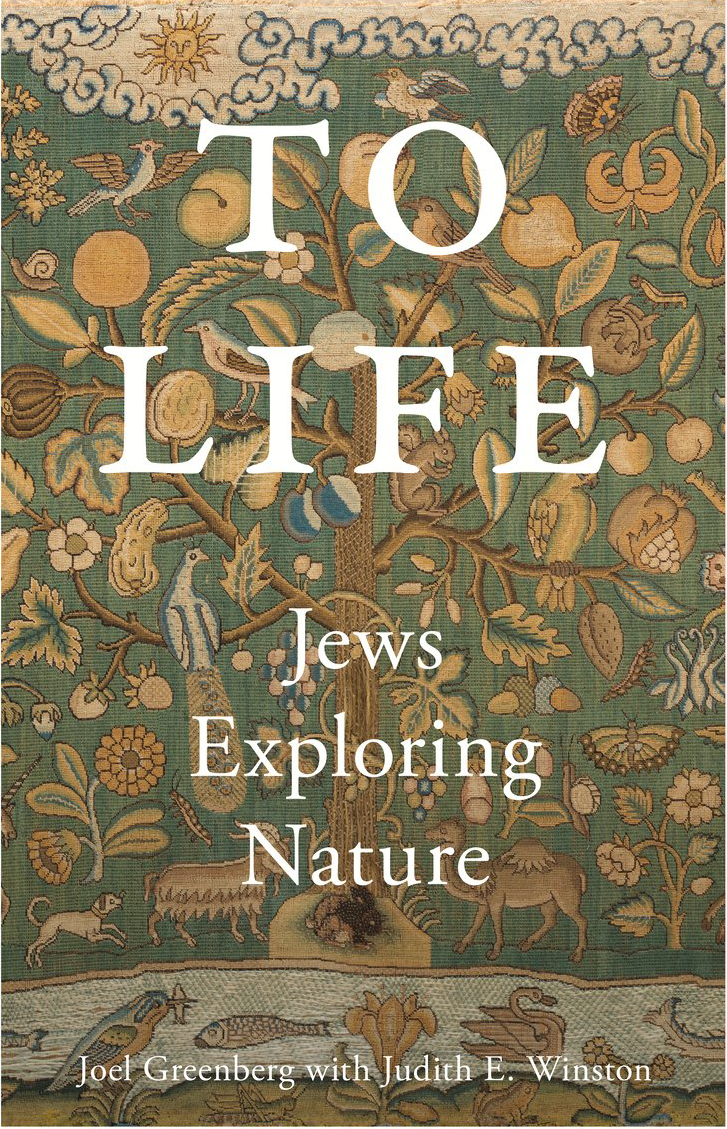
To Life: Jews Exploring Nature by Joel Greenberg