Beginning in the 1980s and 90s, scholars like Dalia Ofer, Lenore J. Weitzman, and Joan Ringelheim began to consider sites such as the ghettoes, labor camps, and death camps as a way of examining how women’s experiences in the Shoah differed from those of men. By looking at the relationship between misogyny and antisemitism, this emerging scholarship opened up important areas of inquiry (for instance, the topics of rape and sexual slavery), which had been previously underexplored in Holocaust Studies.
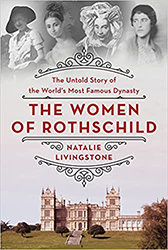
While Natalie Livingstone’s The Nuremberg Women: The Untold Story of the Eight Women Who Brought the Nazis to Justice is intended for a broad audience, the book’s objective — to redress what she calls a “grievous imbalance” in how the story of the Nuremberg Trials has been told over the past eighty years — certainly extends the feminist work of those early scholars. Livingstone asserts that the Second World War was “fought, suffered, endured, chronicled, and…ultimately witnessed and prosecuted by women.” And The Nuremberg Women pursues its thesis through well- researched, carefully sketched portraits of eight women: the brilliant lawyer Harrier Zetterberg, Hungarian countess Ingeborg Kálnoky, survivor and trial witness Marie-Claude Vaillant-Couturier, painter Laura Knight, Soviet interpreter Tatiana Stupnikova, American writer Rebecca West, as well as German journalists, Ursula von Kardorff and Erika Mann.
The book is split into two parts, Nuremberg and its aftermath, which allows Livingstone to illustrate the event’s lasting impact on these eight figures. Mann, for example, found herself to be both “politically and emotionally” displaced in the years following the trial. In the 1990s, Tatiana Stupnikova wrote a memoir of her role as a translator, drawing painful connections between the crimes she learned of at Nuremberg and the more recent failures of the Russian people to push back against autocracy.
Livingstone’s approach has a kaleidoscopic effect. By creating detailed portraits of women who came out of law, journalism, literature, the plastic arts, communications, and even the domestic sphere, she shows readers that Nuremberg was more than an extraordinary legal event; it was a complex, historical moment that cannot be understood through a single perspective alone. Each woman in the book brings to the trial a different cultural context. Each woman has her own specific and often highly personal reasons for bearing witness to this groundbreaking episode in judicial history.
That Livingstone is able to create narrative cohesion while dealing with such a distinctive set of personalities is a testament to her skills as a writer. The women Livingstone profiles “reveal a Nuremberg that is more intimate, human and haphazard; one that was lower paid and less publicized. They demonstrate that the trial was remarkable not because it was perfect but because, against all odds, it happened.” In essence, The Nuremberg Women reminds readers that this landmark trial, which has so often been reduced to large, abstract concepts like justice and evil, had a very human face.