Join a community of readers who are committed to Jewish stories
Sign up for JBC’s Nu Reads, a curated selection of Jewish books delivered straight to your door!
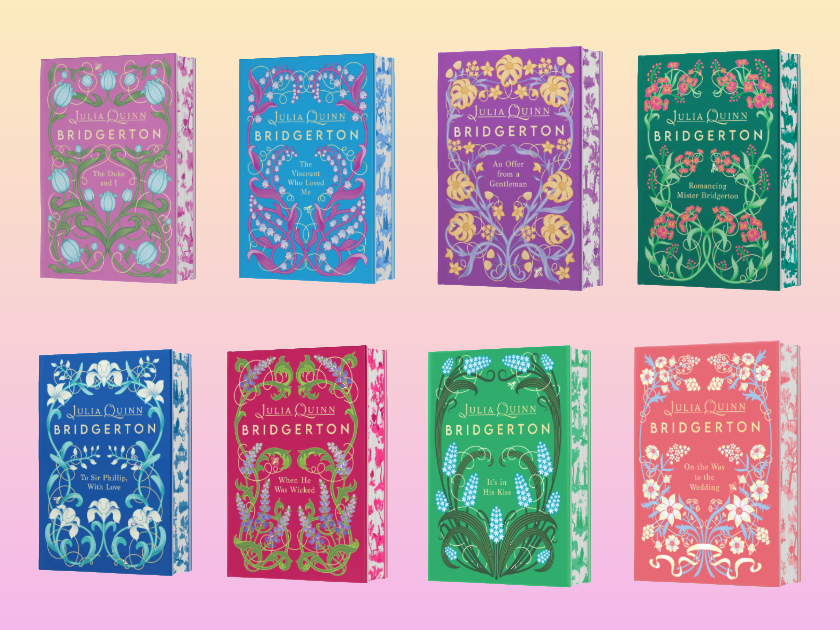
Jewish Book Council spoke with trailblazing romance author Julia Quinn about the in-depth research she conducts, the information rabbit holes she falls down, how the genre has changed over the thirty years she’s been writing in it, and more.
Simona Zaretsky: What has it been like to see the characters of the Bridgerton series reach an even greater audience with the TV adaptation?
Julia Quinn: Wonderful, fantastic, amazing… Honestly, name a fabulous adjective and it probably applies. It’s also a little surreal, to be honest.
SZ: Are there any characters or plotlines that have stayed with you throughout the years?
JQ: All of them? I get asked all the time: Which book is your favorite? Which character? Which couple? And honestly, I can’t say. Each book is special to me in its own way — it might be a character, or a scene, or even just a moment. It might be something that was happening in my life when I wrote it, something that wouldn’t be apparent to the reader. I’ve decided I’ll let the readers have their favorites. I love all my babies the same.
SZ: Your novels are filled with such rich details and descriptions. What’s your research process like?
JQ: I generally have two different types of research. There is the kind that is overarching, that I’ll need for the entire book. For example, in First Comes Scandal, the hero is a medical student, so I needed to learn about medical education in the late eighteenth century. How did one get to call oneself a doctor? Where might one go to school, and how long did it take? Similarly, in The Other Miss Bridgerton, much of the action takes place on a ship. It turns out I know very little about ships, so I spent many hours researching ships of that time period — how fast did they go? How many masts might they have? What would the captain’s quarters look like?
More often, however, I find myself looking up details as I go along. In It’s in His Kiss, the hero makes a joke about Little Bo Peep, which I thought was delightful until it occurred to me — what’s the earliest known reference of Little Bo Peep? If it turned out to be 1910 I was going to be out of luck. (Fortunately, it was Shakespeare, so my joke was safe.) In The Lost Duke of Wyndham, the hero and heroine are looking at a painting in an art book and I was halfway through the scene before I realized that in my mind they were looking at a glossy coffee table book of the sort one might buy at the Metropolitan Museum of Art. Obviously that couldn’t have been the case, so I went down the research rabbit hole of what an art book might look like in 1818. Authors tend to go down a lot of research rabbit holes, to be honest.
SZ: How have you seen the romance genre change in the past thirty years that you’ve been writing them?
JQ: The biggest — and best — change is the embrace of diversity. When my first book was published in 1995, you would never have seen a queer romance from a major publisher. Non-white characters were usually problematically depicted. It was a huge deal when Beverly Jenkins released Night Song in 1994, which was the first historical romance to feature two Black characters on the cover.
We’re not where we should be yet — BIPOC and queer authors still face unfair hurdles and discrimination within the industry — but we’ve made great strides. One of my favorite recent historical romances of the past few years is Lady Like by Mackenzi Lee, a sapphic romance set in Regency England. I loved it so much I chose it as one of the first titles for my new book club: JQ Editions.
SZ: Speaking of which, you recently launched JQ Editions, a gorgeous subscription box series. What was the impetus behind this project? What do you see as the power of the romance genre?
JQ: Romance is having a (big) moment in publishing, but for whatever reason, historical romance isn’t seeing the same kind of boost as contemporary and romantasy. At the same time, we’re seeing a lot of excitement around hardcover special editions with custom artwork, sprayed edges, and the like. I’m always looking for ways to showcase my favorite historical romance authors, and so I thought, Why not special editions for historical romance? I curate the club myself, and my choices range from brand-new titles, to recent gems, to classics of the modern genre. It’s a great way for readers to get gorgeous editions of their favorite books and discover authors they might not have found on their own.
SZ: Are there any Jewish authors or books that you enjoy? (In the romance genre or otherwise!)
JQ: I love Felicia Grossman, who writes historical romance set in London’s East End in the early 1800s. She’s created such a vibrant world, and I personally have learned so much about Jewish life in that era. For example, I had no idea there was such a social barrier between Sephardic and Ashkenazi Jews. There is also a wonderful exploration of what it means to assimilate.
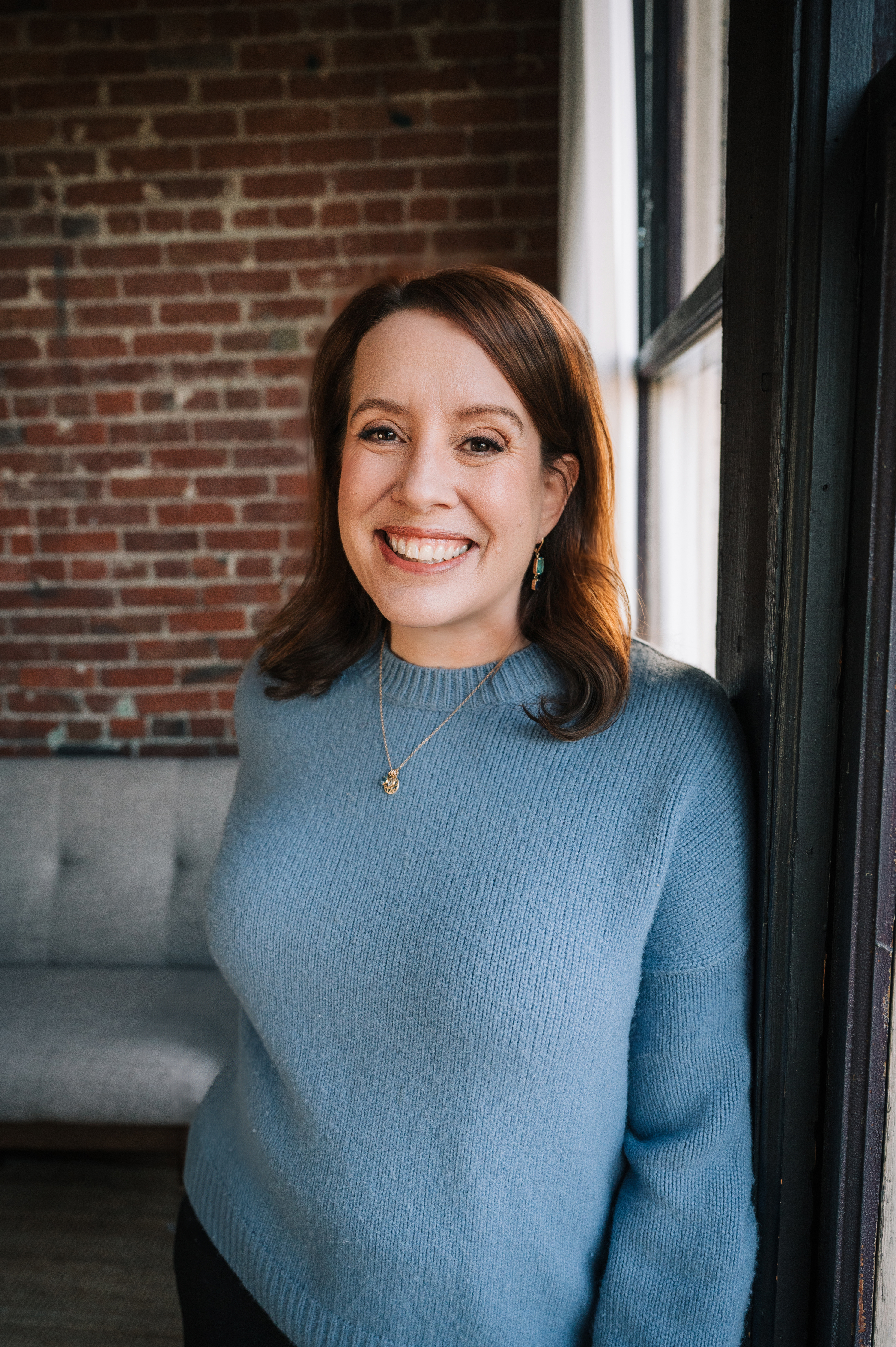
Author photo by Chandra Wicke
SZ: Are there any other historical events or time periods that you would like to see as the backdrop of romance novels?
JQ: I love books set during the American Revolution, which generally hasn’t been a very popular backdrop for historical romance. I wrote one: The Girl With the Make-Believe Husband, but it was a bit of an odd exercise for me as an American because both of the main characters are British, and of course as a child studying history, I was told they were the bad guys. Most of the action takes place in Lower Manhattan, but I did work in mention of the Touro Synagogue in Newport, Rhode Island.
Simona is the Jewish Book Council’s manager of digital content strategy. She graduated from Sarah Lawrence College with a concentration in English and History and studied abroad in India and England. Prior to the JBC she worked at Oxford University Press. Her writing has been featured in Lilith, The Normal School, Digging through the Fat, and other publications. She holds an MFA in fiction from The New School.