Join a community of readers who are committed to Jewish stories
Sign up for JBC’s Nu Reads, a curated selection of Jewish books delivered straight to your door!
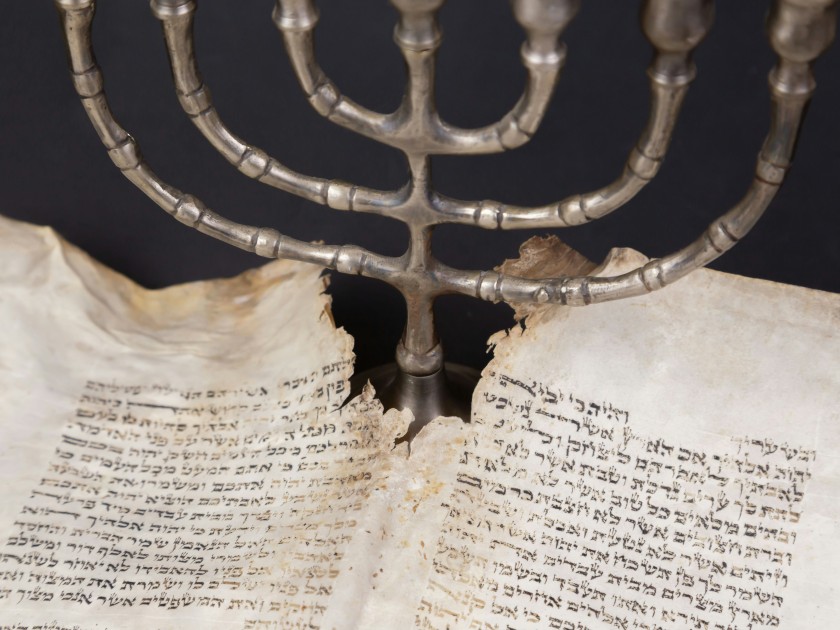
Photo by Diana Polekhina on Unsplash
I’ve found that oftentimes people talk about kabbalah and Jewish mysticism like it’s some sort of secret, esoteric magic, only to be understood by old men with beards poring over ancient tomes.
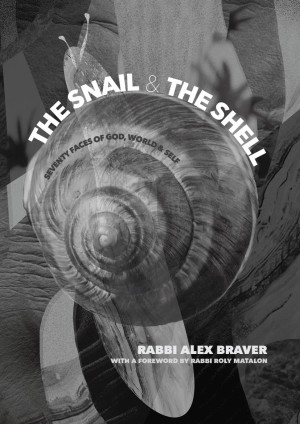
In researching, translating, and writing personal reflections about many traditional Hasidic mystical texts for my new book, The Snail and the Shell: 70 Faces of God, World & Self, there were moments when I felt I was diving into this enigmatic, closed off world. I approached the material with a singular purpose: to amplify ideas and images from these traditional texts that would feel fresh, radical, and entirely new and relevant in our modern world.
By exploring these seemingly arcane texts in the context of our modern world and as a queer rabbi and dad, I hope to provide an open door to wisdom that has often felt closed-off and spark meaningful conversations about pursuing justice and building inner strength at a time of great challenge, all while exploring underutilized resources from the Jewish tradition.
One of the texts I draw upon in The Snail and the Shell is from what some might consider to be one of those selfsame ancient tomes, Ma’or Va-Shemesh by Kalonymus Kalman Epstein (1753−1825, Poland). This work brings up an idea that may seem subversive to some: that wisdom emerges from each person’s heart, and each person’s own divinely inspired imaginings, more so than any sacred text can impart. It is this knowledge — the knowledge unique to each and every human soul, and impossible to fully communicate to one another — that is the true secret, more secret than mystical ideas you can discover in a book, that I wanted to convey in my book.
Like the seventy texts described in my book, the following piece shares a vivid and imaginative idea of God. Below is an original translation of an excerpt from Epstein’s sermon, along with my own footnotes, a personal reflection, and several guiding questions. You’ll find this same structure for each of the texts in my book, which can be purchased here.
______
Translation
“The secret of the Eternal is for those who revere God” (Psalms 25:14). The essence of the word “secret” in this context means: something impossible to reveal. The intent is not about learning kabbalah, which one person can teach to another, but rather the true “secret,” which is grasping God’s blessed and exalted existence.
This is like what’s explained in the holy Zohar (1:103b) about the verse “Her husband is known in the gates [be-SHe’aRim]” (Proverbs 31:23): “[God is known] by each person according to their own imagining [SHi’uRin].”[1] This matter is hidden away in each person’s heart — each according to their capability and according to the light that the Holy Blessed One shines into their hearts. It’s impossible for one person to explain this type of understanding to their fellow; even if they explain it, their fellow won’t understand it. Rather, each person understands only according to what they seek out from God.
This is the meaning of “The secret of the Eternal is for those who revere God” — our Blessed Creator’s existence is a secret hidden away for those who revere God, each of whom grasps in some great way a conception of God’s blessed existence.
______
Reflection
I was partway through rabbinical school when my mother was diagnosed with cancer. At the time, I thought I had a very sophisticated theology; I’d studied with amazing teachers and read as widely as I could, so I figured I knew a thing or two. When my mom died — and in the months and years of grief afterwards — I discovered how thin my theology was, and how much there was left to learn.
My sense of life, meaning, and God, has grown more complicated and flexible in the intervening years. That’s not only because I was forced to discover some of the deeper secrets buried away within me, but also because — as a congregational rabbi — I’ve been invited into people’s homes and lives, simchas and sufferings. In these encounters, I’ve been enlightened and humbled by the broad range of ways people celebrate and mourn, the ways they make meaning and hold the sanctity of everyday life. Each person, in their own way, holds a secret understanding of our world — holding a secret of God, or acting unknowingly as God’s own secret.
I’ll always treasure text study. Writing The Snail and the Shell—delving into dozens of intricate Hasidic texts and researching each citation and allusion — has been a source of joy and fascination for me over the five years it took to compile, translate, and comment on each of them. What I’ve learned from this project has only strengthened the secret I’ve discovered serving Jewish communities for more than a decade now: The deepest learning and the most mystical secrets are hidden in the hearts of other people. When we have the opportunity to encounter them, we can learn more about ourselves and God than we ever thought possible.
______
Guiding Questions
[1] This is a paraphrase of the Zohar’s description: But certainly, “Her husband is known in the gates [SHe’aRim]” refers to the Holy Blessed One, who is known and understood according to what each person’s heart can imagine [me’SHa’eR], and according to the capacity of their spirit of wisdom. As [God] is imagined in the heart, so is [God] known in the heart. This is why it is written “known in the gates [SHe’aRim] – that is, through these imaginings [SHe’aRim], which each and every person imagines [me’SHa’eR] in their own heart. But to be known as is fitting? That, no one can understand and know.
Rabbi Alex Braver returned to B’nai Jeshurun and New York City in 2026 after a decade of service at Congregation Tifereth Israel in Columbus, Ohio.
After graduating from Brandeis University in 2009, Alex received a fellowship from the Hadar Institute in 2010 for a year of Jewish study in their egalitarian yeshiva. He was ordained in 2016 by the Jewish Theological Seminary, with an MA in Midrash and a certificate in Pastoral Care and Counseling.
His new book, The Snail and the Shell: 70 Faces of God, World, and Self (Izzun Books), is a passion project exploring the surprising and creative metaphors for God and spiritual life in traditional Ḥasidic texts, with original translations, commentary, and personal reflections.