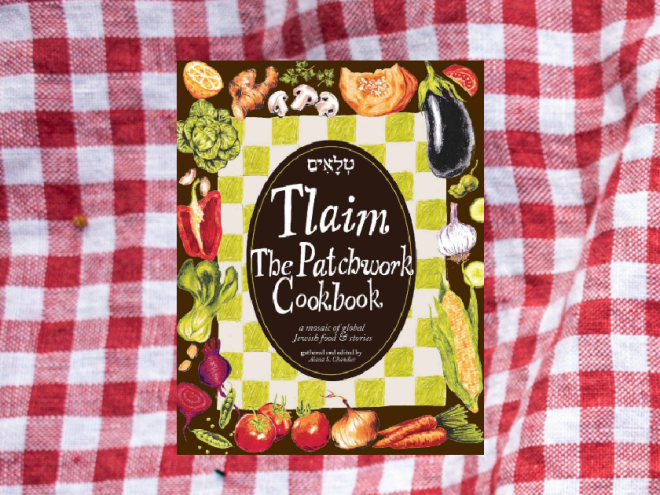
Tlaim: The Patchwork Cookbook is a community cookbook collection of more than eighty recipes and accompanying reflections that map Jewish culinary practices across geographies, histories, and lived experiences. The cookbook is organized by course and accompanied throughout by concise contributor notes and appealing hand-drawn illustrations. Contributors represent multiple diasporas and traditions — from Iraqi, Ethiopian, and Sephardi to Peranakan, Filipino, Caribbean, West African, Korean, and Latin — and their recipes foreground the intersections of ritual, family memory, and adaptation.
The cookbook’s sections are divided by course (Soups, Bread, Salads, Sides, Fried, Entrees, Sweets), with each recipe presented on a two-page spread that pairs a clear ingredient list and step-by-step instructions with a short contextual note from the contributor. These contextual notes situate dishes historically and socially, indicate variations for local ingredients or kashrut practices, and often offer serving suggestions. Recipes include prep and cook times, serving sizes, dietary tags (vegan, meat, egg, dairy), and optional garnishes or substitutions, which supports modifications across different kitchens.
Readers will find familiar holiday staples reimagined alongside lesser-known regional dishes. Standout recipes from each section include Naomi Spector’s Saffron Lentil Soup, a fragrant, Shabbat-ready vegan soup; the Rajagopal-Thomas Family’s Shabbat Challah, classic, richly textured braids for holiday tables; Lauren Monaco Grossman’s Yusheng with Lox, a celebratory Singaporean-style tossed salad with lox; Joseph Moses’s Sukhi Bhaji, a spiced, comforting Punjabi potato side; Dee Sanae’s Umai Jagaimo Tempura Latkes, crispy Japanese-style latkes that are perfect for Hanukkah; A. S. Kim’s T’beet (Iraqi Hamin) with Huevos Haminados, an overnight slow-cooked rice-and-chicken hamin with tea eggs; and Alana Chandler’s Vegan Warabi Mochi Donuts, chewy, kinako-dusted vegan sweets for festive tables.
As a community cookbook, Tlaim performs an important cultural service: it preserves and shares recipes and it intentionally centers voices that expand conventional notions of Jewish food.
Kenden Alfond is a psychotherapist who began Jewish Food Hero because she was looking to connect with other Jewish people who care about healthy food and modern Jewish life. Jewish Food Hero aims to create a positive community of members from all over the world who want to bond over recipes and Jew-ish stuff.