Join a community of readers who are committed to Jewish stories
Sign up for JBC’s Nu Reads, a curated selection of Jewish books delivered straight to your door!

This month, a nearly three hour adaptation of Homer’s epic story the Odyssey came to the (very!) big IMAX screen, directed by Christopher Nolan. Nearly 3,000 years old, this expansive tale follows the Iliad and involves prolonged journeys home, obstacles small and large, and the inner reckonings that occur during this time.
In celebration of this, we’ve put together a reading list of fourteen Jewish novels that feature devastating journeys, intense yearning, and deeply introspective questions of the self. Whether or not you trek to the theater for this film, we hope you’ll check out one of these epic Jewish reads. And share your own suggestions with us at info@jewishbooks.org!
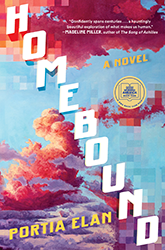
Homebound by Portia Elan
“Portia Elan’s Homebound stretches across centuries, moving from 1980s Cincinnati to a flood-ravaged world far in the future, populated by beings with artificial intelligence, scavenger ships, and fragile forms of human connection. Even in its speculative reach, it keeps circling familiar Jewish concerns: how people endure, how tradition adapts, and how stories reverberate across time.” ~Daniela Wexler
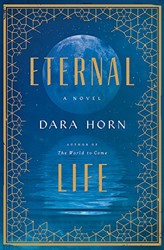
Eternal Life: A Novel by Dara Horn
“Eternal Life, a novel both adventurous and wise, imagines two immortals as old as the Wandering Jew who dwell among us today. Their lives retrace the journeys of the Jewish people, from Jerusalem to Antioch to Pumbedita, in Alexandria and Aleppo, through Spain and Poland, to America and Israel. Yet this is no allegory — it’s a love story, or many love stories, with the same conflicts and joys and heartbreaks that are part of any life.” ~Bob Goldfarb
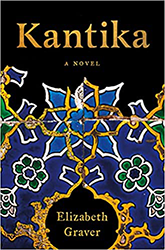
Kantika by Elizabeth Graver
“The story of Kantika, based on the life of Graver’s grandmother, opens in Constantinople in 1907 and spans five decades, making stops in Barcelona and Havana but ultimately ending in New York City in 1950. While modern Jews everywhere are suffering as a result of the two World Wars, it’s also a period of great upheaval for Sephardic Jews in Islamic lands — in this case, Turkey.” ~Nina B. Lichtenstein
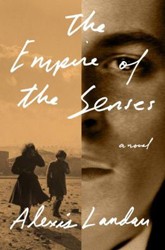
The Empire of the Senses: A Novel by Alexis Landau
“At once at a family saga, a war story, and several love stories, Alexis Landau’s riveting debut, The Empire of the Senses, paints a sweeping yet intimate portrait of pre-World War II Berlin through the eyes of the Pearlmutter family.” ~Becca Kantor
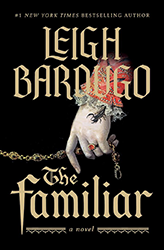
The Familiar by Leigh Bardugo
“Leigh Bardugo illuminates Madrid with rich historical and sensorial details. Settings like the larder in the Ordoños house in which Luzia sleeps and the lavish palace of the king’s fallen-from-grace secretary immerse readers in the textures of this time. Luzia’s story of hope, connection, and miracles large and small will stay with us in our own world, where we so often wear many faces to survive.” ~Simona Zaretsky
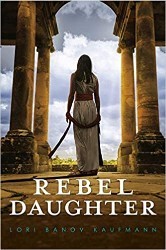
Rebel Daughter by Lori Banov Kaufmann
“Esther Bat Hanan, the heroine of Lori Banov Kaufmann’s historical novel for young adults, Rebel Daughter, is the daughter of a Temple priest in Jerusalem during the tragic Jewish War against Roman occupation. Between 66 and 70 C.E., the colony of Judea was torn by internal factions but ultimately chose to fight against the overwhelming power of the Roman Empire.” ~Emily Schneider
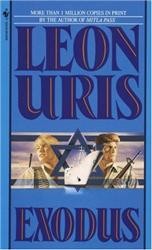
Exodus by Leon Uris
“Exodus is an international publishing phenomenon — the towering novel of the twentieth century’s most dramatic geopolitical event. Leon Uris magnificently portrays the birth of a new nation in the midst of enemies — the beginning of an earthshaking struggle for power.” ~From the Publisher
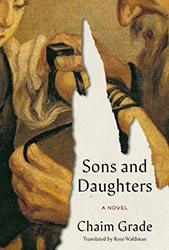
Sons and Daughters by Chaim Grade, translated by Rose Waldman
“Every character matters in Sons and Daughters; each is given their own moment to grapple with a society rife with poverty, war, isolation, and loss of faith. Through them, we see evidence of the Katzenellenbogen family’s widening world; these interconnected stories weave a complicated tapestry of arguments and friendships and unspoken confessions.” ~Isadora Kianovsky
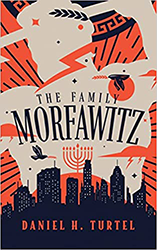
The Family Morfawitz by Daniel H. Turtel
“Entertainingly louche as this novel may be, it does seem to be asking us, as Jews, an important question: in our own quest for the Olympian, whatever that may be, do we risk surrendering something essentially Jewish? Or, to frame it more universally, is it the outside world we should be wary of, like the contemporary gods of the Morfawitz clan, or is it the darkness within ourselves?” ~Angus Smith
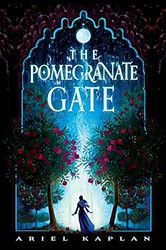
The Pomegranate Gate by Ariel Kaplan
“Combining history and fantasy, the novel follows Jewish characters who are rejected and relentlessly pursued by the world of Christian Spain. A young Jewish woman named Toba enters the realm of the Maziks, magical creatures with powers menacing enough to rival those of the Inquisition. Toba’s place in their realm is further complicated by her unusual past.” ~Emily Schneider
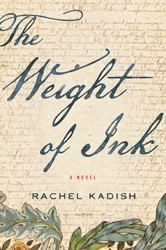
The Weight of Ink by Rachel Kadish
“The beauty of this story is in the variety of its milieus and sensibilities. As we follow our female protagonists of both the seventeenth and twenty-first centuries — Ester Velasquez and Helen Watt, respectively — we also witness the goings-on of a venerable and drafty house of a rabbi in 1660s London, and glimpse the modern life of a cheeky young American man with heartrending troubles of his own.” ~Kristin Gibbons

Hotel Cuba by Aaron Hamburger
“When US immigration rules change, the sisters reroute to Cuba. It’s only ninety miles from America; how hard can it be, they think, to make it to the US from there? What follows sheds light on the little-known Jewish diaspora community of Cuba. Hamburger’s depiction of 1920s Havana is sultry, vibrant, and brilliantly drawn.” ~Jessie Szalay

The Fire Agent by David Baerwald
“The book is suffused with tenderness, as much a study of an individual’s place in history as an exploration of the epic sweep of global events. And this is what Baerwald does best: demonstrate that, no matter what we try to do, there is only so much control we can exert on our world. What matters is how we respond to the events outside of our control, who we choose to hold close, and who we can’t help but push away.” ~Joshua Geller Schwartz
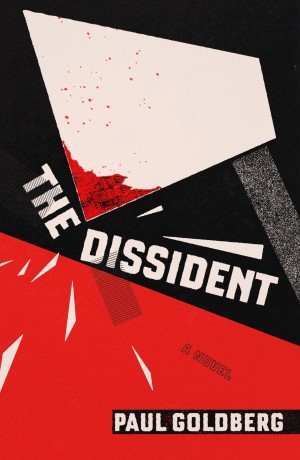
The Dissident by Paul Goldberg
“The Dissident conjures the repressive Soviet Union of the 1970s, a critical interval in modern Jewish history at the threshold of mass Jewish emigration and the 1991 fall of the Soviet Union. Goldberg focuses on a group of refuseniks and on the surveillance-obsessed political world of pre-glasnost Russia, at the end of the Soviet empire.” ~Donald Weber
Simona is the Jewish Book Council’s manager of digital content strategy. She graduated from Sarah Lawrence College with a concentration in English and History and studied abroad in India and England. Prior to the JBC she worked at Oxford University Press. Her writing has been featured in Lilith, The Normal School, Digging through the Fat, and other publications. She holds an MFA in fiction from The New School.