Join a community of readers who are committed to Jewish stories
Sign up for JBC’s Nu Reads, a curated selection of Jewish books delivered straight to your door!
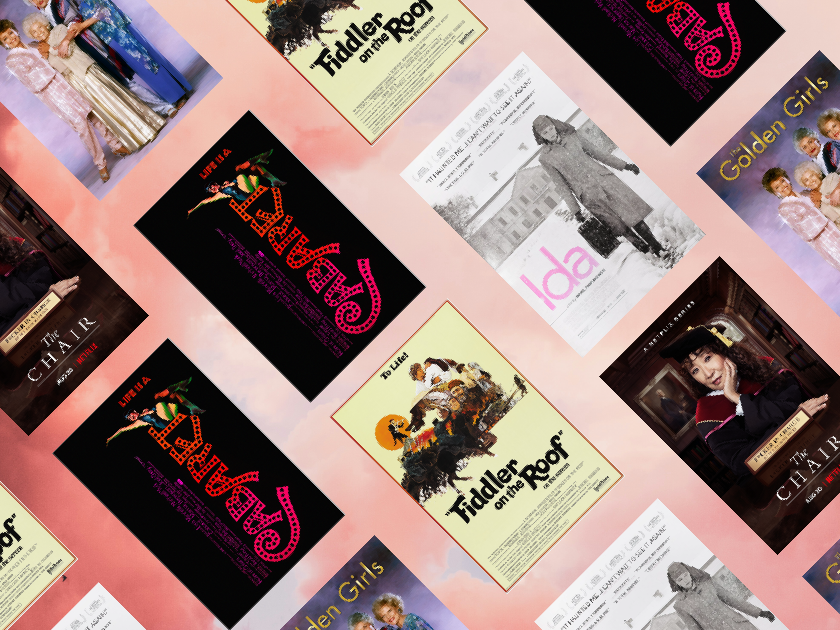
Looking for a great, quick read this May (aka Short Story Month)? Based on your favorite movie or TV show, find the perfect fit from these six stories published in Paper Brigade, JBC’s annual literary journal.
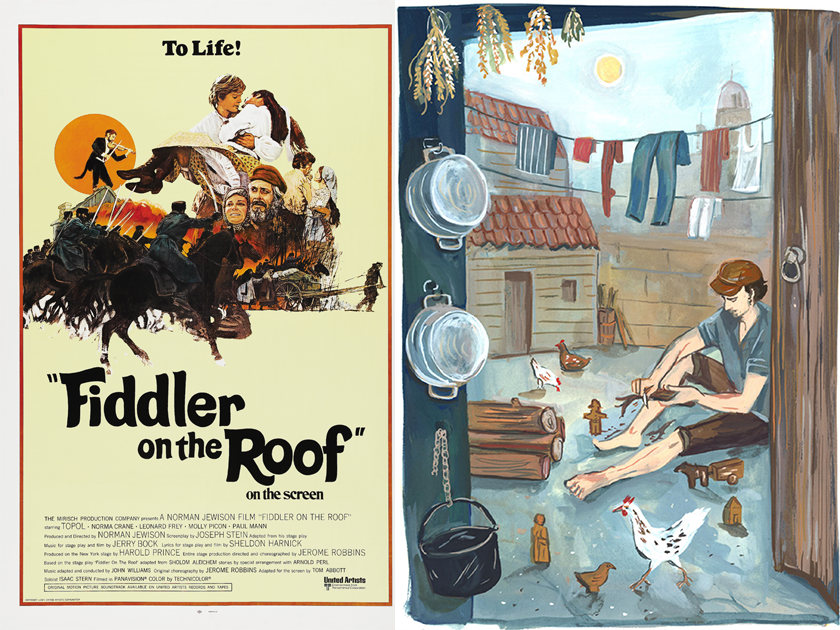
Fiddle on the Roof (1971); Illustration by Jenny Kroik for “Noble”
Fiddler on the Roof (1971) → “Noble” by Scott Nadelson
In the vein of the 1971 classic movie, Scott Nadelson’s “Noble” takes us back to Eastern Europe and a tight-knit shtetl where everyone knows each other’s families, foibles, and feuds. Like Tevye, Nadelson’s protagonist — a young man named Itsko — is a dreamer. Unlike Tevye, he constantly shirks responsibility, spending most of his days engaged in an affair with the wealthy brewer’s wife. Itsko’s eventual existential crisis is a prelude to historical events that threaten to engulf the small dramas of the shtetl forever.
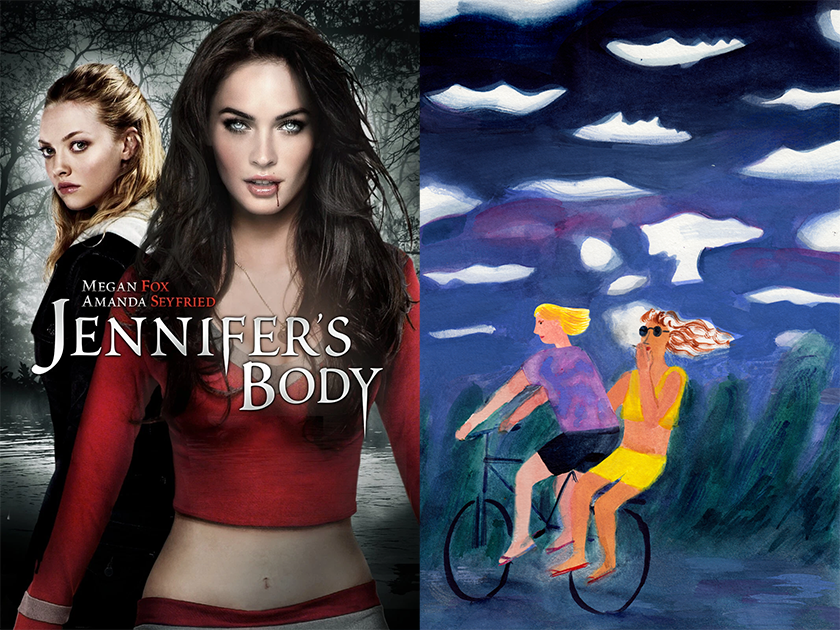
Jennifer’s Body (2009); Illustration by Laura Junger
Jennifer’s Body (2009) → “Into the Mud” by Yael van der Wouden
Sapphic vibes, the supernatural, and an unexpected bond between a popular mean girl and her shy friend — “Into the Mud” by Yael van der Wouden has it all. This story is set in an alternate reality where dybbuks hide in microwaves and Miryam (said mean girl) builds golems down by an abandoned lake to take out her frustration with her unstable home life. When Miryam disappears, unassuming Debby must harness her own power in order to find her.
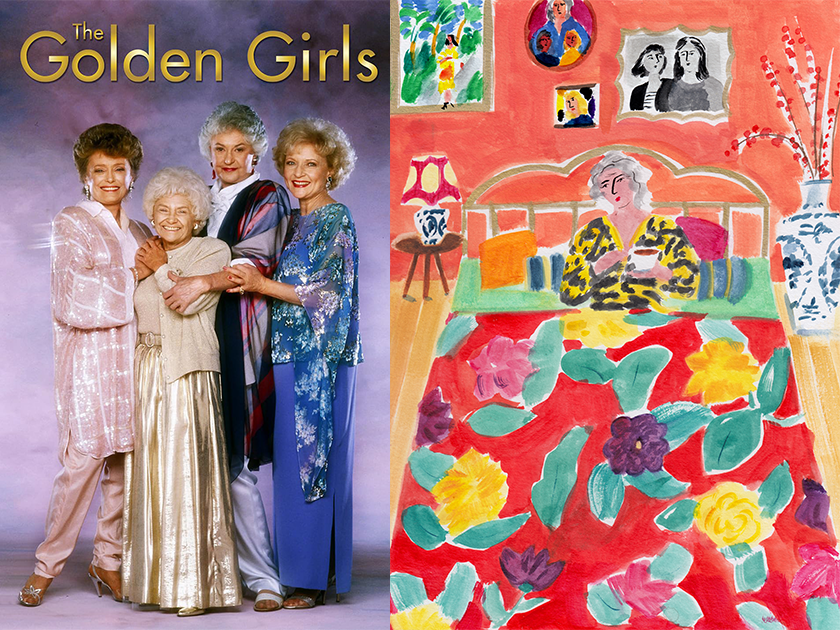
The Golden Girls (1985−1992); Ilustration by Laura Junger
The Golden Girls (1985−1992) → “The Virgin Grandmother” by Kate Schmier
The Golden Girls series was revolutionary in its portrayal of a truth (that should be) universally acknowledged: a woman’s life doesn’t stop after the age of fifty. It’s a premise with which Fran — the protagonist of Kate Schmier’s “The Virgin Grandmother” and the proud owner of a stationery store — would heartily agree. Like The Golden Girls’ Dorothy, Fran has been through a difficult divorce; like Sophia, she isn’t afraid to speak her mind. When a widowed friend starts to show romantic interest in her, Fran has to decide what is more important: companionship or independence.
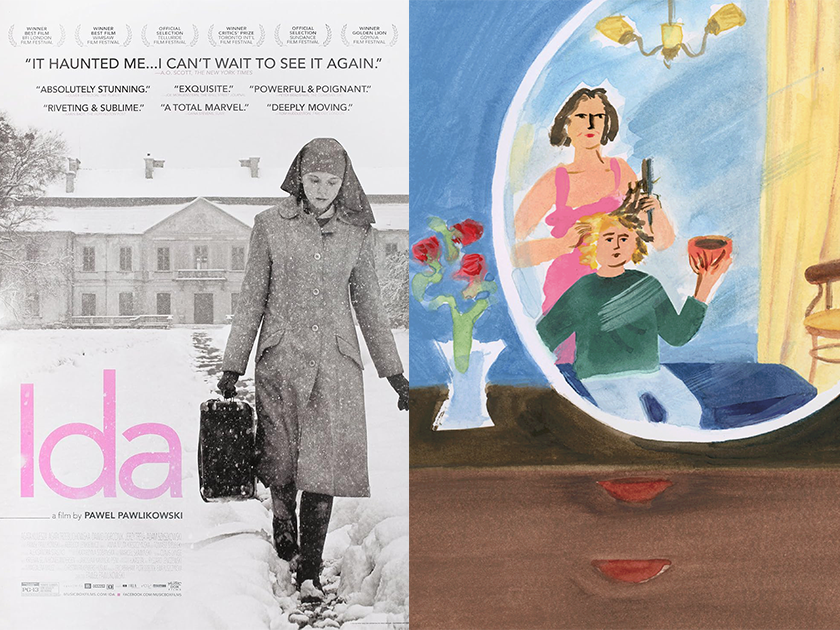
Ida (2013); Illustration by Laura Junger
Ida (2013) → “Our Aunt of the West” by Basia Winograd
The hauntingly beautiful Polish film Ida, winner of the 2015 Academy Award for Best Foreign Language Film, takes place in 1960s Poland. A novice nun is forced to reunite with her worldly aunt, who subsequently drops a bombshell: the novice’s parents were Jewish, and they were murdered in the Holocaust. Basia Winograd’s “Our Aunt of the West” is also set in 1960s Soviet Poland. Like the novice in Ida, budding teenager Maks Haasman is forced to consider his Jewish identity when his aunt — formidable yet charismatic, outrageous yet seductive — comes to visit from Milan.
(And if you like “Our Aunt of the West,” check out “The Realist,” another story by Basia Winograd, which follows Maks’s father in the immediate aftermath of World War II.)
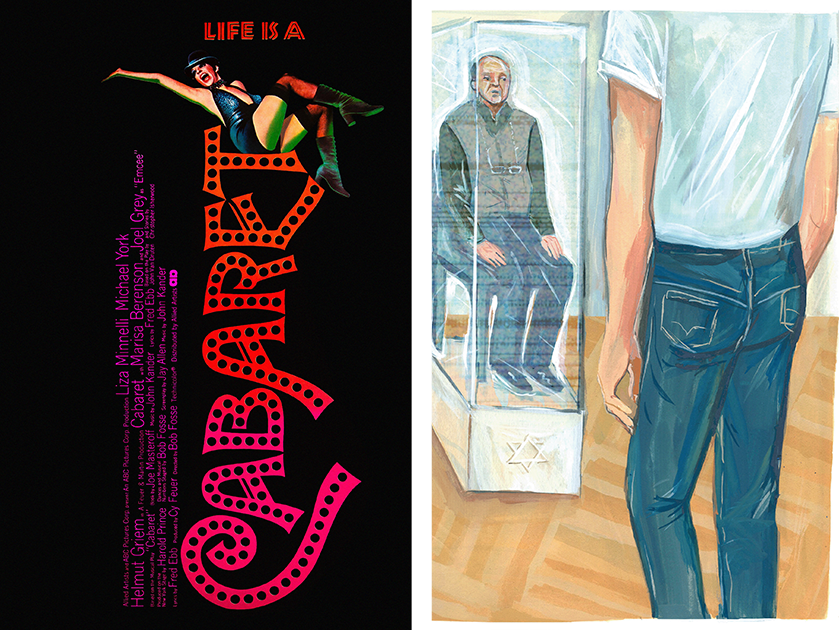
Cabaret (1972); Illustration by Jenny Kroik
Cabaret (1972) → “Holograms” by Adam Schorin
In Cabaret, the patrons of the Kit Kat Klub spend their Berlin nights watching risque dancers and cheering on the American singer Sally Bowles. Outside this bohemian refuge, the Nazis are steadily gaining power.
Adam Schorin’s “Holograms” is set in the Berlin of a much more recent past, and the American protagonist is Sammy, a young, gay Jewish man who experiments with performing in drag. Like in the 1930s, the atmosphere is politically and culturally charged — for Sammy, who is fetishized by philosemites, and even more so for his fellow drag performers who don’t have the option of leaving their lives in the city behind.

The Chair (2021); Illustration by Laura Junger
The Chair (2021) → “Goliath” by Toby Lloyd
The Chair, starring Sandra Oh as the newly elected chair of a university’s English department, shows the side of academia only tangentially related to academics — rumors, scandals, professional rivalries, accusations of prejudice.
Toby Lloyd’s forthcoming “Goliath,” which follows an MFA cohort at the fictional New York university Verity College, explores similar themes. Professor Mitzi Hoffman, a Holocaust survivor and doyenne of American letters, is famous for her classes on the craft of fiction. When one of her students objects to reading Céline because of the French author’s antisemitism, a controversy with long-reaching consequences erupts.
“Goliath” will be published in the spring 2026 Paper Brigade Short, an exclusive gift for JBC members and Nu Reads subscribers. Become a JBC member or a Nu Reads subscriber to receive your copy in June!
Becca Kantor is the editorial director of Jewish Book Council and its annual print literary journal, Paper Brigade. She received a BA in English from the University of Pennsylvania and an MA in creative writing from the University of East Anglia. Becca was awarded a Fulbright fellowship to spend a year in Estonia writing and studying the country’s Jewish history. She lives in Brooklyn.