Join a community of readers who are committed to Jewish stories
Sign up for JBC’s Nu Reads, a curated selection of Jewish books delivered straight to your door!
Makes about 3 ½ cups
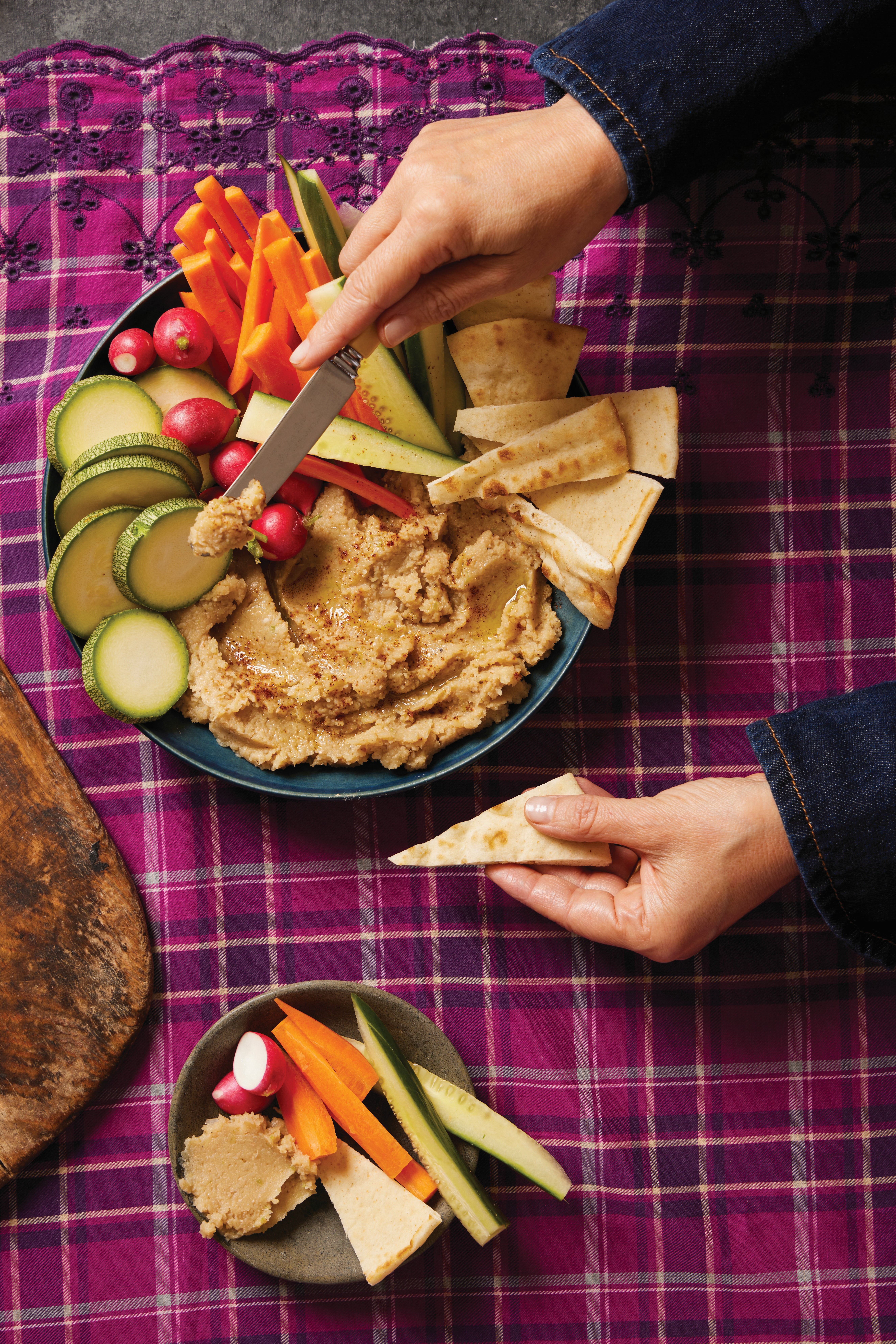
Located in Sells, Arizona, Desert Rain Café helped popularize the foods of the Indigenous Tohono O’odham. One of its most famous specialties was a hummus made from tepary beans, which spread like wildfire. Unfortunately, the cafe closed a few years ago, so I wasn’t able to visit it. In my spiced-up take on the many versions I tried in home kitchens in the town, the creamy, slightly sweet white tepary beans are pureed with charred garlic and onion and roasted green chile. One taste will convince you that hummus can dance to a different beat.
I like to serve this as a salad, putting a ladle or two of hummus on each plate, topping it with bell pepper, cucumber, tomato, and radish, and adding a squeeze of lime and a sprinkling of salt. Of course, it’s great as a dip with tortilla chips, in a veggie sandwich, or as a filling for pita breads.
½ pound (1 cup) dried white tepary beans, rinsed
10 cups water
2 teaspoons kosher salt
½ white onion, quartered
1 garlic head, broken or cut into 2 clusters of cloves (skin left on)
½ pound fresh chiles verdes, such as Anaheim, New Mexico, or chilaca, roasted, sweated, peeled, seeded, and diced
½ teaspoon ground white pepper
¼ cup freshly squeezed lemon juice, or more to taste
2 tablespoons olive oil
2 to 3 dried chiltepin or piquin chiles, or 1 to 2 lightly toasted chiles de arbol
To reduce the cooking time, soak the beans for at least 30 minutes, or overnight; drain.
Transfer the beans to a large pot, cover with the water, and bring to a boil. Skim any foam from the surface, then reduce the heat to medium and simmer, covered, for 1 hour.
Remove the lid, add 1 ½ teaspoons of the salt, stir, and continue cooking, covered, until the beans are soft but not breaking apart, adding more hot water if they threaten to become dry, 2 to 3 hours (the total cooking time will be 3 to 4 hours, depending on how long you soaked the beans and their age). Set aside.
Preheat the broiler, with the rack 2 to 3 inches from the heat source.
Put the onion and garlic cloves on a small baking sheet lined with foil. Place under the broiler for 10 to 12 minutes, flipping them a few times, until charred and softened; you may have to remove the garlic cloves before the onion. Remove from the broiler and set aside. Alternatively, you can toast the onion and garlic on a preheated comal or skillet set over medium heat. Separate the garlic cloves, peel them, and discard the skin.
Put the beans and ¾ cup of the cooking broth in a food processor. Add the onion, garlic, chiles verdes, the remaining ½ teaspoon salt, the white pepper, lemon juice, olive oil, and dried chiles to taste. Process until smooth and serve.
COOK’S NOTES
Excerpted from Pati Jinich Foods of La Frontera by Pati Jinich. Copyright © 2026 by Mexican Table LLC. Recipe photography © 2026 by Jennifer Chase. From Harvest, an imprint of HarperCollins Publishers. Reprinted by permission.
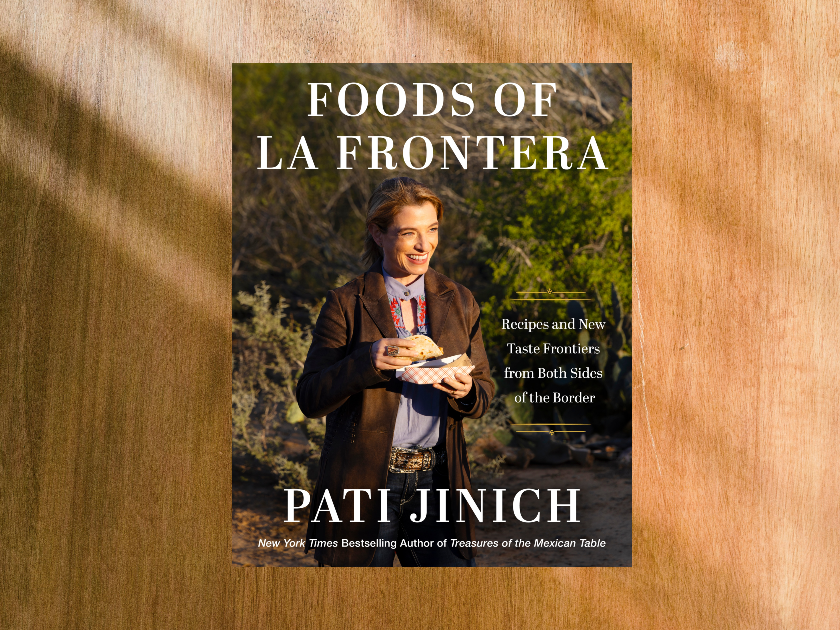
Pati Jinich is the author of New York Times bestselling Pati Jinich Treasures of the Mexican Table and the host of the three-time James Beard Award – winning PBS series Pati’s Mexican Table, and James Beard Award – winning PBS series La Frontera with Pati Jinichi. Named one of the “100 Greatest Cooks of All-Time” by Epicurious and Bon Appétit, she has won a Gracie Award for her television work and is a four-time Emmy nominee and four-time IACP Award winner. She is the resident chef of the Mexican Cultural Institute and has appeared on NPR, NBC, CBS, and more. Born and raised in Mexico City, she lives in Chevy Chase, Maryland, with her husband and three boys.